Irish Examiner view: Germany's SPD did not quite get a ringing endorsement in Brandenburg
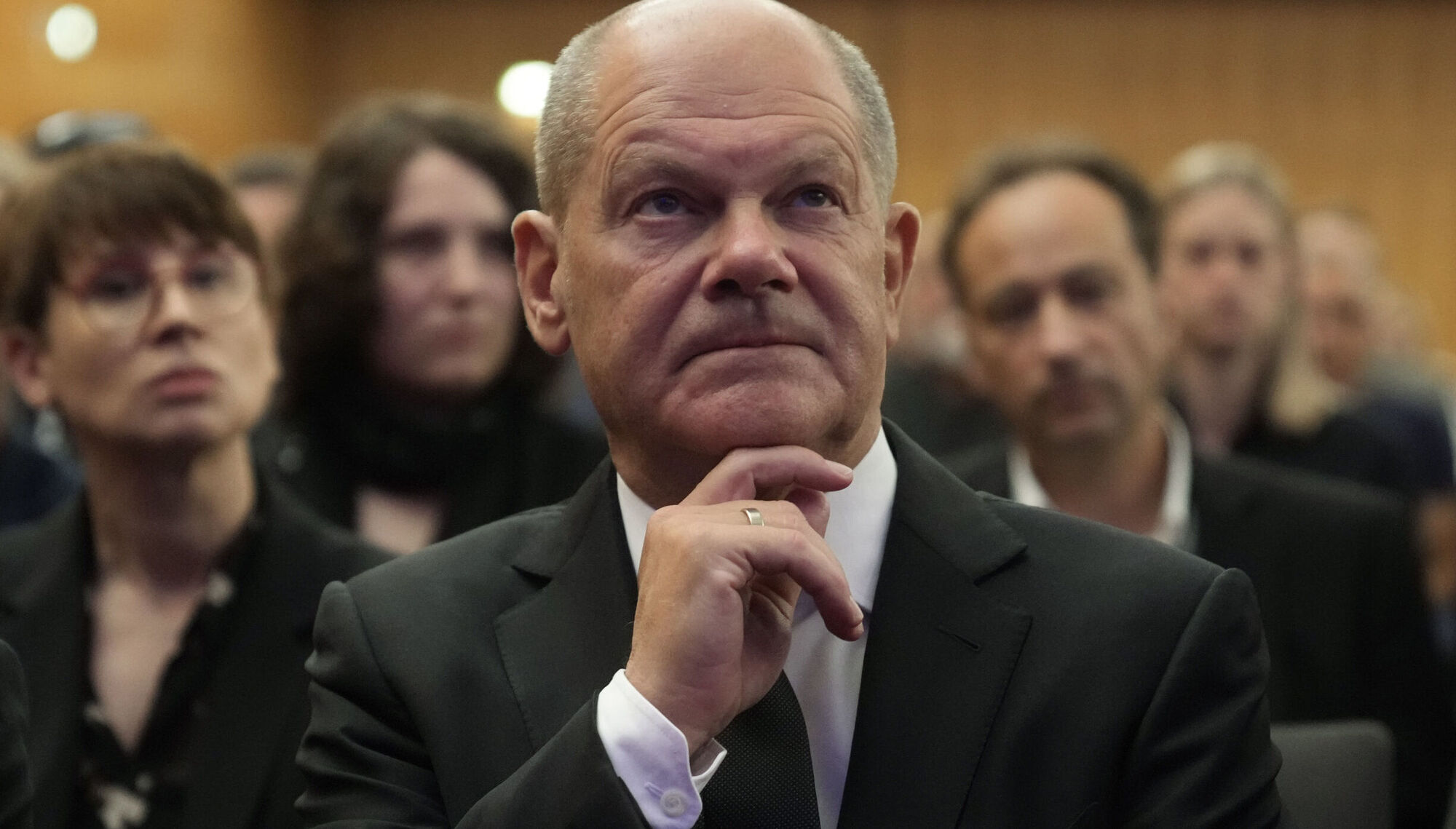
Chancellor Olaf Scholz's SPD ultimately clawed back enough votes to prevent the anti-immigration AfD from seizing victory, although gains they have made are a still a worry for the traditional centrist parties. Picture: Michael Probst/AP
Snapshot elections can often provide ruling governments with unwelcome and hard-to-swallow results and there were huge expectations in Germany at the weekend that the Brandenburg state vote would deliver just that to chancellor Olaf Scholz’s incumbent Social Democratic Party (SPD).
Grim predictions of a massive surge in electoral support for the Alternative fur Deutschland (AfD) far-right grouping proved to be close to the mark, but the SPD ultimately clawed back enough votes to prevent the anti-immigration party seizing victory.
What was widely expected to be a referendum on Scholz’s federal government eventually turned out to be a two-point win for his party, although the gains made by the AfD in Brandenburg, as well as in Saxony and Thuringia earlier this month, are still a major worry for the traditional centrist parties.
Although they do not directly affect the government in Berlin, state elections are seen to reflect the national mood and are regarded as a harbinger of the popularity or unpopularity of the federal government.
Sunday’s election was the third and final vote before next year’s autumn general election to take place in states in what was once East Germany and the AfD has now scored strongly in each, although the SPD’s win in Brandenburg may have stemmed the tide somewhat.
It may have been something of a surprise victory given how badly the party had been polling in the run-up to Sunday’s vote and it may also be that the win had little to do with Scholz’s popularity, or lack of it.
A strong campaign by the SPD’s popular governor in the state, Dietmar Woidke — who had threatened to resign if the AfD prevailed — and which excluded Scholz from the campaign, fearing the negative impact of his presence, was credited with the win as much as strategic voting against the AfD.
As a prescient Woidke noted that if an openly far-right party can claim nearly 30% of the vote then it “was a shrill wake-up alarm for all us democrats, for all those who stand for freedom, openness and tolerance”. For Scholz, the Brandenburg result certainly does not clear the path to general election victory and especially so as many voters expressed the opinion that they only reason they voted for the SPD was to prevent the AfD from gaining power.
There has been a welcome, if somewhat belated, response from the Catholic Church in Ireland to the public horror at the sustained revelations of historic sexual abuse in schools run by religious orders.
Archbishop of Dublin Dermot Farrell has admitted there was a “culture of denial” in the Irish Church about child sexual abuse and that it “has yet to fully come to terms with what was done to the thousands upon thousands of innocent and vulnerable people over such a long period of time”. Undoubtedly he speaks the truth, as he did when he insisted “there will be no authentic, enduring renewal and reform of our Church” until the abuse crisis is addressed.
With some 2,400 allegations of sexual abuse made against 884 individuals in 308 schools run by religious orders over a 30-year period, the evidence contained in the Government’s scoping report on the scandal, a thread of denial that was always suspected has turned in to what Farrell now admits was “a culture” within the Church.
While a lot of what he says is obvious to any ordinary observer and will not cut much ice with abuse survivors, at least the hierarchy are now admitting guilt and shame.
But if actions are to follow deeds, then the Church — and its religious orders — needs to start getting real on how it will compensate the victims and not hide money and property it fears might get mopped up because of their collective guilt.
It is all very well for the religious hierarchy to postulate about its sins, but it now needs to provide sincere and equitable redress.
Taoiseach Simon Harris may have had something of a honeymoon period since being elected in April, but his comments that immigration had an impact on homelessness illustrated a rare clumsy step — thus far, at least.
People in high office are prone to attracting flak no matter how good their government’s record is on any given issue, but those accusing him of making comments that were “cynical, untrue, and dangerous” were leaping on a mirage bandwagon.
Much as Justice Minister Helen McEntee was accused of “cowardice” over the decision to abandon draft laws on hate crime, Mr Harris’s comments have also been used as a stick with which to beat him.
The misrepresentation of words is part and parcel of modern politics, but it would be unfair to the Taoiseach to claim he said immigration was the cause of homelessness. He did link the two, certainly, but he did not maintain that problems with the former had led to the latter. Such are the vagaries of public life that saying one thing and meaning another can lead to controversy.
Undoubtedly some link between those exiting direct provision and homelessness does exist, but it was the Taoiseach’s relative ham-fistedness in expressing that tie that spurred this controversy rather than any attempt to paper over government inefficiency.
There will be many other such contretemps between now and the election — whenever that may be — so the electorate should stand warned that they will face more twisting of words and slaying of facts before they ever see a ballot paper.

CONNECT WITH US TODAY



Be the first to know the latest news and updates