Irish Examiner view: We must act now to stave off coastal erosion
Individual homeowners, littoral communities, and huge numbers of historic monuments and heritage sites are under threat
Irish Examiner view: We must act now to stave off coastal erosion

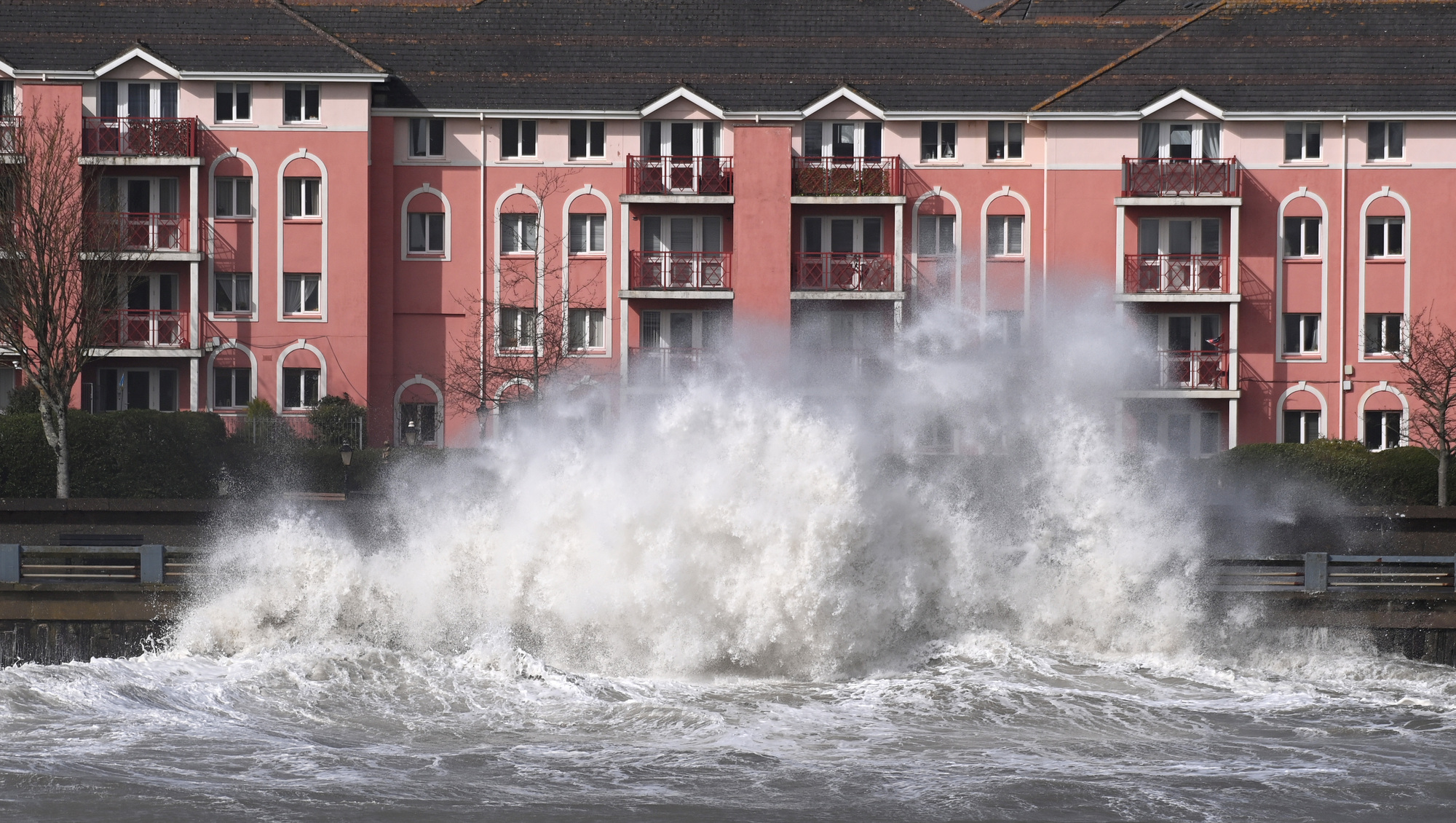
High seas crash over the seafront in Youghal, Co Cork, in April. An increase in the number of fierce storms and the extreme weather events which have latterly been battering the Irish coast has seen many vulnerable areas exposed to greatly graver threats from the waters which surround us. Picture: Eddie O'Hare

Rising sea levels triggered by global warming are affecting large tracts of the globe from almost the entire Atlantic seaboard of America, to large sections of the Indian sub-continent, and Bangladesh in particular, through to small low-lying island nations in the Pacific and Indian oceans.

In Ireland, the effects have triggered concerns about rapidly increased levels of coastal erosion which are affecting individual homeowners, littoral communities, and huge numbers of historic monuments and heritage sites in danger of falling into the sea.

An increase in the number of fierce storms and the extreme weather events which have latterly been battering the Irish coast has seen many vulnerable areas exposed to greatly graver threats from the waters which surround us and it is time that concerted action from central and local government is put in place to counter the growing risk.

While the Government is in the process of establishing a ‘hazard map’ of the most at-risk points along our coastline, which is expected to be completed next year, the frailty of hundreds of easily identifiable sites is ominous.

Coastal erosion has been a fact of life for Irish communities almost for as long as they have been established, but climate change has clearly exacerbated the process and there is now obvious need to start taking the necessary steps to remedy at least the most pressing instances.

The creation of the hazard maps — recently confirmed by the Office of Public Works — is a start to the necessary work but, in the broader picture, there are also almost 140,000 recorded archaeological sites and monuments in the country, but there is no data existing on the threat to them from climate change.

Data is also lacking when it comes to identifying sites located on the coast and impacted by erosion. Aside from individuals and communities at risk, Martello towers, castles, historic houses, and promontory forts are also under threat and existing maps previously used to predict the risk of coastal collapse to such structures are considered inaccurate.

In the 2019 Climate Change Sectoral Adaptation Plan for Built and Archaeological Heritage, maps showing predicted rates of erosion by 2050 are regarded by some as “optimistic” as such estimates failed to take climate change into account.

What is needed is a national coastal erosion action plan, because such is the rate of ongoing attrition, if steps are not taken now, it might soon be too late to do anything about it.
Modi’s BJP is losing its shine

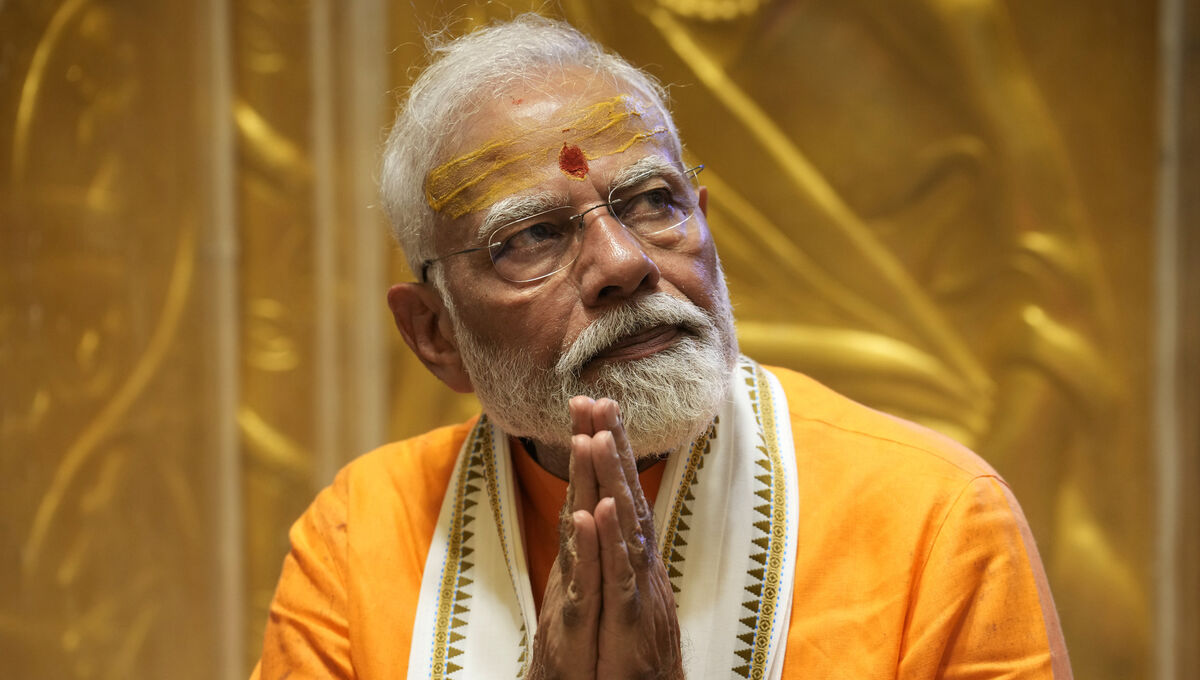
Indian prime minister Narendra Modi's vision of India as a 'Hindu nation' is in stark contrast to the secular state promoted by others. Picture: Rajesh Kumar/AP

The single biggest election we will see this year is currently at its half-way point in the world’s biggest democracy.

However, like many others in this “year of elections”, it is marked by rancour, scandal, incendiary speech, the threat of authoritarianism, and cries of foul play against the existing administration.

India’s ongoing general election campaign, which started on April 19, is a convoluted affair — as well as being extremely contentious. It involves some 969m voters, 2,600 parties, 15m election officials, and even one polling booth which is situated 15,000ft up in the Himalayan mountains.

For one man, however, the seeking of a third term in office has gone from being a done deal to something far less certain. That man is prime minister Narendra Modi, whose BJP party is widely expected to win an outright majority.

In 2014, under Mr Modi’s leadership, the BJP became the first party to secure a parliamentary majority in India in three decades, and it did even better in the 2019 election.

This time around, there was even talk of the party winning 400 of the 543 seats in parliament — which has not happened since 1947.

However, with accusations of the BJP bringing the judiciary, the media, and the election commission under its own control, the apparent strength of the government is under greater scrutiny. While Mr Modi speaks constantly of economic growth and driven infrastructural growth, that is not something being felt everywhere in the country.

Also, his vision of India as a “Hindu nation” is in stark contrast to the secular state promoted by others — including the previously all-powerful Congress party — and has led to accusations of Mr Modi creating an “illiberal democracy”.

On the economic front, while Mr Modi constantly lauds his party’s achievements, the feeling among many voters is of disbelief. While the unemployment rate is only 5%, the rate among under 25s is close to 18%. However, given that nearly half the population is under 25, this is a pressing issue.

So too is the fact that while Mr Modi and the BJP have created more billionaires than at any point in India’s history, inequality is now greater than at any point in the country’s history. It seems that Mr Modi will be re-elected when the votes are finally counted next month, but his position of strength will be tarnished by the fact that he has polarised the country more than any previous Indian leader.

Unrest in New Caledonia

For the past week, deadly civil unrest has roiled the French overseas territory of New Caledonia in the South Pacific, the latest flashpoint in a decades-long tussle over the role of Paris in the affairs of the island.

Violence erupted on the island after French legislators approved a constitutional amendment to allow recent arrivals to vote in provincial elections, prompting local leaders to fear a dilution of the vote of the indigenous Kanak people.

At least six deaths have been reported, and the French authorities have flown in an estimated 1,000 added security personnel to try and quell the violence, restore order, and allow trapped tourists to return home. Protesters have set vehicles, businesses, and public buildings alight and blockaded the main road between the capital Noumea and La Tontouta International Airport, in the worst violence seen in decades.

New Caledonia has a long history of pro-independence tensions and the French government will have to tread carefully if this current unrest is not to turn into a full-blown war of independence. The similarities between this and what happened in Algeria between 1954 and 1962 are very obvious to many French people.

CLIMATE & SUSTAINABILITY HUB

More in this section

Revoiced

Newsletter

Sign up to the best reads of the week from irishexaminer.com selected just for you.

Cookie Policy Privacy Policy Brand Safety FAQ Help Contact Us Terms and Conditions

© Examiner Echo Group Limited