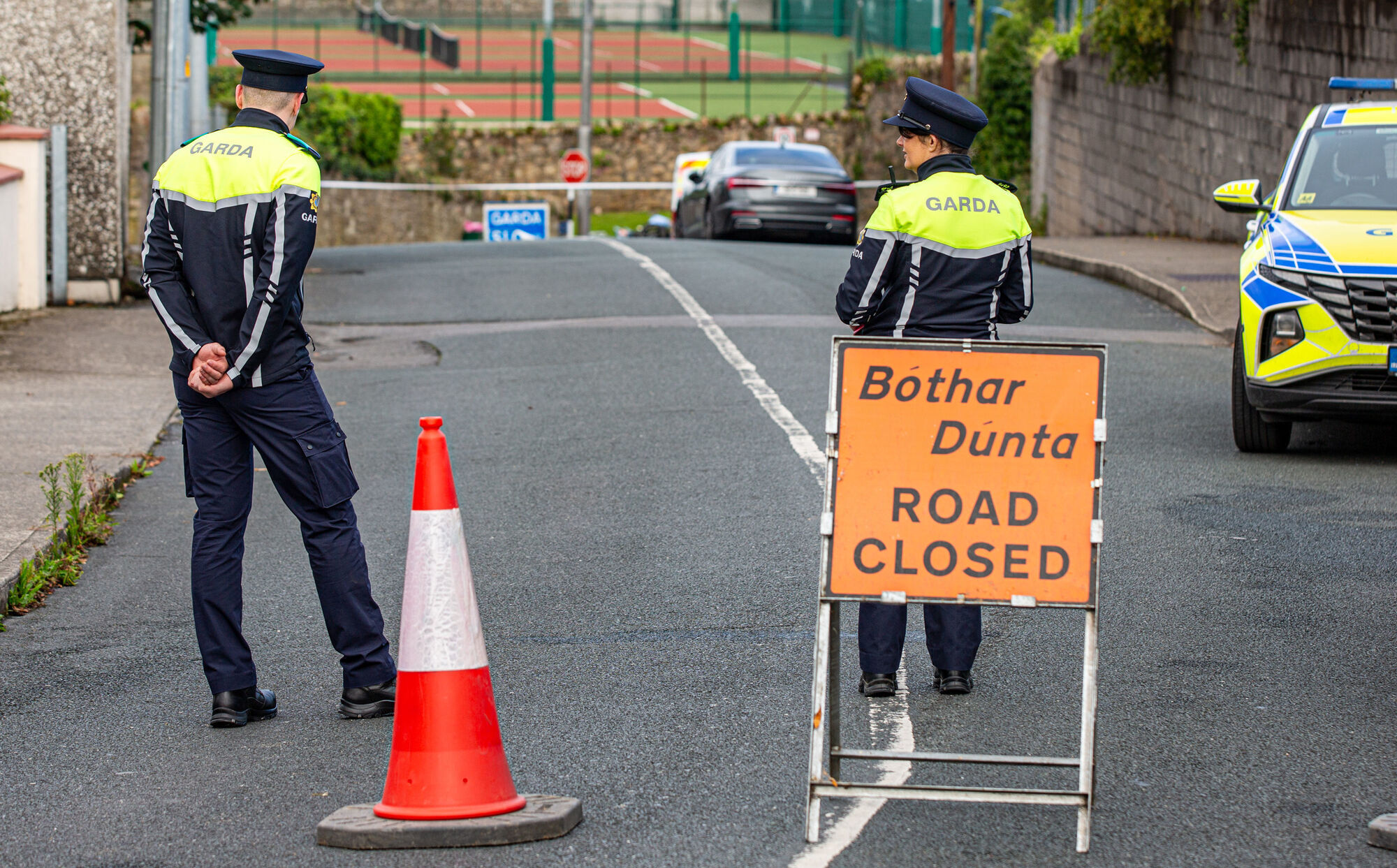
News that many of the speed limits for Irish drivers are to be lowered can only be described as a necessary development after a shocking year to date of deaths on Irish roads.
Action was certainly required, and the announcement that Jack Chambers, the junior transport minister, is to bring the new speed limits to Cabinet is unfortunately timely: It coincided with news of a driver being killed in a two-car crash in Carlow.
The proposed new speed limits take 20km/h off the maximum speed allowed on national secondary roads — down from 100km/h to 80km/h — while the speed limit on local and rural roads would be lowered from 80km/h to 60km/h.
The latter adjustment appears to be the priority — Mr Chambers stated yesterday that those rural and local roads make up 85% of the national road network and account for 75% of fatalities.
Anyone who has driven on Irish country roads will appreciate that, in some instances, the physical infrastructure is not fit for purpose. If the roads themselves are unsafe for the high number of vehicles now using them, then that becomes another factor which increases the dangers faced by motorists.
However, in the small print of this week’s announcement there is a puzzling complication — lowering the speed limits requires legislative changes, and the minister of state envisages local authorities implementing those changes through 2024 and 2025.
This doesn’t offer reassurance that we will urgently tackle a problem which is contributing to deaths on our roads. No one is in favour of hasty legislation being enacted which might later be challenged, but this is a crisis which demands action — action on the part of politicians moving swiftly, and action on the part of those authorities charged with putting new laws into effect.
Must some parts of the country wait until the year after next to benefit from this measure?
The justice minister said earlier this week she was open to all options on improving road safety. It is a grim irony that speed in implementing such options is so important.
Drowning tragedies
The sunny spell being enjoyed for the last few days has led many people to seek out the water — those rising temperatures have made one last splash in the sea before the autumn really closes in irresistible to thousands.
Unfortunately, tragic events around the country have also provided a grim reminder of the potential dangers of water sports.
In the last couple of days we have learned that a man in his 80s and a girl of seven died in the sea near Curracloe and Fountainstown, respectively, while a teenage boy died off Passage West at the end of August.
The entire country was justifiably shocked by the death toll in car crashes in August, particularly those in Tipperary.
September is reminding us, however, that danger is not confined to our roads.
There is a whole genre of swimming books which has emerged in recent years, one which celebrates the empowering experience of “wild” swimming in particular.
The benefits of that experience are undeniable — there is no doubt that the health dividend of communing with nature through swimming is immense, and the sea is a vast natural resource available to thousands of us.
However, we must also remember that the sea is an untamed environment with the potential to endanger the lives of even accomplished and experienced swimmers.
The recent tragic events in Cork and Wexford may lead to an outcry similar to that which greeted road deaths, but the solution may not be quite the same. In the case of the recent road deaths, the Government’s response, as noted, has been to introduce legislation addressing speed limits in an effort to improve safety.
Such a formal approach would not be suited to swimming, which by definition is largely unregulated, but stronger education programmes certainly seem necessary.
Public safety warnings about the potential dangers of swimming in our seas, rivers, and lakes, and specific initiatives to educate and upskill the public when it comes to basic principles of water safety, would both be welcome.
Green giant
International sport has a Gallic flavour for the coming weeks, with the Rugby World Cup about to kick off in France, and Ireland facing France in tonight’s European Championships qualifier in the Parc des Princes in Paris.

The soccer side’s preparations were overshadowed this week by the loss of Evan Ferguson to injury.
The Brighton star is regarded as one of the hottest prospects in the Premier League — he hit three goals against last weekend Newcastle United — and his late withdrawal led to widespread gloom about Irish chances of a win.
It also led to a certain amount of paranoia, with some observers reading quite a lot into Ferguson’s absence and speculating that he might be about to follow the examples of Declan Rice and Jack Grealish — other Irish-qualified players who eventually threw their lot in with England.
Unfortunately for the conspiracy theorists, Fifa’s own rules declare that Ferguson’s appearances for Ireland bar him from switching his allegiance now, while the player’s own comments argue strongly against that possibility.
Unlike Rice and Grealish, who were raised in England, Ferguson is a native of Meath. He has said if he ever did switch to England, he “wouldn’t be allowed back”. His future certainly looks green.
Read More
CONNECT WITH US TODAY
Be the first to know the latest news and updates