Irish Examiner view: Navalny trials
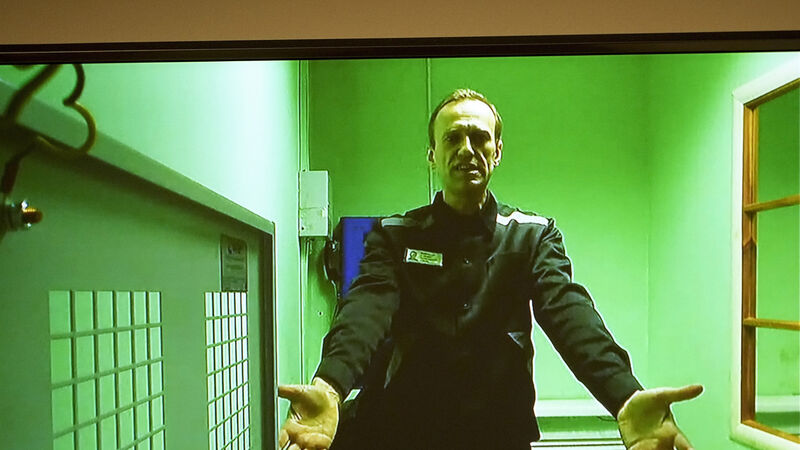
Russian opposition leader Alexei Navalny is serving sentences totalling 11 and a half years. Picture: AP Photo/Alexander Zemlianichenko, File
It is 50 years ago that the Soviet dissident Aleksandr Solzhenitsyn published his eviscerating real-life accounts of servitude in the Russian forced labour camps. The Gulag Archipelago defined the state’s comprehensive and systematic use of terror and repression against its own people.
Post-publication, the Nobel literature prize winner lost his Soviet citizenship and relocated via West Germany to the US. He returned to Russia in 1994 before dying in 2008.
Little is known about Vladimir Putin’s opinions of Solzhenitsyn although the author held complex views about the merits of Russian nationalism (as opposed to Communism) and about the relationship between Moscow and Kyiv which can be read as echoing those currently espoused in the Kremlin.
While Solzhenitsyn was persona non grata during the regime of Leonid Brezhnev, the USSR had learned enough not to use the practices of the Gulag system against him.
Not so in the case of jailed opposition leader Alexei Navalny, Vladimir Putin’s chief critic, who will face a preliminary hearing on Tuesday which could keep him in prison for decades. Navalny, 46, was arrested in January 2021 upon returning to Moscow after recuperating in Germany from nerve-agent poisoning which he attributed to Russian secret services. He is already serving sentences totalling 11 and a half years.
Solzhenitsyn was instrumental in helping to discredit the Gulag system by dragging it into the daylight. But he understood, and stated, that the basic structure had survived and could be revived and expanded by future leaders. As is happening now.
CONNECT WITH US TODAY



Be the first to know the latest news and updates