Irish Examiner view: Refugee aid a long haul
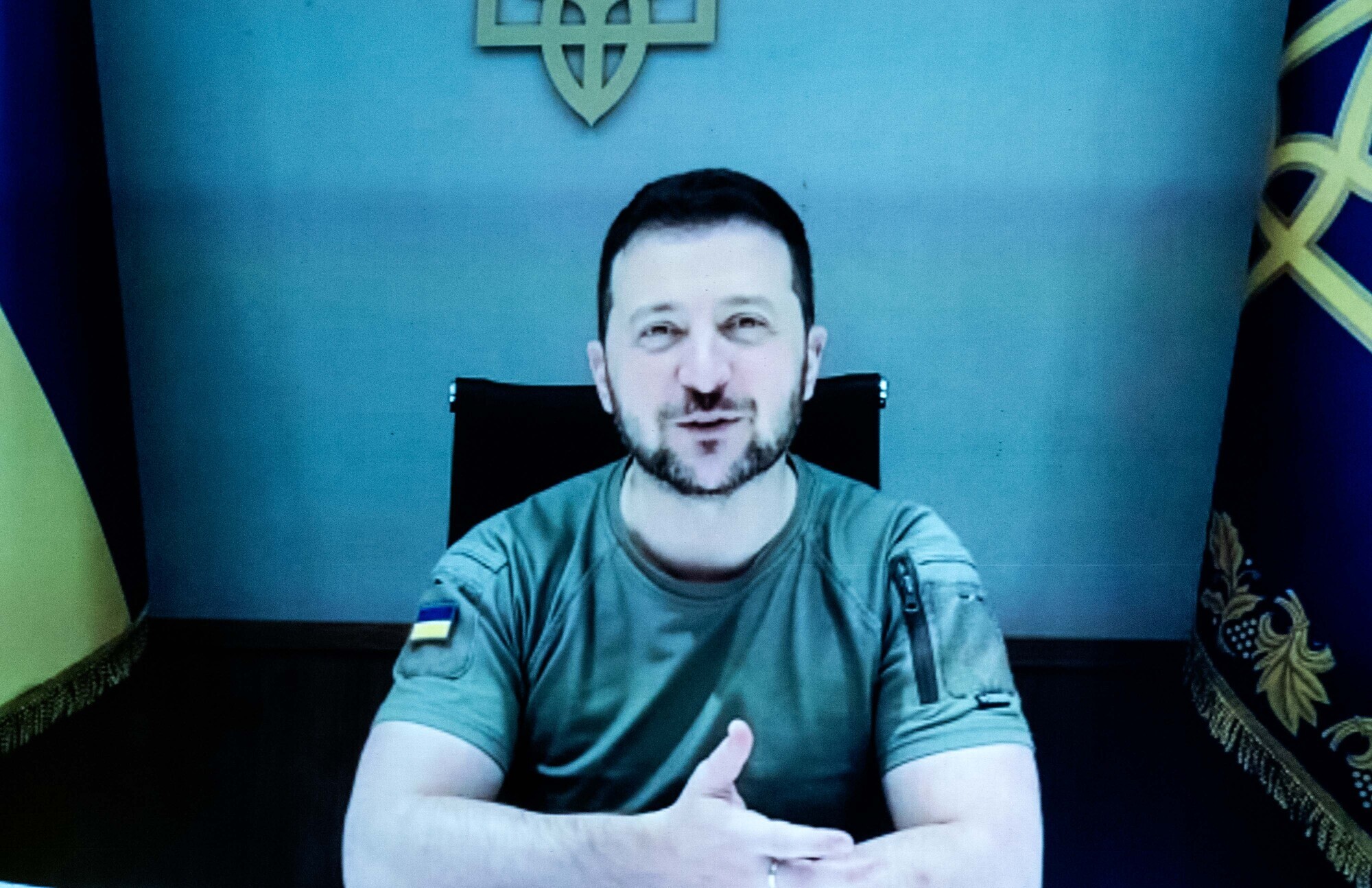
Ukrainian President Volodymyr Zelensky addressing further and higher education students in the Helix, DCU, via videolink. Picture: Sam Boal/RollingNews.ie
Since Russia’s criminal invasion, more than 8m citizens of Ukraine have been forced to leave the country. Another 5m have been displaced within its borders.
Neighbouring Poland is sheltering 1.5m, the largest share of the refugee population.
Kyiv alleges that more than 16,000 children have been forcibly deported to Russia, or to areas controlled by Moscow-backed separatists.
The butcher’s bill includes nearly 200,000 of Vladimir Putin’s regular army, conscripts and mercenaries. The Ukrainians have suffered some 100,000 casualties. Up to 40,000 civilians have lost their lives.
More than 65,000 war crimes have been reported, says EU justice commissioner Didier Reynders, while UN investigators accuse Russia of criminality on a “massive scale” including bombings, executions, torture and sexual violence.
One third of Ukrainian land has been seeded with mines while the “active” frontline runs north to south along some 1,500km. The World Bank expects the country’s economy to contract by 35% this year; the war has caused €35bn of losses in the agricultural sector.
The costs of replacing infrastructure wrecked in the past 12 months is in the order of €150bn.
The brutal truth facing the western allies of Ukraine, and Ireland is counted among that number, is that we are only at the beginning of a conflict which has unleashed mediaeval cruelties which, with the presence of bandit militia, belong to conflagrations of yesteryear such as the Hundred Years War rolling across historic frontiers and territories.
For the political leaders of Ireland, all those who demonstrated, and for all citizens of the Republic we will have to dig deeper into our reserves of generosity before the end of 2023.
The West is now interlinked with the future of Ukraine by becoming its supporter and advocate; a safe haven for its people; its armoury and its banker. Even if a route to ceasefire can be found — and there is no sign of that — there will remain a long-term commitment to be its friend and to share the heavy lifting if that country is to escape the fate of being a bowed and bloodied colony at the edge of a military tyranny.
That obligation is upon us and will not recede even as the fighting peters out in, who can say? 2024? 2025? 2030?
During the recent three-part Panorama documentary on the schism with the West, some time was spent explaining the meaning of the special word ‘Vranyo’ and its place in the Kremlin’s quiver of diplomatic responses.
An American journalist laid it out from the perspective of a Russian: “You know I’m lying, and I know that you know, and you know that I know that you know, but I go ahead with a straight face, and you nod seriously and take notes.”
So far Ireland has provided shelter for 50,000 Ukrainians, and opinion polls suggest that public sentiment is hardening against increasing that number. But we must, realistically, anticipate and prepare for more before proper discussions, shorn of Vranyo, can start.
Over the weekend the last survivor of a massacre at Oradour-sur-Glane, a French village obliterated by the Waffen SS in 1944, was commemorated after he died at the age of 97.
It is now mainly students of history who remember the unbridled brutality carried out at a picturesque village near Limoges by elite troops who just a few weeks before were fighting in Kharkiv against Ukrainian forces of the Red Army.
The next generation of historians will study what has happened at Bucha, at Mariupol, at Makariv, at Izium and other locations and will ask what neighbouring countries did to help people at deadly risk from an ancient cruelty. Those who have spent their time making “Ireland is full” posters will have a lot of explaining to do.