Irish Examiner View: Will history repeat itself in this war?
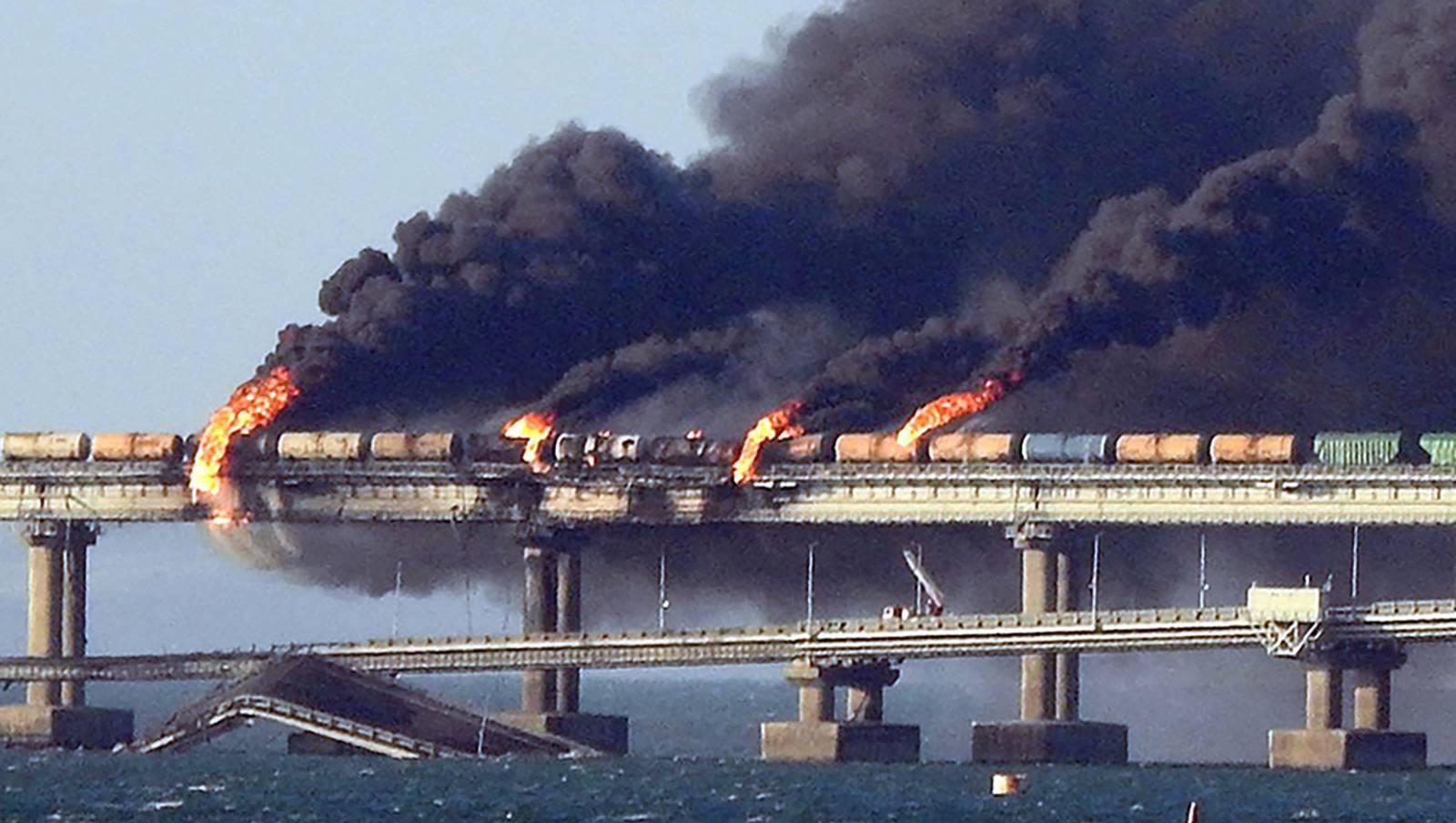
The explosion on the Kerch Bridge was hailed as a turning point, but Sergei Surovikin’s promotion to unified commander of the Russian forces may be more significant. Picture: AFP via Getty Images
The ongoing conflict in Ukraine seems to reach a different turning point almost weekly, with observers keen to nominate “this explosion” or “that declaration” as the decisive fork in the road for the entire war.
In recent days, the explosion on the crucial Kerch Bridge — a vital link between Ukraine and Crimea — was quickly selected as one such turning point, but a subsequent appointment may turn out to be far more significant in the long run.
Sergei Surovikin’s promotion to unified commander of the Russian forces in the conflict meant the elevation of a man with a chequered past to a position of real influence.
When Russia intervened in Syria on the side of Bashar al-Assad, one of the more notorious results was the savage bombardment of Aleppo in 2016 by that Russia-Syria coalition.
Surovikin was one of those closely associated with that operation — in a report published by Human Rights Watch, he was named as one of the commanders who may bear command responsibility for human rights violations.
Within 48 hours of Surovikin’s promotion to Russian commander in Ukraine, there were echoes of what happened in Aleppo — Russian rocket attacks targeted civilian targets in Ukraine, including a children’s playground and a major junction next to a university.
By turning to Surovikin, Russian president Vladimir Putin is signalling his country’s intention to refocus its efforts in Ukraine rather than explore an exit strategy in any serious way.
Given Surovikin’s track record in Syria, the fear must now be that a city in Ukraine may suffer the same fate as Aleppo. The new commander’s early tactical decisions suggest as much, unfortunately.