Irish Examiner view: Role will be to modernise and change
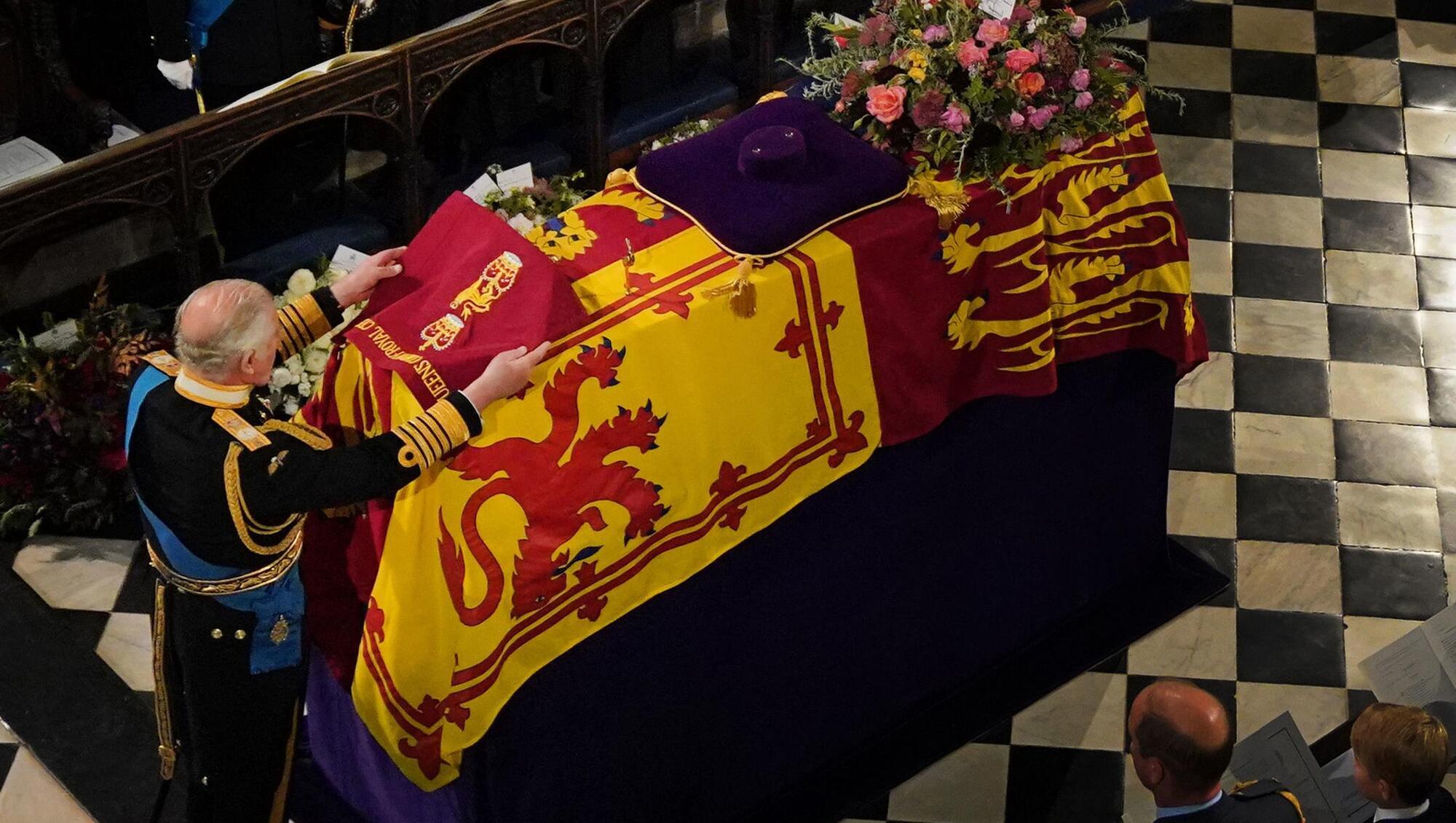
King Charles III
Irish Examiner view: Role will be to modernise and change

King Charles III places the Queen's Company Camp Colour of the Grenadier Guards on the coffin during the Committal Service for Queen Elizabeth II held at St George's Chapel in Windsor Castle, Berkshire. 

While the solemn and dignified funeral and burial of Queen Elizabeth II in London yesterday closed a chapter in the history of the British monarchy, it opened another new volume for her successor, King Charles III.

Undoubtedly — and the new monarch appears to have already grasped this — Queen Elizabeth II will be a very hard act to follow, both nationally and internationally, and the love and devotion shown to her memory will be hard for her son to recapture. In fact, the realm over which his mother ruled could realistically diminish considerably in the wake of her death, with the discussion in many countries about republicanism having already gathered pace.

Charles, in his role as Prince of Wales, was seen very much as an ‘interventionist’ member of the royal family, outspoken on political issues and lobbying the ministers of his mother’s realm on matters that interested him personally. He had often been touched by controversy as a result.

The new king, before his ascension to the throne, admitted he will not be able to play a similar role as the head of state of a constitutional monarchy. He will be expected to give royal assent to laws passed by the elected parliament. In recent years, that assent is considered a formality, with no input from Buckingham Palace.

Avoiding controversy

For the system as it exists to survive, Charles must be an uncontroversial and politically neutral figure, even if his express wish is to be a conduit for change. There is, of course, a touch of irony in the fact that the two previous King Charleses were controversial figures.

King Charles I entered parliament in 1642 to arrest parliamentarians for treason; a revolution which saw Britain become a republic temporarily duly followed. King Charles II was restored to the throne in 1660 only on the basis that the monarch accepts the will of the democratically elected parliament of the day. King Charles III will be bound by the same laws.

But, even in the 11 days since the queen passed away in Balmoral, the sands of change have shifted and what’s ahead of Charles is a different world than that over which his mother ruled. The post-colonial world he has inherited is shrinking and he has already acknowledged his own deepening understanding of the legacy of slavery in the empire his family ruled over.

The queen was the glue which held the Commonwealth together and it appears inevitable that her successor will increasingly see further states depart from that family of nations. King Charles’s job will be to modernise, effect generational change, and make the monarchy seem more progressive and in touch — for its own relevance and survival.

It is unlikely Charles will ever be held in the same affection as his mother, but he nevertheless has a massive undertaking on his hands as he speaks for the nation as it faces into a period of turbulence. The manner in which he assumes that role will be his legacy.

x

More in this section

Revoiced

Newsletter

Sign up to the best reads of the week from irishexaminer.com selected just for you.

Cookie Policy Privacy Policy Brand Safety FAQ Help Contact Us Terms and Conditions

© Examiner Echo Group Limited