Irish Examiner View: Drought around the world paints a depressing picture
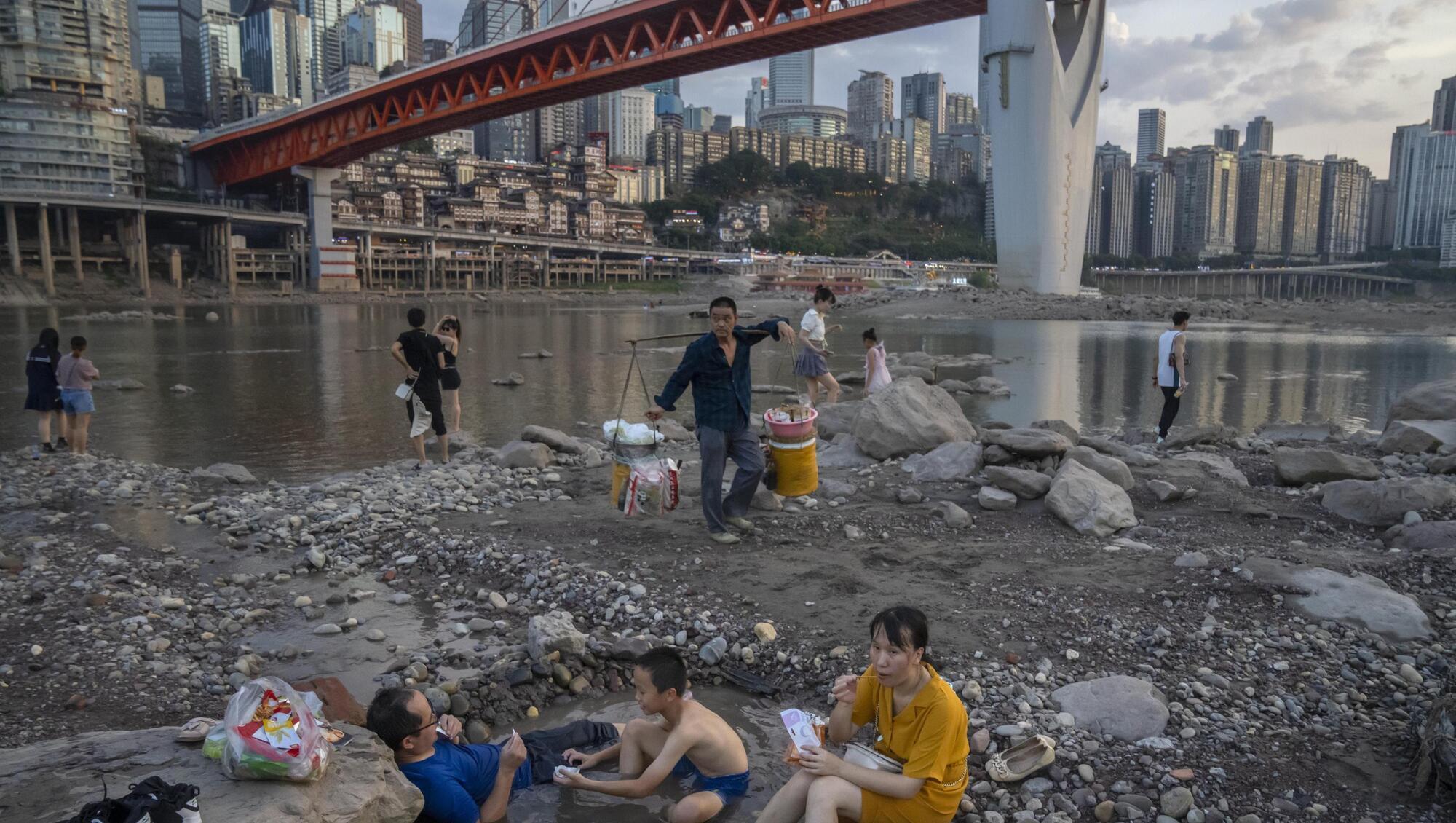
People sit in a shallow pool of water in the riverbed of the Jialing River, a tributary of the Yangtze, in southwestern China's Chongqing Municipality. Picture: Mark Schiefelbein/AP.
This year has become the year of the drought.
Global weather conditions have created serious drought conditions in Europe, Central Africa, and China, and brought with it massive implications for agriculture, economic wellbeing, and even national security.
Throw in the effects of drought on the wildfires which have scorched much of southern Europe and large tracts of western America, and the world is facing a situation that scientists predict will be the worst in 500 years.
This drought might be throwing up some interesting artefacts as rivers, lakes, and reservoirs run dry.
Roman camps, ghost villages, and even a Second World War battleship have been revealed by Europe’s receding waters. In the US, gruesome Mafia secrets have come to light as Lake Mead — the biggest reservoir in that country — has seen water levels drop by several metres, and in China, the mighty Yangtze has virtually dried up.
At Decin in the Czech Republic, on the Elbe River near the German border, there is a ‘hunger stone’ and it is one of dozens found on European rivers. They mark river levels during historic droughts and warn future generations of the famine and hardship that follow every time they become visible.
The earliest visible date recorded on the Decin stone is 1616, although there are traces of inscriptions dating back to droughts in 1417 and 1473.
It is, researchers say, “chiselled with the years of hardship” and told of how these events “brought a bad harvest, lack of food, high prices, and hunger for poor people”.
The European hunger stones are appearing increasingly regularly — and it’s not just northern Europe that is affected. Italy’s River Po is at a 70-year low and Lake Como is drying out rapidly. In Serbia, the Danube has fallen to its lowest level in a century and there are similar scenes in France, Spain, and Portugal.
The Chinese are increasingly worried about food production and authorities are deeply concerned about this year’s autumn harvest and in Africa, where drought is not uncommon, this year’s rainy season was the driest in 70 years.
All of this paints a pretty depressing picture and does not bode well for the global collective climate future.
And the problem is that while it took hundreds of years to reach the level of crisis playing out in the world right now, it will take serious, committed effort to produce any mitigating effects.
CLIMATE & SUSTAINABILITY HUB