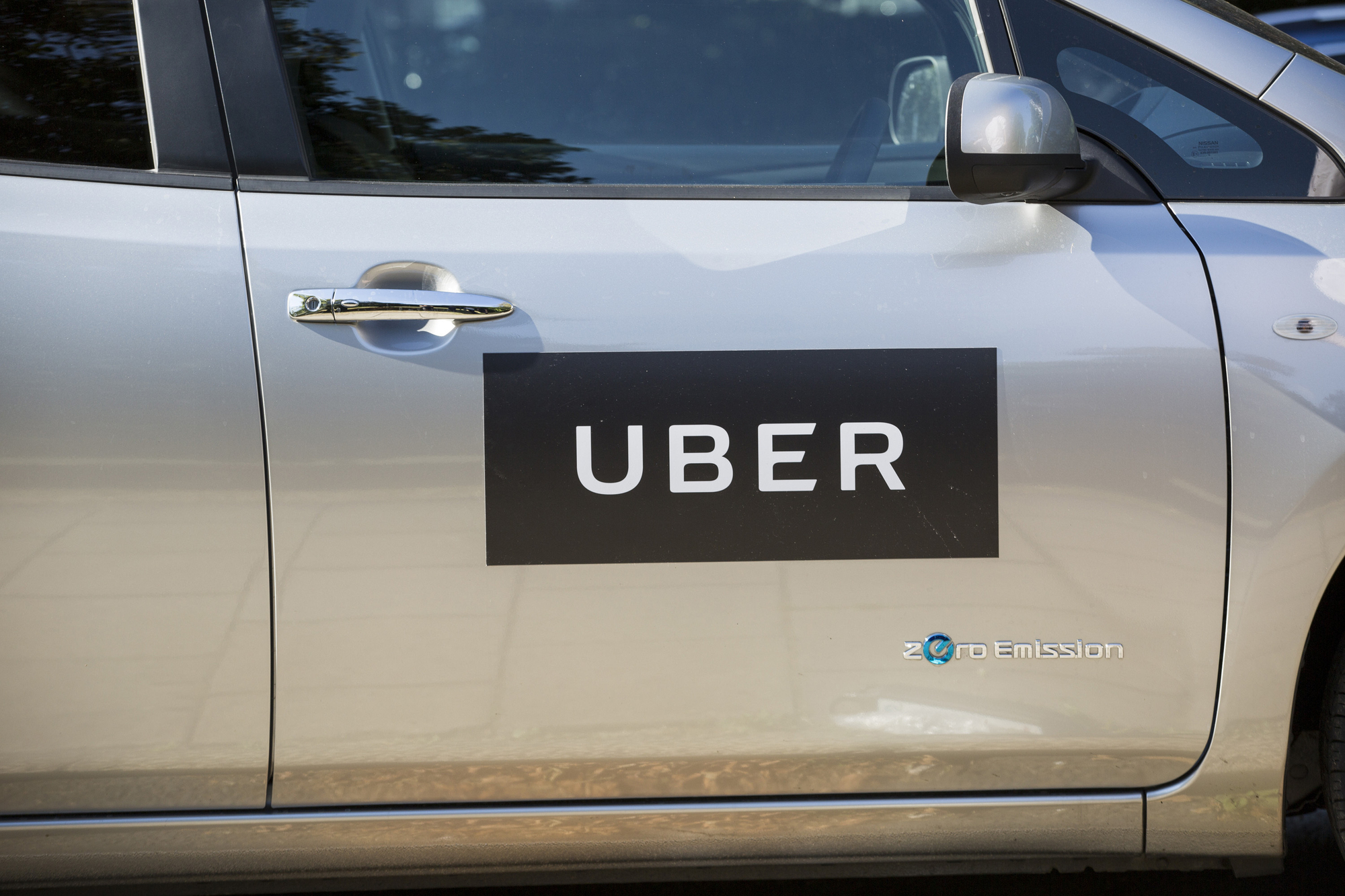
Amidst the swathe of allegations about how the taxi technology company Uber conquered many of the world’s city and road networks is one that tells us much about the levels of surveillance to which we can now be subjected.
The Irish lobbyist Mark MacGann, who was born in Longford and raised in Roscommon, has been revealed as the whistleblower behind the leaking of files which expose the high-level manoeuvrings and political heft applied to stimulate the explosive growth of California-based Uber globally.
The cache of 124,000 internal records was leaked by MacGann to The Guardian and shared with the International Consortium of Investigative Journalists and 40 media partners, including The Irish Times, the BBC, and The Washington Post.
MacGann, who left Ireland in the 1980s, was chief lobbyist for Uber in Europe, the Middle East, and Africa between 2014 and 2016. In an interview he described how, on his first day, he was taking an Uber taxi from London’s City Airport and emailed a senior executive to say he was in traffic.
“I know,” came the reply, “I’m watching you on Heaven — already saw the ETA!” “Heaven”, otherwise known as “God View”, was the euphemism used by Uber employees for a back-office application which allowed them to monitor the real-time movements of any customer anywhere in the world.
In a statement, Uber said tools such as God View, which it stopped using in 2017, “should never have been used”. But companies which offer commercial services, particularly those which claim they are disrupting existing structures for the public good, should be legally obliged to disclose the level of deliberate intrusion they make into the private lives of consumers. And suffer severe consequences if they do not.
Uber did not really establish itself in Ireland in the same manner that it has in, for example, London, Paris, Brussels, Sydney, Johannesburg, and other destination cities. But this was not, as the Uber Papers make clear, for lack of lobbying and brokering of relationships, sometimes involving former government servants. It is even suggested that fine words about “the sharing economy”, one of those vacuous phrases which bedevil contemporary politics, were drafted for inclusion in a Fine Gael election manifesto by Uber wordsmiths.
Ultimately, and for now, the Irish taste for regulation has prevented the inexorable march of Uber. The law states that anyone carrying passengers for profit has to be licensed. There is a limited Uber service in Dublin but only for licensed taxi drivers, which also applies in some British cities.
We are unlikely to have heard the last from Uber, a company valued at €41bn on the New York Stock Exchange. A company which operates in 10,000 cities, and 70 countries and accumulated around €24bn in gross bookings in 2021.
If you hear talk in the Dáil about taxi deregulation in the future, ask one question: What’s in it for Uber?


CONNECT WITH US TODAY
Be the first to know the latest news and updates