Irish Examiner view: Systems that were tightly strung are now broken
Delays at airport is emblematic of a wider issue in the labour market
Irish Examiner view: Systems that were tightly strung are now broken

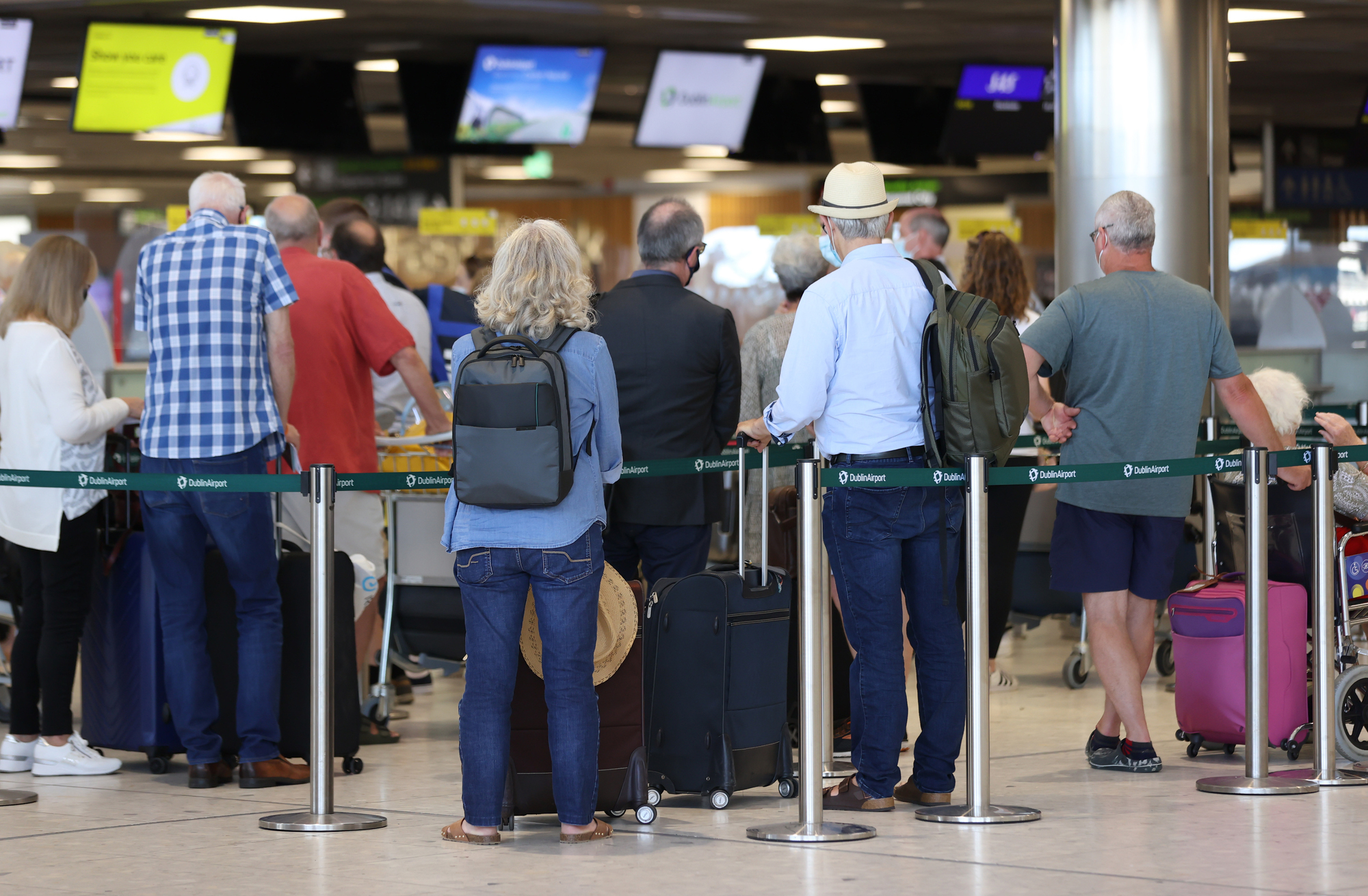
Long queues to clear security are expected to worsen in the lead-up to Easter.

Covid’s long tail was obviously always going to have an impact on trade, transport, and travel as well as public health. At the current rate of progress, it may be five years before service levels approach anything like those which existed before 2020. Strange as it may have seemed then, we may look back fondly on that period as gilded days.

The concept of air travel as a pleasurable experience and “part of the holiday” disappeared around the time of shoe bomber Richard Reid in 2001, and the transatlantic liquids terror plot of 2006 ensured that it never returned.

Waiting in long crocodiles to clear security has been a fact of life for two decades but it is depressing news that the queues at Dublin Airport, already lengthy, will only get worse in the weeks leading up to Easter. 

As some people say they have missed flights while spending two hours in security it is prudent, although tiresome, to get there much earlier, particularly as there is not always a corresponding advance in bag check-in times by the airlines. 

Ryanair is advising its customers to arrive “at least” 3.5 hours ahead of travel and is facilitating an earlier bag drop.

The problems are caused by staff shortages following the collapse of international travel during the pandemic. The recruitment, training, and background security checks for all staff working at an international airport take weeks. 

But the problem is emblematic of a wider issue in the labour market, which is that the enormous disruption caused by isolation policies has broken, perhaps forever, many of the systems, already tightly sprung, which we have relied upon to deliver goods and services just in time and at low cost. In the drive to eliminate so-called waste (for which read cost) we have also lost operational flexibility and safety margin.

In Cork, the Chamber of Commerce reports that shortage of skills rank consistently in the top three business threats identified every quarter. While this is most acutely felt in sectors such as hospitality, health, manufacturing, technology, and financial services, it is by no means limited in its impact. 

There is a crisis in childcare and social welfare. There is a crisis in driving and delivery, all areas which require licence approval, and some of which need Garda vetting.

Passport delays

In the Passport Service, there are 182,000 applications being processed with more than 11,000 registered more than six months ago, and 70% of those requiring the provision of further supporting documentation. One of the problems seems to be that there is a failure to acknowledge that 182,000 represents a “backlog” with Foreign Affairs Minister Simon Coveney stating that “all applications are being processed in the usual way”.

While civil servants can’t be blamed for delays caused because inadequate details have been provided the performance figures of 35 working days for first-time applications on Passport Online seem excessive. And the eight weeks required for An Post’s mail-in Passport Express service gives rise to a joke that if this is the rapid version then we would hate to be waiting for the normal service.

Hopes rest on a new document management system and a recruitment campaign which will double the number of staff within the Passport Service to 900 “in the coming months”. They will, however, be too late for Easter.

Meanwhile if 182,000, or a subset of it, does not represent a backlog for the Passport Service then at least the Department of the Environment has a clear idea of what constitutes a logjam. It has nearly 7,000 homes seeking improvements under the Government’s Better Energy Warmer Homes scheme with an average waiting time of more than two years.

The initiative is specifically aimed at people receiving social welfare payments such as fuel allowance, carer’s allowance, or the working family payment, those most at risk of energy poverty.

Environment Minister Eamon Ryan said the budget for the programme had been tripled this year.

And good luck with that. Have you tried to get a builder recently? There’s a skills shortage you know.

x

More in this section

Revoiced

Newsletter

Sign up to the best reads of the week from irishexaminer.com selected just for you.

Cookie Policy Privacy Policy Brand Safety FAQ Help Contact Us Terms and Conditions

© Examiner Echo Group Limited