Irish Examiner view: There is no place for rogue corporations
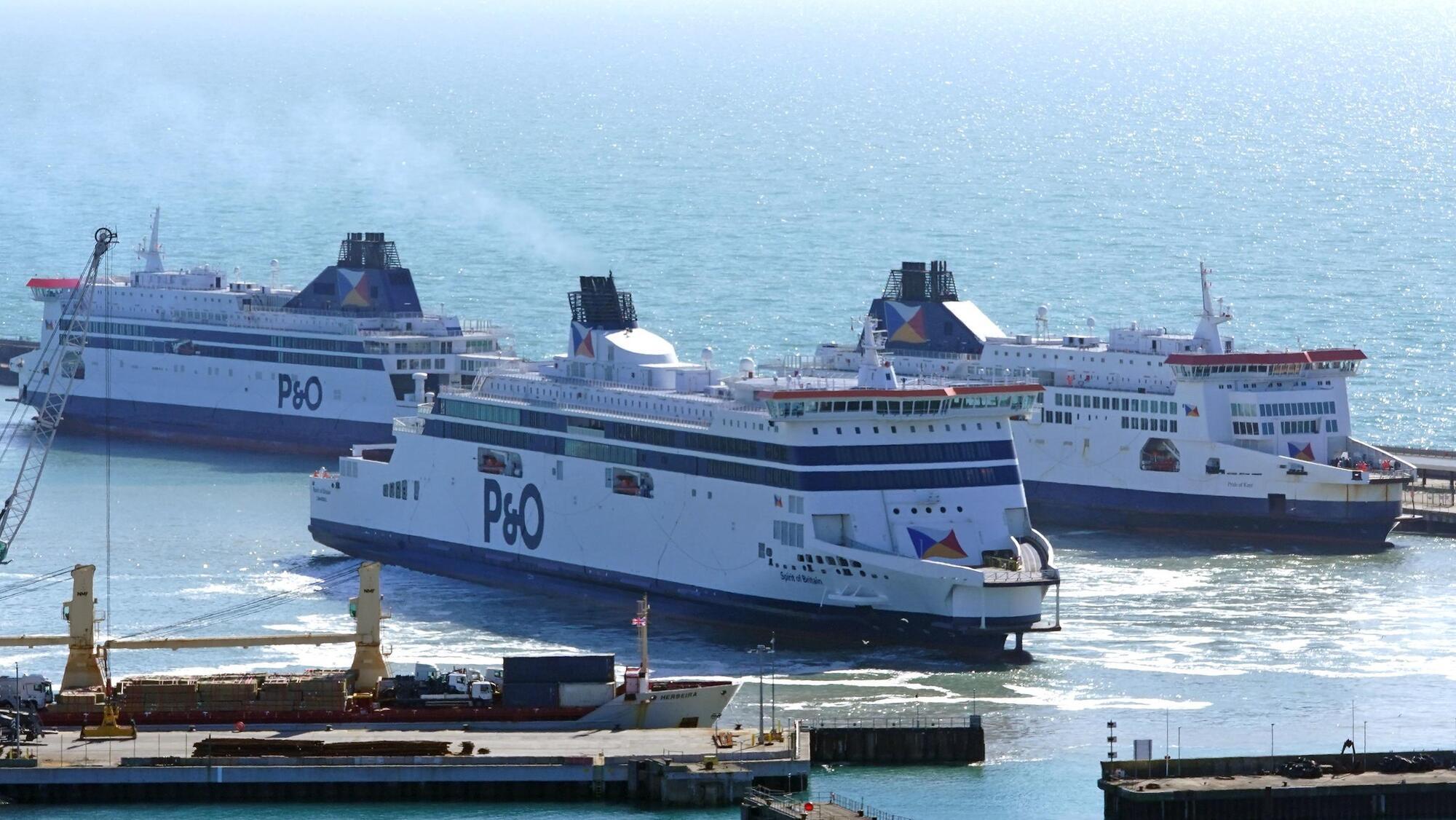
Three P&O ships moored in Dover on March 17 as the company suspended sailings ahead of its 'major announcement' which turned out to be a shameless illegal action against workers. Picture: Gareth Fuller/PA
It is not difficult to pick a side in the increasingly bitter and unpleasant P&O Ferries dispute, which has led to one of its vessels being detained at Larne in the North, as well as the suspension of services with Cairnryan in Scotland, and between Dover and Calais.
While the Dublin-Liverpool route is back in operation, sailings between Hull and Rotterdam have been reduced.
There have been many memorable moments where big bosses have been summoned before parliamentarians to give an account of themselves. Sometimes it has been an apologia (Rupert Murdoch: “This is the most humble day of my life.”). Sometimes brazen (Ex- editor Kelvin Mackenzie answering questions on Hillsborough coverage: “It was a fundamental mistake. The mistake was I believed what an MP said.”). Sometimes very good entertainment value (Fred ‘the Shred’ Goodwin of RBS squirming while being told that he had “destroyed a great British bank”.)
Never before, though, has evidence been quite as shockingly barefaced as that delivered by P&O Ferries chief executive Peter Hebblethwaite when summoned to explain the summary dismissal of 800 seafarers, many of them long-serving. Yes, the company knew what it was doing was illegal.
Yes, they would do it again. The cheque’s in the post.
The nub of his argument is that the ferries division is not viable unless it replaces its British crew with foreign workers on salaries averaging £5.50 (€6.60) an hour — below the minimum wage.
No prior knowledge appears to be required for anyone tempted to apply for one of the replacement jobs but “previous experience in hospitality institutions” is desirable.
Draconian cost management may be an acceptable argument for certain captains of industry, but it does not justify breaking the law. We look to leaders of commerce and capitalism to set an ethical rather than an amoral example.
While there is a subplot about Hebblethwaite being removed as a director under the UK Company Directors Disqualification Act 1986, that is not the main point.
Jesper Kristensen, chief operating officer, zooming in from the Dubai HQ of parent company DP World, made it clear that the plan had been blessed in advance.
Whatever the outcome, one decision should be easy to make. DP World already has substantial investments in the Thames and on the Solent and is enthused by the prospect of being a senior partner in that country’s development of freeports. But any corporation prepared to be so nakedly cavalier about the rule of law cannot be trusted to collaborate.
That lesson is clear and needs to be heeded, also, by all of Europe’s seagoing nations.
CONNECT WITH US TODAY



Be the first to know the latest news and updates