Irish Examiner view: That’s entertainment ― 60 years of RTÉ television
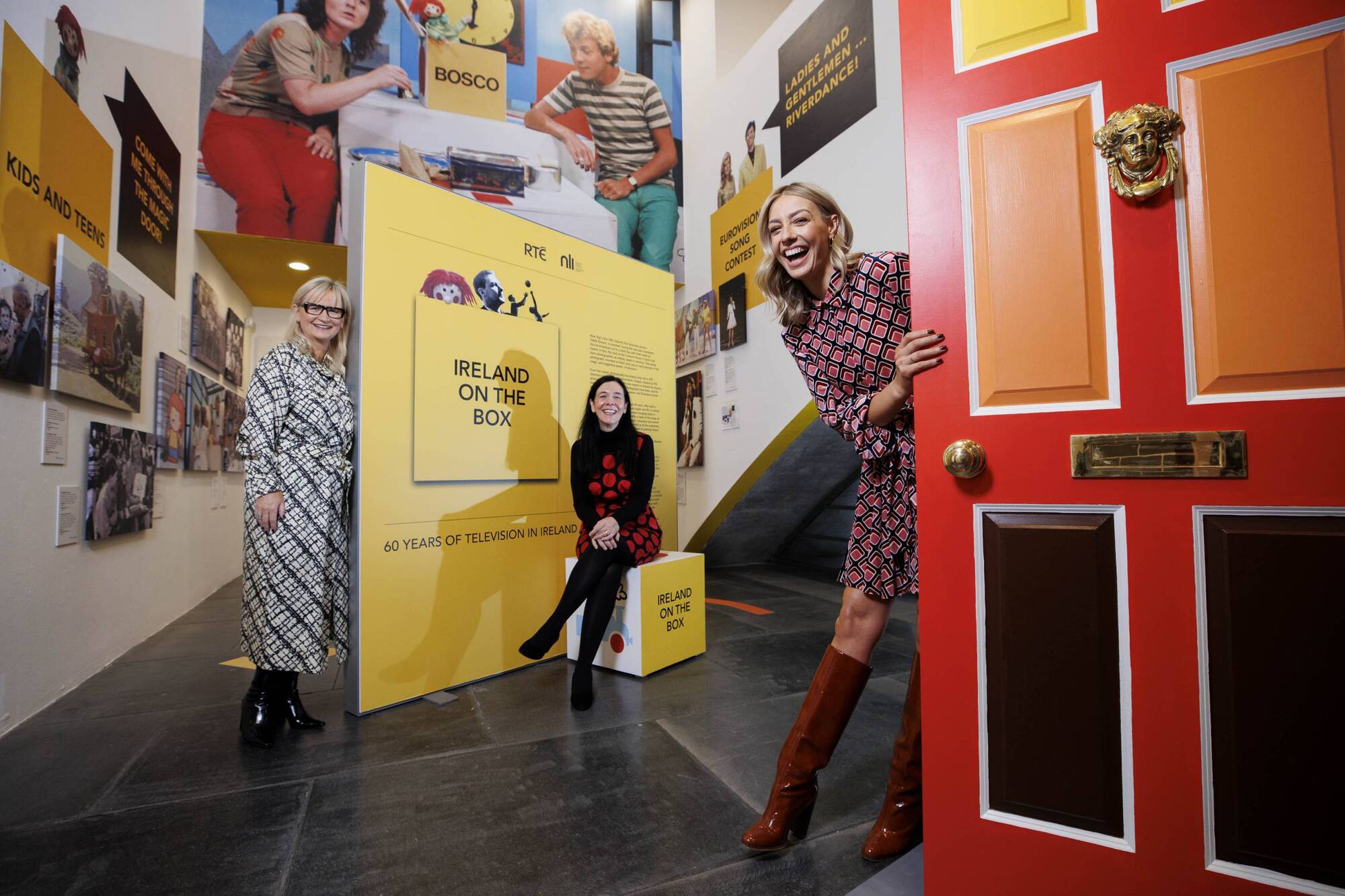
RTÉ director general Dee Forbes, National Library of Ireland director Sandra Collins, and RTÉ presenter Bláthnaid Treacy at the launch of Ireland On The Box, a photographic exhibition running at the National Photographic Archive, Dublin, to mark 60 years of RTÉ television. Picture: Andres Poveda
After RTÉ made its first television broadcast, 60 years ago tomorrow, on New Year’s Eve 1961, the authority chairman, the well-known personality Eamon Andrews, joked that the national symbol of Ireland, Kathleen Ní Houlihan, may in future become known as Cathode Ní Houlihan.
The anecdote is recounted by journalist and commentator Fintan O’Toole in his latest book, , and underlines the centrality and influence of the State broadcaster in the development of the modern Republic.
This has been reinforced during the days of the pandemic when readers and consumers, seeking news-gathering and commentary, have increasingly turned back towards traditional brands disparagingly written off, usually by critics with something to gain or an axe to grind, as “old mainstream media”. Some 90% of the population of the country turned to the State broadcaster as a primary source of information about coronavirus and the governmental response to it.
Next year RTÉ will face some challenging scenarios: The final shape of the Future of Media Commission report, with its thoughts on funding; the implications of the Online Safety and Media Regulation Bill; and the continuing struggle to achieve cost reductions. These were scheduled in 2019 to deliver savings of €60m by 2022 with some half of those being achieved in the next 12 months.
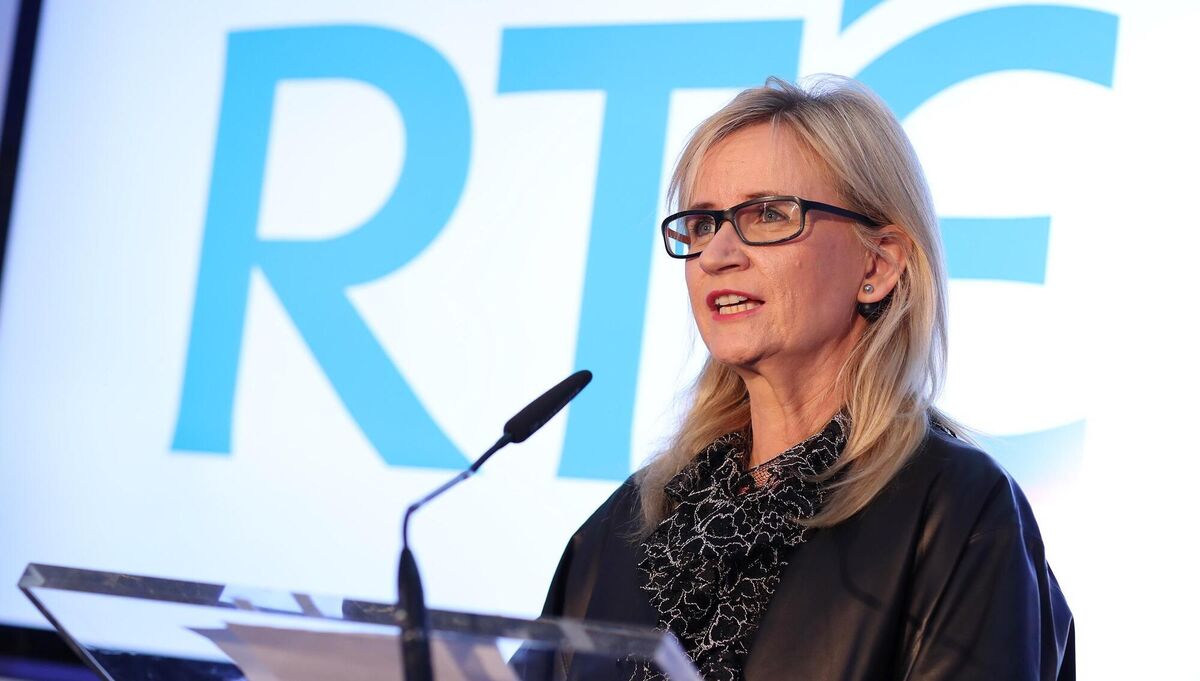
Director general Dee Forbes, in post since 2016, presided over a profit in 2020 after several years of losses but this was accomplished in part by a reduction of operating costs because of the impact of Covid-19 and the related government support provided to the organisation. Lockdown and the cancellation of sports events and other special activities meant that travel was reduced and working from home also brought financial efficiencies. While this facet might continue, everyone hopes that other events will return to normal. Funding will also have to be found to cover the symbolically important year of centenaries and anniversaries to follow.
The technological landscape itself continues to evolve quickly and the role of streaming platforms and the atomisation of audiences still has a distance to travel. Securing a constituency within the attention span of young people and even children is fundamental if they are to be persuaded to pay the licence fee, an essential component of RTÉ’s financial strategy in the years to come.
How much simpler it seemed back in 1961, as the first signals were relayed from the Kippure transmitter site in the Wicklow Mountains, but even then there were prescient comments from the first person to speak to the nation on the native service, president Éamon de Valera. “I must admit that when I think of TV and radio, with their immense power, I feel somewhat afraid. Like atomic energy, it can be used for incalculable good but it can also do irreparable harm,” said Mr de Valera.
He urged the new service to remember that Ireland was an old nation with distinctive characteristics and, in that spirit, one of the earliest programmes was a tale from a seanchaí, a rural storyteller — in fact, the actor Eamon Kelly, who delivered his lines in a Kerry accent. “There was a man long ago and a long time ago it was.”
While the political classes were apprehensive about the impact of the new national medium — one TD described it as the most effective tool of propaganda since the invention of the printing press — others had enthusiastic proposals about what its content could consist of. One suggested there should be programmes about countryside festivities such as the mummers. Another felt that it would be a valuable assistance in improving the standards of Irish dancing. There should also be more programmes about factories and manufacturing. Its role in promoting the use of Gaeilge was another aspiration. There was a general disinclination to take too many programmes from the BBC so gaps in scheduling were filled more regularly by US output.
The shape of TV to come was set by Gay Byrne’s , itself aligned to an American format. It even had its own early controversy when Mr Andrews resigned his post over what he saw as excessive political interference into content. It was, he maintained, a matter of freedom of expression.
RTÉ has had its share of controversies and legal challenges since its inception, prominent among them the dismissal of the entire RTÉ authority in 1972 by the then posts and telegraphs minister, Gerry Collins, for broadcasting a report of an interview carried out by one of its reporters with Seán Mac Stíofáin, Provisional IRA chief of staff.
It is unimaginable that such would happen today, or would be deemed acceptable by the citizenry, and given the challenges facing the world, this is to be welcomed.
The 2020 annual report identified an employee headcount of 1,866, which was an increase over the previous year attributable to the regularisation of individuals previously engaged as contractors or through agencies and those returning from unpaid leave.
What figures will be reflected in the next report will be the subject of keen attention given that the voluntary exit programme has been previously oversubscribed and that staff decisively rejected proposals for pay cuts, and reductions in sick pay entitlements and allowances. The broadcaster also said it planned to suppress posts and not replace retirees.
For Ms Forbes and her team, 2022 will be the year where the pedal has to be put to the metal if the proclaimed economies are to be realised. In parallel, revenues must be increased, and they will be hoping for improved performances in licence fee collection, or a significant increase in the fee, or both.
There is much to celebrate in its influence and impact on cultural life since RTÉ’s televisual journey began that Sunday evening 60 years ago. “GREAT HOPES IN TV SERVICE” proclaimed the main lead headline of The Cork Examiner in capital letters. “Inaugural Programme Goes Without A Hitch” declared the subdeck. But a contradictory second paragraph of the news report said that “reception in the south varied from ‘perfect’ in Limerick to ‘practically none’ in Cork City”.
A new addition to page four was half a column of TV schedules showing what was on offer from 5pm to 11pm.
That day’s leader column foresaw the day when “we have a TV service of which we can all be proud”.
It is true to say that this has been achieved. In her last annual report, Ms Forbes said that “future generations deserve a strong, independent Irish voice”.
That is even more necessary in 2022 than it was in 1962. We wish RTÉ well in navigating whatever rough seas lie ahead.

CONNECT WITH US TODAY



Be the first to know the latest news and updates