Irish Examiner view: F W de Klerk and the long walk to freedom
Perhaps, in some ways, the story of South Africa might serve to inform the next stages of this island’s constitutional development
Irish Examiner view: F W de Klerk and the long walk to freedom

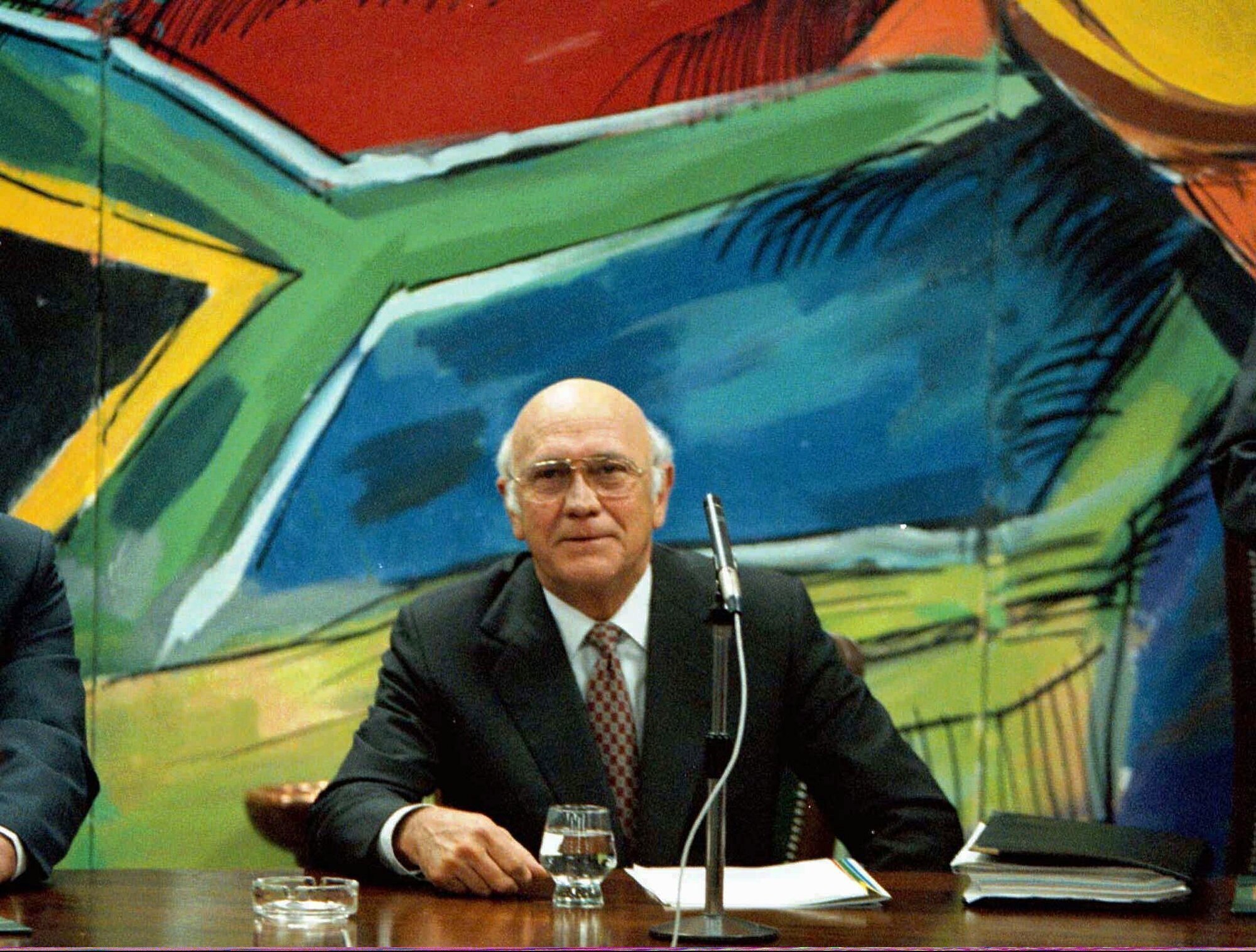
The late F W de Klerk, who oversaw the end of South Africa's country’s white minority rule, said at the time that in the new South Africa which he helped to forge “the positives outweighed the negatives”. AP Photo/Sasa Kralj, file

The death this week of FW de Klerk, the last white, and segregationist, president of South Africa, is a reminder that, while it often requires a charismatic leader to implement transformational political change, that it usually takes two to make a deal.

Thus it was that Nelson Mandela could not have completed his “long walk to freedom” from prisoner on Robben Island to international statesman and father of the “Rainbow Nation” without the ostensibly conservative De Klerk acting as usher to a transition that many in the National Party that he led from 1989 to 1997 found impossible to contemplate.

De Klerk declared that the “era of apartheid is now over” (he preferred anyway to call it “separate development”) and lifted a ban on the outlawed African National Congress before facilitating Mandela’s release after 27 years in prison.

In his final words, recorded on video and released after his death, he said: ‘‘I, without qualification, apologise for the pain and the hurt and the indignity and the damage that apartheid has done to black, brown and Indians in South Africa.” 

As is usual with history makers, even when they are possessed of a Nobel Peace Prize and can take responsibility for dismantling their country’s covert nuclear weapons programme and the implementation of universal suffrage, there are those who can find fault with his legacy.

Then South African President F W de Klerk, shakes hands with African National Congress President Nelson Mandela at the end of talks between the Government and anti-apartheid groups to end white-minority rule, in 1991. AP Photo/John Parkin, File)

Archbishop Desmond Tutu, who headed the Truth and Reconciliation Commission, whose establishment and work De Klerk opposed, said that he occupied “a historic but difficult space” while the Nelson Mandela Foundation says his contribution was “big but uneven”. Unsurprisingly those on the right of apartheid politics regard him as a traitor while former Marxist freedom fighters take an equally critical view, although for different reasons.

De Klerk himself recognised the impossibility of squaring all shades of opinion and said that in the new South Africa which he helped to forge “the positives outweighed the negatives”. 

In Ireland we can foresee a time when there will have to be a dialogue about the future shape of the Republic and a shedding of historical orthodoxies and mythologies. That experience will similarly need people with the convictions to step away from previous paths and strike new directions. 

Taoiseach Micheal Martin said he was saddened to hear the news of De Klerk’s passing. Perhaps, in some ways, the story of South Africa might serve to inform the next stages of this island’s constitutional development.

x

More in this section

Revoiced

Newsletter

Sign up to the best reads of the week from irishexaminer.com selected just for you.

Cookie Policy Privacy Policy Brand Safety FAQ Help Contact Us Terms and Conditions

© Examiner Echo Group Limited