Love may be the great force in humanity’s long journey, but experience, perspective, and context are the filters between us and nearly every decision we make.Â
This morning, many of those abandoned souls trapped in Afghanistan will look in a stranger’s face and ask horrible questions most of us need never consider: Suicide bomber or not? Taliban avenger or not?Â
Life in that long-misused country has regressed in ways that confound our ideas of social or individual progress. The list of those culpable is familiar.
It, in one iteration or another, stretches over centuries. In that context, the calamity suggests an inability to accept that different cultures can and do have profoundly different values.Â
Afghanistan’s recurring catastrophe is a symptom — yet another one — of that entirely human conflict. That implosion is not the only klaxon symptom we struggle to acknowledge, much less accept.
This weekend, if the weather forecasts prove accurate, we will enjoy exceptionally warm weather. Summer may provide one more waltz around the family barbecue before the school bells sound.Â
Yet, that great pleasure is increasingly overshadowed by the realisation that this Riviera weather is a symptom of the havoc climate collapse brings.
Surging wildfires
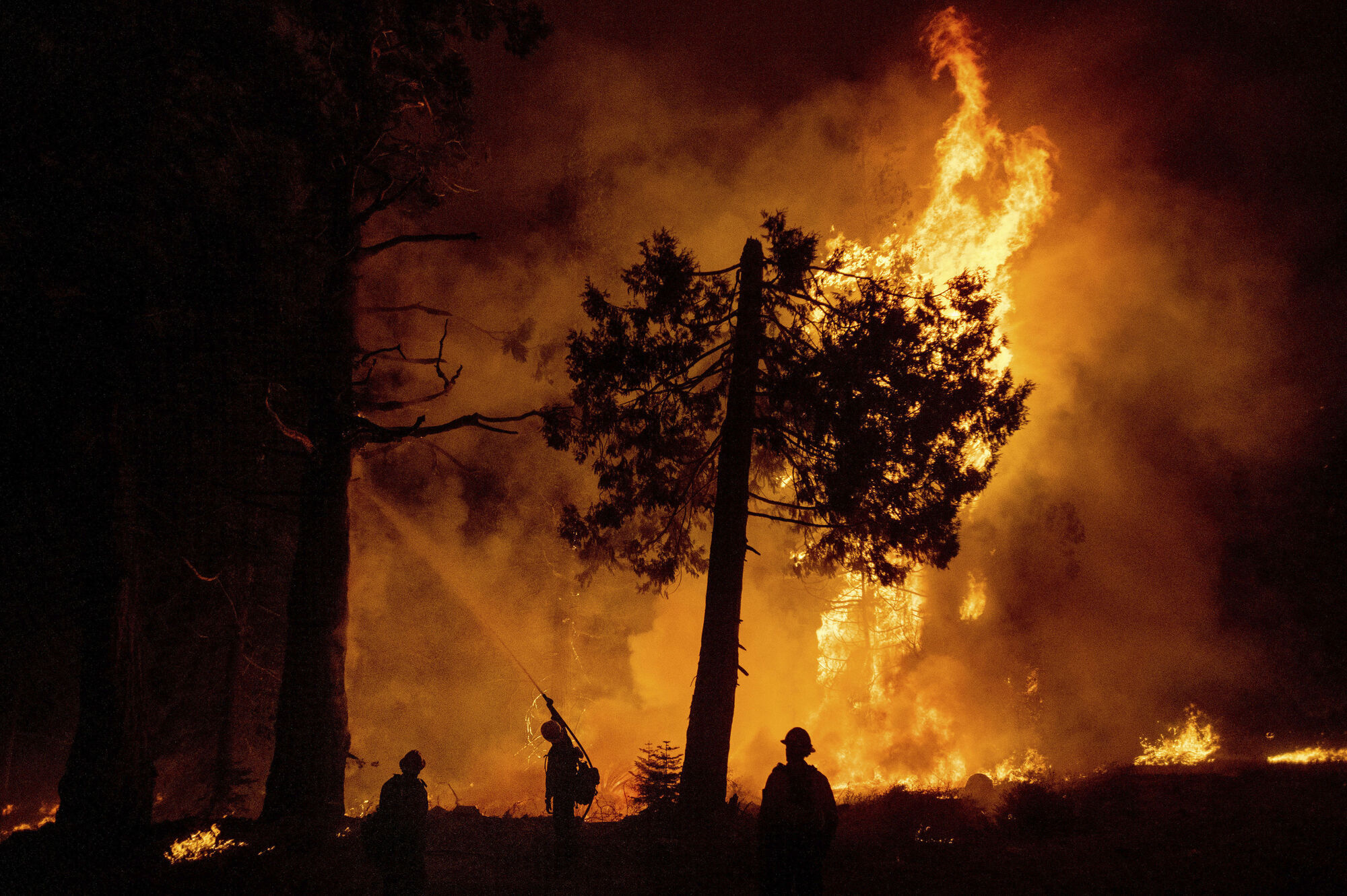
Just this week, climate carnage reached the Riviera when thousands of people, including tourists at campsites familiar to many Irish holidaymakers, were evacuated ahead of surging wildfires.Â
People had only minutes to escape as hundreds of firefighters were deployed west of Saint-Tropez. The blaze scorched some 14,820 acres — a significant area, but minuscule in the context of the vast swathes of our planet razed in recent years.Â
It seems as delusional as any plan to impose Western culture on Afghanistan to imagine that this weekend’s weather on this small island off continental Europe is not part of that very same evisceration.Â
It may still be possible — if you believe in fairies — to dismiss suggestions that we should consider how Irish towns, say Killarney, might fare should a climate-driven inferno take hold in surrounding woodlands. Indeed.
That grim prospect can only be dismissed if this week’s report from the American Meteorological Society is, like so many climate warnings, ignored.
It confirmed that Europe experienced its warmest year in the history of measurements in 2020. Ireland was, however, an outlier, with temperatures and rainfall close to recent averages.Â
It demands some magical thinking to see this Atlantic-inspired reprieve as anything other than a calm before a storm.
In November, the world’s leaders will meet at COP26, the 26th UN Climate Change conference. That so much remains undone after 25 conferences says more than is comfortable about our capacity to face reality.Â
Those leaders could hardly propose anything too radical. Something like a global Marshall Plan is required.Â
Anyone who doubts that might look to Kabul today and ask what our world might be like if that chaos were everywhere, if that dystopian nightmare were made real for all of us — just as our climate scientists have warned for more than four decades.Â
And there will be no 11th-hour airlift to take us beyond the reach of climate collapse.
CLIMATE & SUSTAINABILITY HUB
CONNECT WITH US TODAY
Be the first to know the latest news and updates