Brexit defeat: But we cannot give up hope
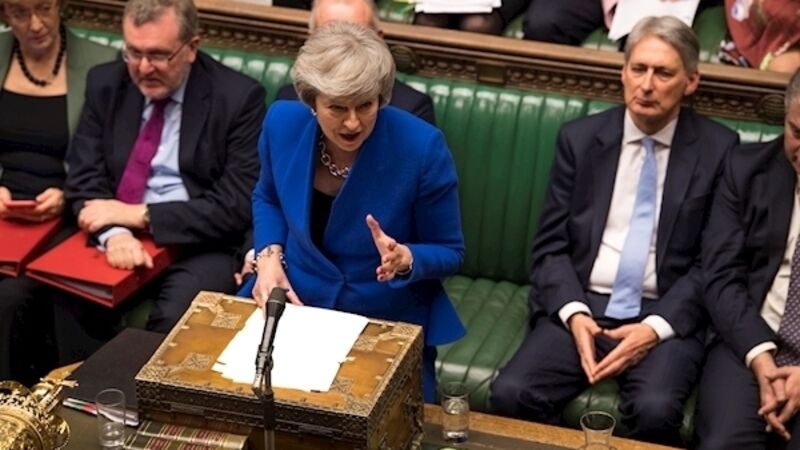
The scale of Theresa May’s defeat in the House of Commons’ vote on the EU withdrawal agreement has shocked even the hardest of Brexiteers.
The deal was rejected by 230 votes, galvanising Labour Party leader Jeremy Corbyn to table a motion of no confidence in the government.

The Conservatives won that particular vote last night but the position of the prime minister is greatly diminished.
The result of the vote on the agreement has so far been interpreted by many politicians in London, Dublin and Brussels as being of such a scale as to make a no-deal Brexit almost inevitable because it suggests that no further concession from the EU would be sufficient to overturn such a crushing defeat.
An Irish government statement said that “Regrettably, the outcome of tonight’s vote increases the risk of a disorderly Brexit.”
That may be both too pessimistic a view and a wrong interpretation of the vote.
Others hail the historic and overwhelming nature of the defeat as representing an end in sight for Brexit altogether because, while the agreement was not acceptable to a large majority of MPs, neither does there appear to be a majority in the Commons in favour of a disorderly exit.
This content has been blocked due to your cookie settings
That could mean, they believe, a long postponement of Article 50 or an abandonment of Brexit following a second referendum.
That may be both too optimistic a view and, again, a wrong interpretation of the vote.
It also fails to take into account the problem with extending Article 50 beyond the European Parliament elections in May.
It is important to examine the vote forensically.
One politician who is attempting to do so is European Parliament President Antonio Tajani.
He recognises that there are are two negative majorities in the British parliament — one against the agreement and the other against the possibility of leaving the EU without agreement, but there is no positive majority.
Opening the European Parliament debate assessing the Westminster vote, he spoke of seeking a ‘shared solution’ to the impasse while being one of the few politicians to appreciate the complexity of the vote.
We cannot overlook the fact that these various forces voted against the agreement for diametrically opposed reasons, some concerned about the backstop, others hoping for a closer relationship with the Union in the future by, for example, staying in the Customs Union.
The European commission and, notably, its chief negotiator Michel Barnier have invested enormous time and effort to negotiate the withdrawal agreement.
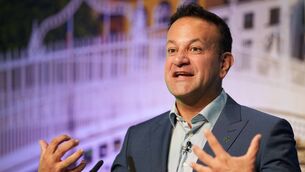
So has the Irish government, in particular Leo Varadkar and Simon Coveney.
The danger is that the margin of rejection of the deal could lead exhausted negotiators to throw their hands up and walk away from further talks.
That must not happen.
What is important now is that we do not allow Brexit fatigue to take hold and to seek that shared solution.
The vote in the Commons was very loud and very clear, revealing what British MPs do not want.
It is now essential for Westminster to outline exactly what it does want.