Aung San Suu Kyi’s betrayal - Power often means a fall from grace
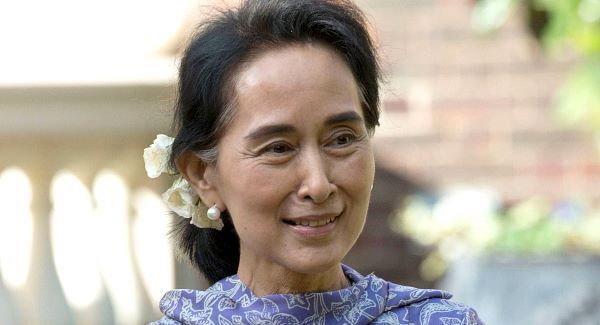
The ethnic cleansing of Myanmar’s Rohingya means Aung San Suu Kyi’s fall from grace is complete and irreversible.
Once an unchallengeable international darling of what might be described as the Bono classes, her election to parliament fostered the hope that good can prevail, that humanity can be humane.
How wrong we were in that instance — that error of judgment was almost universal.
When, in 2010, Myanmar’s junta ended Suu Kyi’s house arrest, she had been the world’s pre-eminent political prisoner for almost two decades.
Her serenity and easy grace — and her austere physical beauty — made it impossible to imagine her as anything other than an agent for her country’s redemption. She seemed to epitomise moral virtue unbowed by circumstance.
Vaclav Havel, the dissident Czech playwright who, in 1989, had become his country’s first post-communist leader, thought so too. In 1991 he convinced the Nobel committee to award her their coveted peace prize.
When a book of her essays was published, Havel asserted that “she speaks for all of us who search for justice”. Wrong again.
Since she became her country’s de-facto leader two years ago, she has remained haughtily, almost regally unmoved by what, for the Rohingya people, must seem their ongoing holocaust.
A Muslim minority in the west of the country, they have been driven from their homes and are often the victims of mass murder by the army endorsed by Suu Kyi’s bewildering silence. How Havel must turn in his grave.
In November, during a visit to that country, Pope Francis also chose a bewildering silence. He refused to use the word Rohingya in case his intervention had consequences for Myanmar’s Catholics. Political pragmatism or moral
cowardice?
Suu Kyi’s metamorphosis from a Joan of Arc figure to one more like an immoral Jiang Qing or an insane Robert Mugabe speaks to a pattern all too obvious in human history — once power is achieved, the opportunities it affords, the doors it opens, seem far more attractive than the obligation to deliver on the expectations of the revolution.
The list is long but not entirely uncontested. Socialists of a certain age, including President Michael D Higgins, were, in their formative years, so inspired by Castro and Guevara that they turned a blind eye to their freely expressed Gestapo tendencies. Like the Pope in Myanmar, they prefer silence to challenge.
Old sundowner colonialists, forced to leave the African or Asian country of their birth because their old order was replaced by nationalist revolution, invariably recite a litany decrying how the idealists so quickly learned to exploit their compatriots even more cruelly than they had.
Gaddafi, Mugabe, Mobutu, Amin, and, in his turn, Zuma and many more, all seem to confound the optimism of revolution.
Europe is not immune. For every Josip Broz Tito or Lech Walesa there is, or was, a Nicolae Ceausescu or a Radovan Karadzic.
Irish revolutionary leaders have mostly been pious democrats constrained — if they needed to be — by a strong parliament.
A reality that, in a quickly changing world, seems another good argument for engaging in our political process.

CONNECT WITH US TODAY



Be the first to know the latest news and updates