US exits human rights council: A wake-up call for UN to reform body
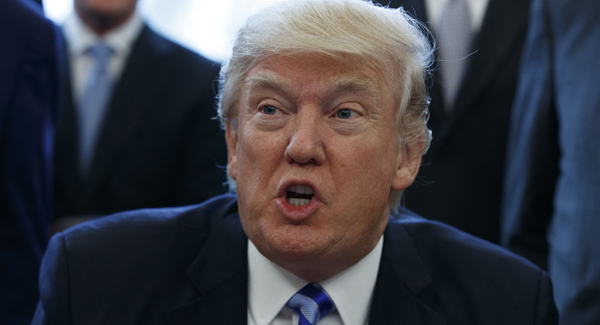
It would be easy to dismiss the withdrawal by the United States from the UN Human Rights Council as a sign of Donald Trump’s petulance, following criticism of his policy of separating migrant families on the Mexican border.

US exits human rights council: A wake-up call for UN to reform body

It would be easy to dismiss the withdrawal by the United States from the UN Human Rights Council as a sign of Donald Trump’s petulance, following criticism of his policy of separating migrant families on the Mexican border.

It can also be seen as yet another form of American isolation, following US withdrawal from the 2015 Iran nuclear deal and from the Paris Accord on climate change.

It is all of those things, but it is also a wake-up call to the UN to make the Human Rights Council (HRC) worthy of its name.

Otherwise, it is in serious danger of going the way of the UN Commission on Human Rights, which operated from 1946 until its replacement by the council in 2006.

By then it had lost all its credibility and, therefore, its legitimacy. Several members had appalling human rights

records, yet were elected onto it.

The commission’s work reached a peak of absurdity with the uncontested election of Sudan in 2004, despite committing genocide in the Darfur region. The HRC’s lack of credibility is coming close to that.

US ambassador Nikki Haley has justified the withdrawal on the grounds of chronic bias against Israel. She has a point.

The council has a built-in mechanism, known as Agenda Item 7, a permanent fixture on the schedule devoted to discussing rights abuses in the West Bank and Gaza Strip. It has been used exclusively to perpetuate censure of Israel.

She also decried the membership of countries like China, Cuba, and Venezuela, which are themselves accused of rights violations. Strangely, Haley does not mention Saudia Arabia, a systemic abuser of human rights, both within its own border and in neighbouring Yemen.

The Saudis have cynically used membership of the council both as a sword and a shield — attacking Israel at every opportunity while avoiding censure for its own appalling human rights abuses.

Of course, the withdrawal is also a sign of significant failures by the US — its inability to form a consensus within the UN to radically reform the council and an abandonment of its staunchest ally in the Middle East. Israel is not, and never has been, a member of the council, so it has lost the influence and voting power of a loyal friend.

American withdrawal could also bolster countries such as Cuba, Russia, Egypt, and Pakistan, which resist what they see as UN interference in sovereign issues.

The HRC remains the UN’s principal mechanism and international forum concerned with the promotion and protection of human rights. As such, it is legitimate to call attention to the plight of the Palestinian people and to support their right to self-determination.

It is equally legitimate to criticise Israel, when it deserves it, but it is not legitimate to institutionalise such criticism so that it operates selectively, exclusively, and obsessively.

To allow that to continue, while permitting countries like Saudi Arabia to use the HRC to its own ends, is a violation of the equality principles guaranteed by the UN Charter and underlying the Universal Declaration of Human Rights.

Most importantly, it is a significant obstacle to the UN’s ability to carry out its mandate.

x

More in this section

Revoiced

Newsletter

Sign up to the best reads of the week from irishexaminer.com selected just for you.

Cookie Policy Privacy Policy Brand Safety FAQ Help Contact Us Terms and Conditions

© Examiner Echo Group Limited