Incinerator proposal approved: Decision is a warning to cut waste dramatically
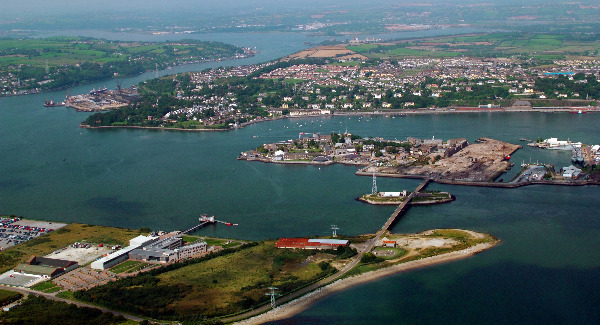
Two of our world’s conflicting but defining forces — the growing threat of climate destruction and the mountains of polluting waste generated by our relentless consumerism — collided yesterday when it was announced that An Bord Pleanála (ABP) granted planning permission for a controversial €160m Indaver waste incinerator in Cork Harbour.
It is envisaged that the plant, a waste-to-energy facility first proposed in 2001, will process 240,000 tonnes of commercial, industrial, hazardous or domestic waste each year. Dublin’s Poolbeg incinerator is at full capacity and processes about 1,800 tonnes of solid waste a day — approximately 65,000 tonnes a year, just a quarter of the quantities expected by Indaver.
Environmentalists opposed to the Ringaskiddy project remain steadfast and may refer the decision to the European Court. They have been supported by local politicians who warned the incinerator was “an outdated project” which would limit the potential of one of the world’s great natural harbours. Tánaiste Simon Coveney, Fianna Fáil leader Micheál Martin, and Fianna Fáil TD Michael McGrath each made strong individual submissions opposing the proposal to the 2016 oral hearing.
Their advocacy, and that of many others, was in vain. So too was the 2016 report of the ABP inspector which recommended that the incinerator be refused permission. That rejection was consistent with two earlier ABP reports, one in 2003 another in 2009, that declined to endorse the project.
Countering those views, ABP pointed out the plant will be subject to an EPA Industrial Emissions licence. The board also said the incinerator would not impair employment opportunities (one site advertised 296 pharmaceutical jobs in Cork yesterday) and was not incompatible with the development of the National Maritime College. It agreed with its inspector that the incinerator would not pose a significant risk to human health.
Apart at all from the bitterly divisive issue in hand yesterday’s announcement must focus renewed attention on democratic integrity of the planning process. If the views of three ABP inspectors, objective professionals who represented the public interest in three reports spread over 15 years, and three of the area’s senior public representatives whose raison d’etre is the public good, can be cast aside then whose views prevail? Whose interests win out? In this instance, and in others of similar import, a shrug of the bureaucratic shoulders won’t wash. A full explanation is essential. ABP, if it is to retain credibility, cannot hide behind its status as an independent, statutory, quasi-judicial body. The agency must justify its decision. It must be assumed that Messers Coveney, Martin, and McGrath will take an interest in ensuring transparency. That they have been rebuffed so publically might encourage them to take a particular interest in the effectiveness of how the project is policed.
That Cork Harbour for a Safe Environment (CHASE), who have, with considerable cross-community support, resisted the project for almost two decades adds weight to the argument that a clear explanation of how the decision was reached be made public. In an ideal world all — yes, all — details, the who, what, where and when, of the lobbying around this decision would be published. Why not here?
That, however, is just one aspect of this uncomfortable modern fable.
According to Repak, the body that oversees Irish recycling, we are the top producers of plastic waste in Europe, with an average of 61kg per person every year. Although our levels of recycling are relatively high, Séamus Clancy, chief executive of Repak, has warned that the decision by China, until recently the destination for the majority on Irish recyclable materials, to stop importing 24 categories of solid waste, including some plastics, paper and textiles will have a huge impact. “This is a wake-up call about how we deal with waste... Even a year ago, clean, dry, clear plastics for recycling fetched €50 per tonne. Now you would have to pay €100 per tonne to have it recycled plus the cost of collection.”
In one of the great ironies of this episode CHASE have warned that this process may be reversed as, they contend, Indaver will have to import waste to ensure the Ringaskiddy project’s profitability. Even if it provokes a justified charge of hypocrisy this possibility can hardly be greeted with any great enthusiasm.
Permission Granted. Inspector once again recommended refusing. Bord Pleanala - please hang your heads in shame.
— CHASE (@CHASECorkNews) May 31, 2018
In a world where, according to Greenpeace, one company — Coca-Cola — produced more than 100bn plastic bottles and used more than 300bn litres of water in 2016, this is utterly unsustainable and to pretend otherwise is dangerous. It is not necessary to be a greener than green environmentalist to see that the companies generating huge quantities of waste and the private interests behind incineration are, almost hand-in-hand, leading us in a danse macabre but, as ever, it takes two to tango. Incinerators would not be an attractive commercial proposition much less profitable unless we generated vast amounts of often unnecessary waste.
Echoing this reality but on a different plane, the EPA warned yesterday, within an hour of the Indaver announcement, that Ireland’s greenhouse gas emissions will increase every year until 2020. This is despite an EU target to reduce greenhouse gas emissions by 20% on 2005 levels from the non-Emissions Trading Scheme — agriculture, transport, residential, commercial, non-energy intensive industry and waste. The latest projections show that, at best, Ireland will only achieve a 1% reduction by 2020 compared to the 20% target. This has huge environmental and very real cost implications. It is also culturally revealing.
Just as far too many people and business interests, heads in the sand, resist confronting our excessive emissions others will oppose any incinerators in nearly any circumstances. Others still put commercial ambitions before community and environmental obligations. None of these positions is sustainable and demand a real-world response based on a common purpose which, first and foremost, must be a dramatic, transformative reduction in the quantities of waste we generate. Every option at our disposal, everything from taxes to refusing to buy products shrouded in plastic, to dissuasive waste collection charges must be taken quickly. Until we do that it may be naive to be surprised or angry by announcements like yesterday’s.
The unspoken subtext at the heart of that anger is our habit of making laws and imposing restrictions but not giving those vetoes any real meaning by effective policing or real sanctions when they are necessary. We have indeed, even if unintentionally, cut a stick to beat our own back.
CONNECT WITH US TODAY



Be the first to know the latest news and updates