Reforming An Garda Síochána: Softly, softly approach is not working
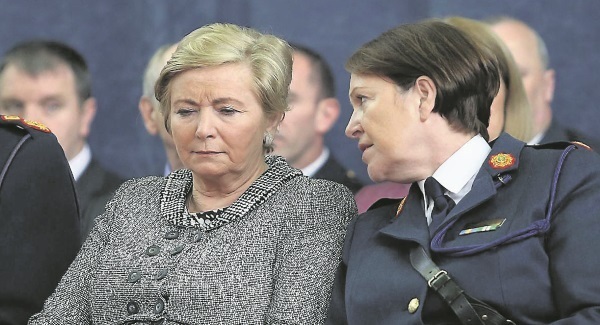
In recent days it has emerged, through the Charleton inquiry disinterring, that former Garda Commissioner Nóirín O’Sullivan wrote to former justice minister Frances Fitzgerald suggesting a form of words, an all-for-one-and-one-for-all valediction that she should use in a Dáil statement to underline her support for An Garda Síochána and its senior officer.
It was suggested to the minister, in May 2016, that she should conclude a statement with a ringing endorsement of the commissioner’s stewardship.
“I wish to state, here and now, that I have full confidence in the commissioner” was how a less than bashful Ms O’Sullivan thought the opportunity might be used.
Ms Fitzgerald declined the opportunity to put such a glowing report on the Dáil record, rather she immediately sought a meeting with Ms O’Sullivan.
What may have transpired at that meeting can only be imagined but it must be hoped that Ms Fitzgerald used the opportunity to reassert the Dáil’s absolute primacy in the relationship between politics and our police.
It is not unusual that the heads of various arms of the State might offer suggestions to their political masters about how developments in their area might be communicated to the public but even in that context it seems at least presumptuous that a garda commissioner might suggest to a minister for justice that they should offer such a complete endorsement of their performance to our parliament.
It is not hard to imagine how a Haughey, a Thatcher, a FitzGerald or any leader with a bit of backbone might react to such a self-serving suggestion.
It, after all, reeks of a bit more tail-wagging-the-dog demand than is appropriate. It also takes the idea of self-regulation to a new low — even in Ireland.
But it does a lot more than that. It shows a degree of licence, a depth of self-confidence, and a level of expectation that can only exist in a culture absolutely secure of its place in the world.
The author cannot have imagined this correspondence and the latitude expressed in it would ever be made public.
It is a concrete indication of why it seems impossible to reform the gardaí.
It shows an assumed independence and a self-appropriated authority unacceptable in a democracy.
That frame of mind may also be behind yesterday’s statement from the Policing Authority that there is as yet “no evidence” that garda management is making any real efforts to deliver on its commitment to redeploy 1,500 gardaí to frontline duties.
The authority also found that a “significant” number of obligations under the Garda 2017 Policing Plan are “off target” and may not be realised.
It also sought information on homicide figures reflecting CSO concerns that led to the deferral of the publication of garda data until it was seen to be “reliable”.
The admission that the fake drink-driving scandal was so widespread that disciplinary action would be impossible crossed a Rubicon but yesterday’s report suggested, as did Ms O’Sullivan’s letter, that the patient needs immediate major surgery rather than a cajoling, let’s-hope-for-the-best slap on the wrist.
This threatening spiral must be reversed.
CONNECT WITH US TODAY



Be the first to know the latest news and updates