Brexit is a chance for reflection - Our mutual friends, or not?
The Brexit debacle gives London, Dublin, and Belfast the opportunity to reflect on our mutual relationships.
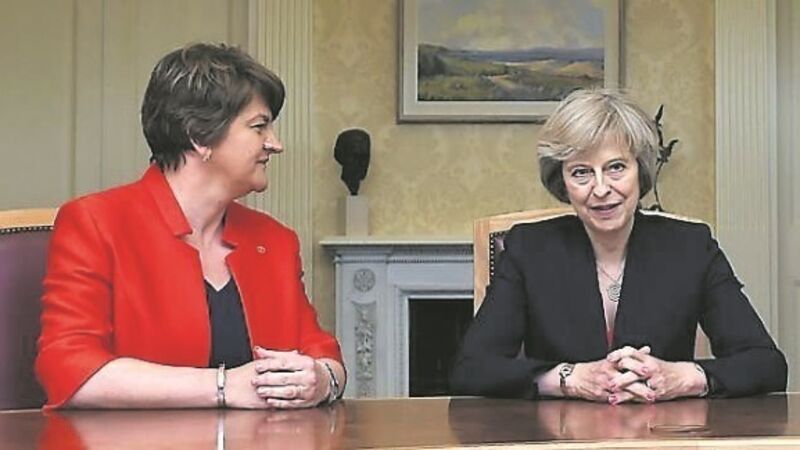
Starting in London, British prime minister, Theresa May, and her minority government do not have to look too far back in history to realise that allowing a small, but ferociously vocal, political party on the periphery of the UK to dictate policy has its dangers.
The Sunningdale Agreement of 1973 was an attempt to establish a power-sharing Northern Ireland Executive and a cross-border Council of Ireland. It collapsed in chaos and violence within six months. Not since then has a British government been so in hock to a small unionist party that represents fewer than 500,000 UK citizens.
It might be more palatable for Theresa May to solicit an arrangement with the Liberal Democrats or even her arch-rivals, the Labour Party, and break the deal with the DUP.
Moving to Belfast, the DUP needs to get real and realise that a veto is like your last bullet and can only be used effectively once. Is DUP leader, Arlene Foster, really prepared to precipitate a general election in the UK and see Gerry Adams’ friend and confidante, Labour leader, Jeremy Corbyn, as prime minister?
She might also consider the aftermath of Sunningdale, when the then British prime minister, Harold Wilson, drew up a secret plan — codenamed Doomsday — to expel NI from the UK.
Only fears expressed by Irish foreign minister Garret FitzGerald that civil war would ensue prevented him from doing so. Furthermore, she and her party must recognise that Northern Ireland is, and has been since its creation, treated differently to the rest of the UK.
It had a devolved administration before either Scotland or Wales. It is the only part of the UK over which another jurisdiction has a consultative role — under the Anglo-Irish Agreement signed, in 1985 by Margaret Thatcher and bolstered by the Good Friday Agreement of 1998 — dubbed “Sunningdale for slow learners” by the late Seamus Mallon.
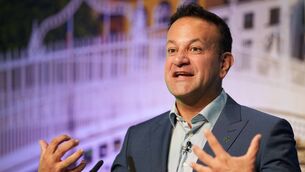
Dublin needs a reality check, too. Whatever about the merits of it, the DUP action should not have come as a surprise to anyone, least of all Taoiseach Leo Varadkar and his team of negotiators.
Arlene Foster was clear about the party’s position all along, so he should have, at least, asked Theresa May if the DUP was on board with what was agreed.
As well as that, Tánaiste Simon Coveney should stop talking about his aspirations for Irish unity. It confuses matters and puts FG in the same boat as Sinn Féin, in unionist eyes.
Neither should it be assumed that the majority of people in the republic want a united Ireland. There is a huge difference between a soft border and unity. Sinn Féin offers only one version — a pseudo-socialist republic.
There are others, ranging from full reintegration with the UK to a Canadian-style arrangement. If we are serious about a national debate on unity, all possibilities should be considered.
Sinn Féin also needs to get real. The main reason the DUP holds the balance of power in the UK is because of SF’s refusal to take their seats at Westminster. With seven House of Commons seats, it could, at least, force the DUP into a reality check and to the negotiating table.
CONNECT WITH US TODAY



Be the first to know the latest news and updates