I want to contribute to Irish society, but I can't get a job
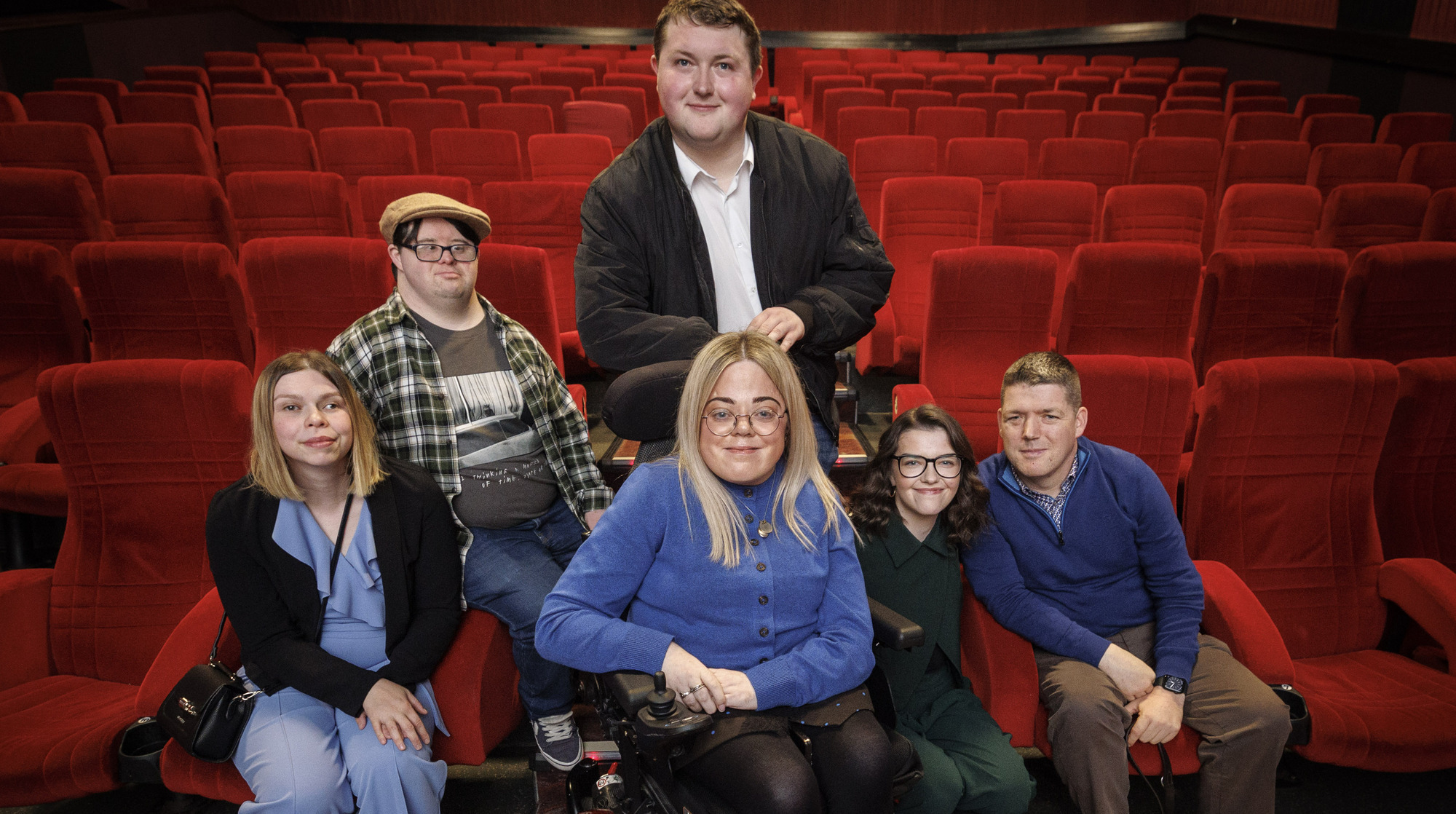
(Left to right) Participants Alex Moloney, from Cork, Conor from Drogheda, Co. Louth, Emma Ward from Galway, Kevin Whelan from Dublin, Melissa Ryan from Borrisoleigh, Co. Tipperary and Niall Mulvihill from Roscommon at the special preview screening of Able, a new three-part documentary series which follows six people with disabilities as they navigate one of the biggest challenges facing them: finding meaningful employment. Picture: Andres Poveda
Even though I want a job and would really like to contribute to Irish society, I have never been able to get one. It's not for lack of trying.
Over the years, I have applied to many jobs in the media. Most of the time I never get a response, but if I do, it's a short message of an apology and to say they wouldn't be able to offer me a job due to the building not being wheelchair accessible and not being able to provide accommodations I might need.
In some part of my brain, though, I also wonder if it's because I am an Irish Traveller that I never get responses, which is a hard thing to admit, but it's the truth because so many Irish Travellers struggle to find employment too due to awful stereotypes and misconceptions. So I have the odds stacked against me from both sides.
Applying to many jobs and being outright rejected due to inaccessible buildings over the years has hurt my confidence a little because it's made me question whether I am a good journalist. The rejection especially knocked my confidence last year when I was struggling with my grief at losing my grandmother who was the reason people first started reading my articles.
Over the last year, I have been working on a new RTÉ documentary called Able. It is presented by Brendan O'Connor.
It follows six people with disabilities trying to gain employment in Ireland which has one of the lowest employment rates for people with disabilities in the European Union. We have worked hard to highlight some of the struggles disabled people face trying to find suitable employment.
Read More
In 2024, I was approached by the casting team. I turned down the opportunity because the risk of losing my disability allowance payment and medical card if I worked was far too great to consider. Like many other people with disabilities, I rely on those two supports to live.
If I worked part-time and ended up needing time off due to sickness, I would lose that income and be left with nothing to support my needs. From needing to pay for GP appointments and medication to buying my wheelchair equipment, I wouldn't be able to afford the rising costs of what living with a disability without a steady income.
So I can only work part-time to ensure I can keep those supports, but unfortunately not many industries offer this, especially the one I want to be part of, the Irish media industry.
A year went by, and as I've liked to say, fate intervened, and I had another chat with the producers about my concerns. They didn't even know about the risks, and I decided to push myself out of my comfort zone and do it.
Now I couldn't be happier about it because I do believe this show is going to start a much-needed conversation about getting more people with disabilities into employment and hopefully challenge the misconceptions of being disabled in Ireland.
I became a freelance journalist almost five years ago. I didn't have one connection to the industry. All I had was a delusional belief that I was meant to be a journalist and give others who aren't typically seen in Irish media a platform to share their stories.
I had no expectations going into this experience. I was open to anything that would help me grow my journalistic skills and confidence. I knew if I could make this documentary, then I would be able to do anything.
During filming, I came across the Lyra McKee Investigative Journalism bursary, and without overthinking it, I applied.
I attended online seminars about so many different topics in investigative journalism. My favorite part was being challenged to come up with my pitches. I liked this part because I don't get to do many pitches while being solely freelance, so it made me get out of my comfort zone and come up with ideas on the spot.
I am so glad that this project went better than I thought it would, and I wouldn't hesitate to do another one like it in the future.
I really enjoyed the filming process, from getting to meet and chat with the broadcasting legend Brendan O'Connor to meeting my fellow participants and behind-the-scenes crew.
I learned so much more than I thought I would. I soaked up as much information about production as I could, and I learned more about what could happen if I did find employment, which has made me feel a little bit better about applying for jobs in the future.
My self-confidence really shot up during this project because I went from second-guessing my place in the industry to really believing in myself and knowing I was right where I was supposed to be. This is because the people involved saw me as a person first and not as a wheelchair user, which meant a lot.
I also launched my own podcast during this time called , which is on Spotify.
It occurred to me that there was a gap in the podcasting world where I could share my own experiences of being a disabled Irish Traveller, while also giving people within both the Irish Traveller and disabled people community a platform.
Brendan found out about the podcast and challenged me to do an episode with a disability rights activist.
He wanted me to see that while print journalism is my goal, I could also venture into other areas of media and not be afraid to do so.
We went to a recording studio, and I really enjoyed getting to use all the equipment and being able to showcase more of my skills, and I got to learn so much more about an activist I was already a fan of.
Brendan listened to the whole episode and sent me a lovely email which only had one piece of feedback — be more confident in myself.
When I first wanted to join this industry, I had no connections.
All I had was a dream and sheer belief that I could make something of myself if a person would just see past my wheelchair and allow me to prove my skills.
I have worked really hard to build a diverse journalism portfolio in the past few years, and I only hope to continue that.
When people watch the documentary, I hope it starts a conversation about getting people with disabilities into the workplace and how companies can support them, because most companies won't accommodate part-time work or the support we need to work.
I also hope it'll challenge the many misconceptions of what it means to have a disability in Ireland because if people just believed in the person and not the disability, the world might be a kinder, more accessible and inclusive place for everyone.
It certainly has helped to shed my imposter syndrome and become the most confident version of myself. It also helped relight the spark that I had lost after my Nana died in early January 2025, and that meant the most to me.
I am now so sure that I belong in this industry, and I hope this isn't my last experience of being on television, writing, and raising awareness around disability and intersectional inclusion.
If anyone would like to help me continue to grow, learn more about the industry or just work with me, you can find me on Instagram at emmawardjournalist.

BLACK FRIDAY
Already a subscriber? Sign in

CONNECT WITH US TODAY



Be the first to know the latest news and updates