Dara Waldron: I was lost in a foreign land, and Lee Reeves saved me
It doesn’t matter if you are from Kennedy Park in Limerick City or Dublin Road in Tuam, Brooklyn or Boston, ‘the Fighting Irish’ references an ability to battle back — and Lee Reeves showed us how, writes Dara Waldron
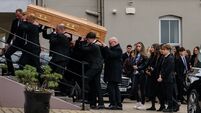
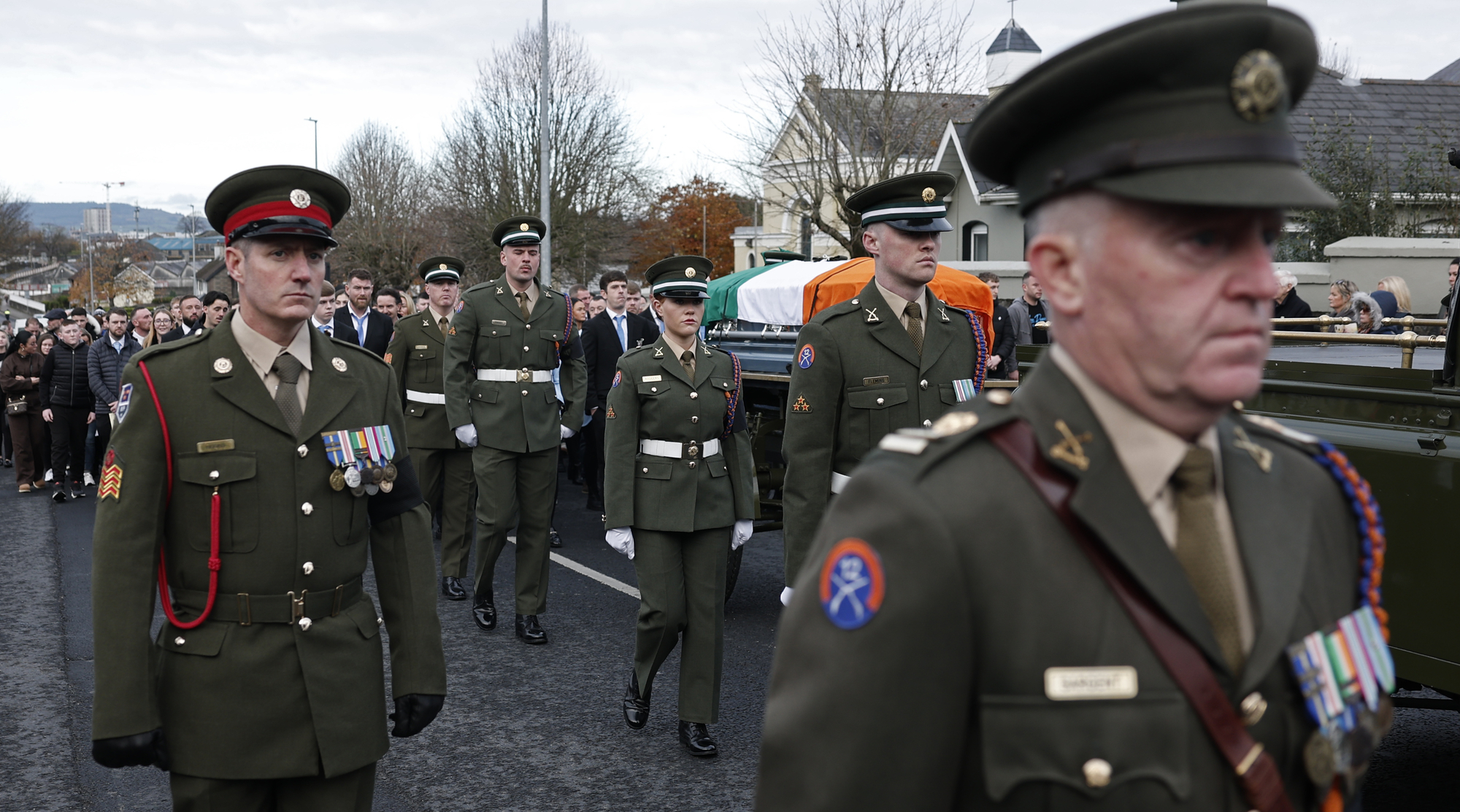
Members of the Irish Defence Forces walk in procession alongside the coffin of boxer and soldier Lee Reeves after his funeral mass with full military honours. 

Members of the Irish Defence Forces walk in procession alongside the coffin of boxer and soldier Lee Reeves after his funeral mass with full military honours. 

IT WAS some time in 2023 when my friend and former student, Frances McCarthy, sent me a screener of a short film he helped produce in collaboration with The Gaff Limerick to raise awareness for mental health.

The film is a 13-minute documentary, the subject of which is the relatively well-known Limerick boxer Lee Reeves who died last week.

Knuck & Knuckle is a film made up of conversations with Lee about his life. Lee talks about his upbringing, the loss of his mother to suicide, his brother Tony’s death.

The kind of thing that most young men would struggle to deal with. He struggled but then he turned to boxing and became a successful athlete and a mental health advocate.

Over the film’s 13 minutes, he also became heroic in my eyes. He spoke of the tragedy of losing his mother Cathy, his work with a suicide prevention group in response; his rescuing of a woman from drowning in the Shannon.

But I won’t spoil the majestic way the film narrates the story of Lee’s life or weaves the elements together to affect us deeply, moving even the most hardened of us to tears.

Suffice it to say, the film is on YouTube and should be watched by many people in memory of Lee.

I am writing this because I want to thank Lee Reeves for his bravery in making the film about suicide.

When watching it for the first time I was in the thick of grief for a close friend who had died by suicide. I was angry — with whom or with what I had no idea.

Floundering in a foreign land. I felt like I needed to hurt the world. And maybe, at some level, to have it out with my friend for leaving me was the real thing I craved.

I wanted to say that he didn’t need to go away. That we could fix things together. I was upset because I didn’t get the chance to help him. As Lee tells us, grief gobbles us up in this way, often smothering us in paralysis.

And suicide grief does something even more. It brings us to a land of unassailable anger, while at the same time preventing us from processing the absence of the one who has died.
We are angry because, at a base level, we expect to see the deceased again.

Lee made  Knuck & Knuckle with The Gaff Limerick about mental health and suicide — you can watch it for free any time.

I screened it in a film seminar I teach last week, in tribute to the life and legacy of Lee Reeves soon after his tragic death. Seeing the students so moved by the film surprised me. 

It also rattled me a bit. Maybe the timing was off, the shock of his death too raw? Maybe I misjudged the mood?

“No, being sad and emotional is normal. Part of life. And the film exposes so much of life’s lowest pitfalls. Let’s talk about the film,” I thought. And we did.

I soon felt a bond with the group I hadn’t felt before: a kind of collective lament. It felt like everyone in the room could sense the collective grief that was passing over the city of Limerick.

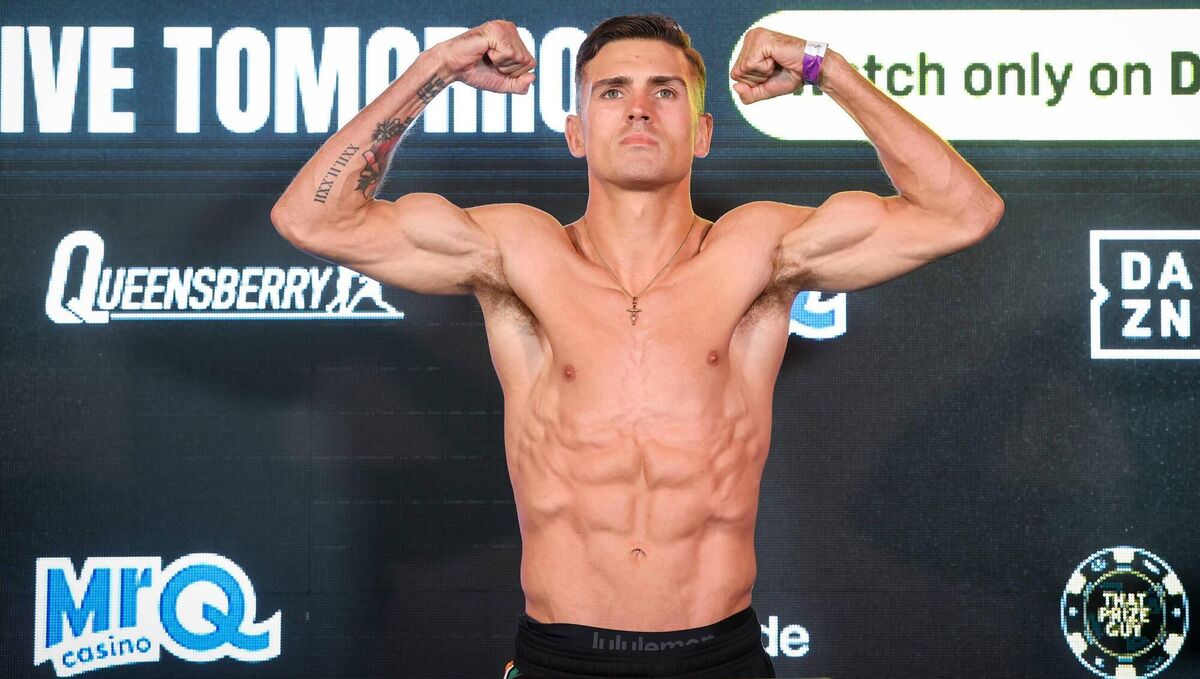
After the loss of his mother to suicide, his brother Tony’s death, Lee Reeves turned to boxing and became a successful athlete and a mental health advocate. Picture: INPHO/Nick Elliott

And though I never met or knew Lee Reeves personally, after the class I decided to attend his removal and pay my respects.

We had some things in common: Lee came from Kennedy Park, one of Ireland’s most disadvantaged areas. A part of the city often invisible to many. I come from Tuam, an employment black spot throughout my formative years. A town that had many problems with poverty and social exclusion.

On the day of the removal I drove into Limerick City from Murroe. It was deceptively cold so I decided to wear a beanie cap. When searching in the drawer, I found a hat I had bought in Chicago in November 2025, exactly a year before, when attending the Ireland v New Zealand match in Soldier Field.

I had no idea, but found out after that it was a Notre Dame hat emblazoned with the words ‘Go Irish’. It is an unusual colour: it has a metallic gold instead of an expansive green. And, of course, Notre Dame’s sporting teams are all known as ‘the Fighting Irish’.

I had no inkling at the time that I was buying a hat that represented something more than an Irish team. It invoked the legacy of Irish people travelling around the world — the great tradition of the Irish in the US. 

I took the hat with me to the removal and I thought about leaving it with one of Lee’s family or at his coffin, in respect. But I never did. I second guessed myself. It is still in the back of my car waiting for someone.

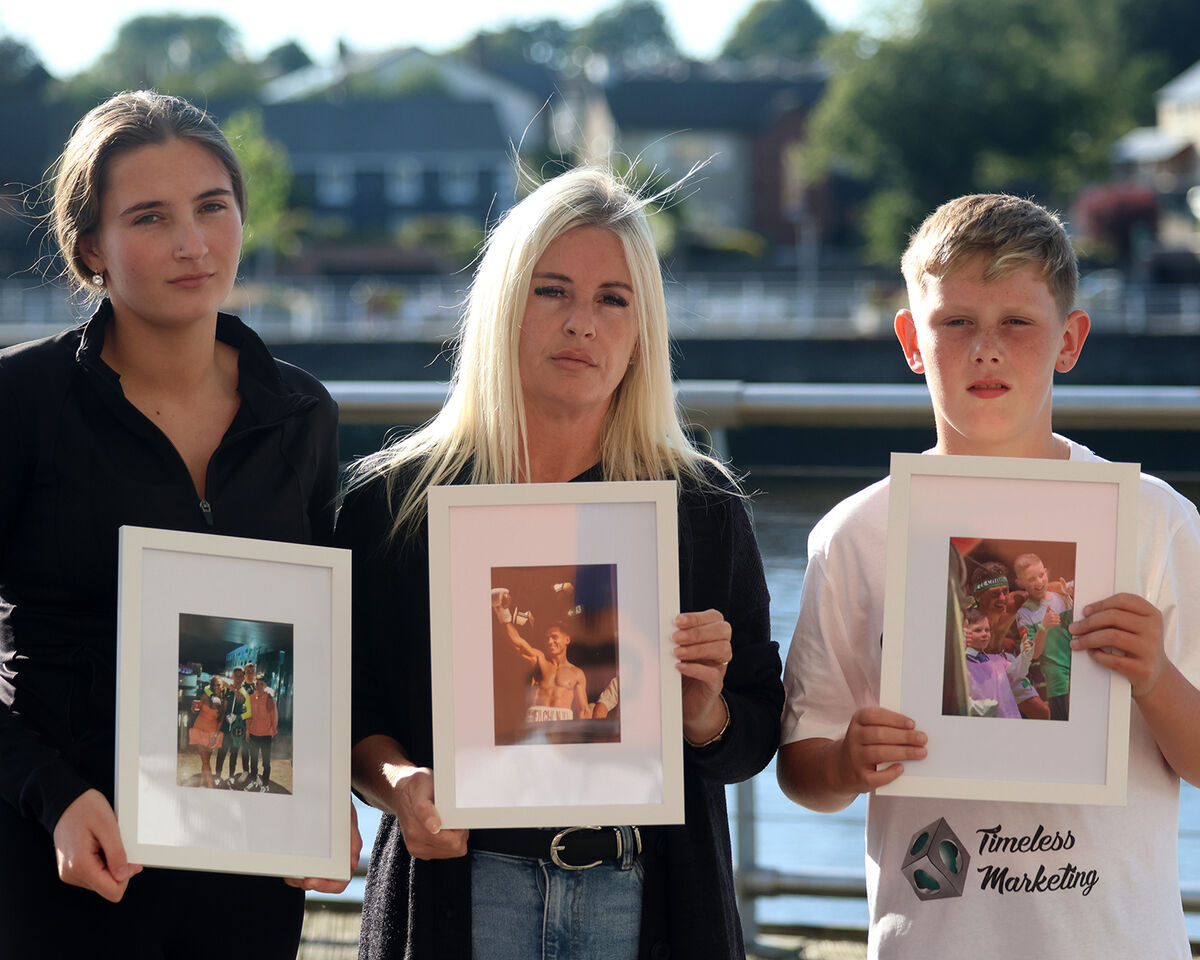
 (Left to right) Elise Connors, Louise Connors, (Lee's sister) and Martin Connors, at the 'Night of Hope for Lee Reeves'. Picture: Brendan Gleeson
(Left to right) Elise Connors, Louise Connors, (Lee's sister) and Martin Connors, at the 'Night of Hope for Lee Reeves'. Picture: Brendan Gleeson

The ‘Fighting Irish’ is a widely known wording synonymous with Notre Dame’s sporting traditions, but it is used in many instances. It draws upon the perseverance of Irish people everywhere. Pushing against life’s challenges and difficulties. 

It doesn’t matter if you are from Kennedy Park in Limerick City or Dublin Road in Tuam, Brooklyn or Boston, ‘the Fighting Irish’ references an ability to battle back. It is a phrase that is used to remind the Irish people that they are stronger than they think they are.

When I watched Knuck & Knuckle that day in 2023 I learned about a boy who became a man; grieving and helping his community to fight the reality of suicide. I heard someone speak who came through the grief of suicide and gave others his map. 

He was soft spoken and brave. I was lost in a foreign land at that time and needed that map. A way of finding my bearings. In 2023, I searched around for a person to help lead me along and to speak my language. I was lucky to find Lee Reeves.

In memory of Lee Reeves (1995-2026).

  • Dara Waldron is a writer and academic. He is the author of A Sheepdog Named Oscar (Simon and Schuster UK).

More in this section

Revoiced

Newsletter

Had a busy week? Sign up for some of the best reads from the week gone by. Selected just for you.

Cookie Policy Privacy Policy Brand Safety FAQ Help Contact Us Terms and Conditions

© Examiner Echo Group Limited