‘I’m not a politician’: Clash with Pope Leo could prove dangerous for Donald Trump
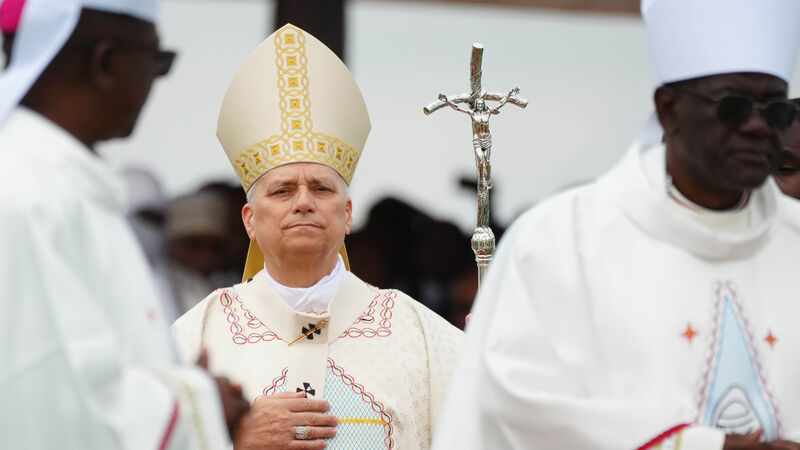
Pope Leo XIV arriving in procession to celebrate Mass at Yaoundé Airport in Cameroon on Saturday, the sixth day of his 11-day pastoral visit to Africa. Picture: Andrew Medichini/AP
“I am not a politician; I speak of the Gospel.” Pope Leo’s recent remarks, made during his apostolic journey to Africa, immediately suggest that his clash with Donald Trump operates on a different level to the US president’s usual political spats.
Read More
This is not the classic kind of confrontation that Trump has often had with foreign heads of state and government in the past — such as in recent months with British prime minister Keir Starmer, whose refusal to fully back the US and Israel in their war against Iran attracted Trump’s ire.
Rather, it is a clash rooted in fundamentally different moral and political visions — between a president who treats power in transactional terms and a pope who frames war, migration, and human dignity as matters of moral principle.
When then Cardinal Robert Prevost was named as Pope Leo last May, Trump and his administration initially appeared to welcome the new pontiff warmly.
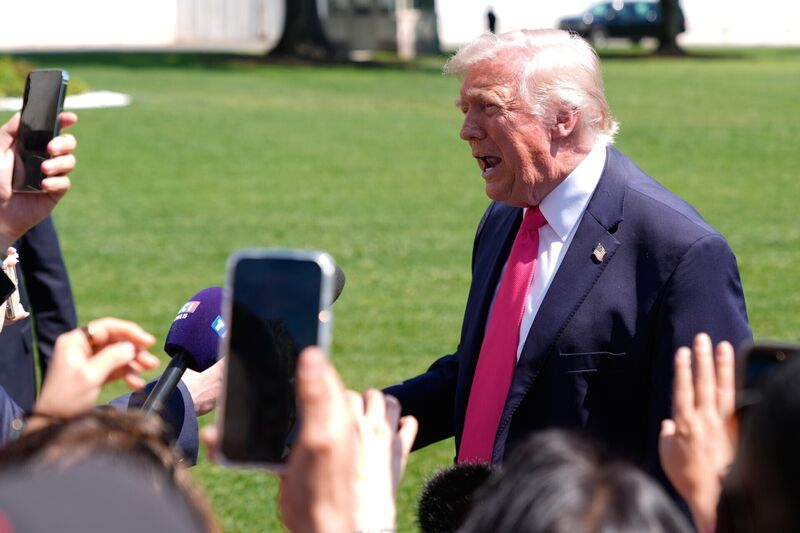
In fact, in a post to his Truth Social platform, the US president appeared to take credit for his election as pope, writing that Prevost “was only put there by the Church because he was an American, and they thought that would be the best way to deal with President Donald J. Trump”.
However, the war in the Middle East launched by the US and Israel has made the differences between their positions clearer, further heightening tensions between them.
On Palm Sunday, the week before Easter, it became clear that Leo had decided to take a firm line against the war in Iran, saying that Jesus “does not listen to the prayers of those who wage war, but rejects them, saying: ‘Even though you make many prayers, I will not listen: Your hands are full of blood.’ ”
His Easter message was equally clear: “Let those who have weapons lay them down! Let those who have the power to unleash wars choose peace! Not a peace imposed by force, but through dialogue! Not with the desire to dominate others, but to encounter them.”
Days later, the Pope denounced the US president’s apparent threat to destroy the whole of the Iranian civilisation as “truly unacceptable” in comments which roundly criticised the war and called for a “return to dialogue, negotiations”.
Read More
Trump responded in harsh terms on Truth Social, posting that "Pope Leo is WEAK on Crime, and terrible for Foreign Policy."
He went on to say that he did not want a pope “who thinks it is OK for Iran to have nuclear weapons”, adding: “Leo should use common sense, stop doing the bidding of the radical left, and focus on being a great pope rather than a politician.”
Returning to Washington from Florida, Trump also told reporters: “I don’t think he’s doing a good job. I’m not a fan of Pope Leo.”
The Pope replied by saying that he was not afraid of the Trump administration and would continue to speak out against war.
Trump did not stop there.
He went so far as to publish an image portraying himself as Jesus Christ, a move that appeared to go too far even for some of his conservative supporters.
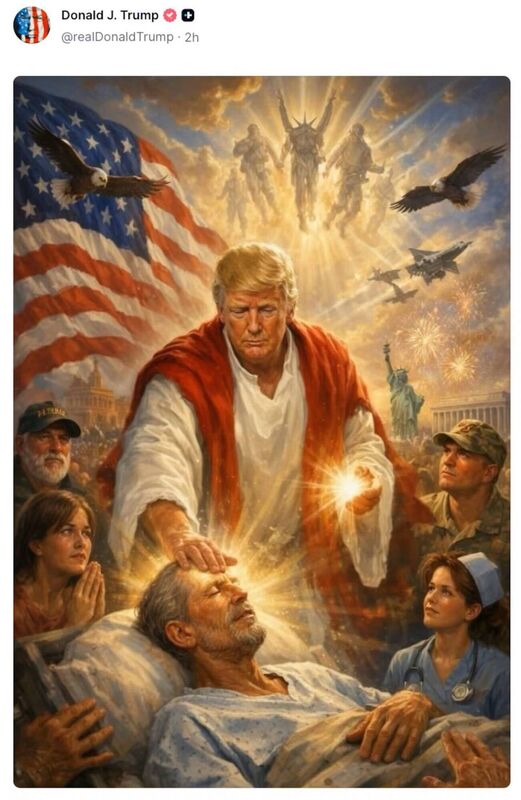
The reaction was strong enough to force him to delete the post and backtrack.
Trump has clashed with the Vatican before, but this confrontation unfolds in a very different setting. Pope Francis, the first Argentine pope, and the first pontiff from the global south, was often openly critical of Trump, particularly on migration. In 2016, he famously suggested that a leader who thinks only of building walls rather than bridges is “not Christian”, crystallising the tension between them.
The key difference was that Francis was also a divisive figure within sections of the Catholic Church in the US. He was frequently targeted by conservative Catholic commentators and Church networks in the US, and in 2019 he remarked that “it’s an honour that the Americans attack me”.
Leo, by contrast, is the first US pope — and that changes the political equation.
His voice is likely to carry different authority among Catholic voters, who are an important part of Trump’s electoral base.
In the last presidential election, 55% of Catholic voters supported Trump, including 62% of white Catholics. Senior Catholics also occupy prominent positions in his administration, including vice president JD Vance and Trump’s secretary of state, Marco Rubio.
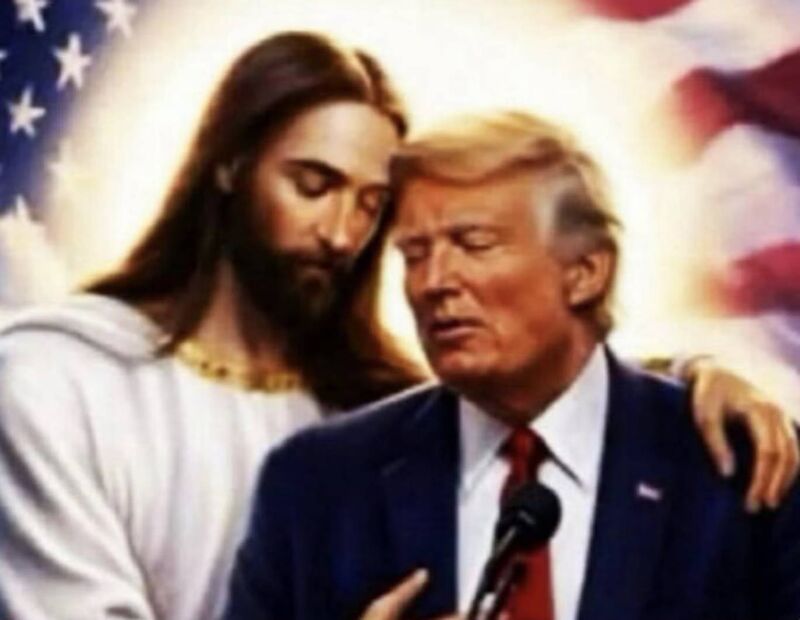
That is why Leo’s criticism may prove more politically consequential. It does not come from an external moral voice alone, as was often the case with Francis, but from an American pontiff speaking into a Church and an electorate that Trump cannot afford to ignore.
This is not a political confrontation like the many others the world has become used to with this US president. The stakes are higher at home and on the world stage.
At home, it risks alienating many Catholic voters whose support will matter not only in the midterm elections but also in the next presidential race. Internationally, it may complicate Trump’s relationship with European conservative parties, many of which have long sought close association with the Vatican.
The Pope, as the leader of a vast global community, cannot be treated as though he were just another political opponent.
- Massimo D’Angelo is a research associate in the Institute for Diplomacy and International Affairs, Loughborough University
- The Conversation
CONNECT WITH US TODAY



Be the first to know the latest news and updates