How this week's protests fuelled confusion and consternation at Leinster House
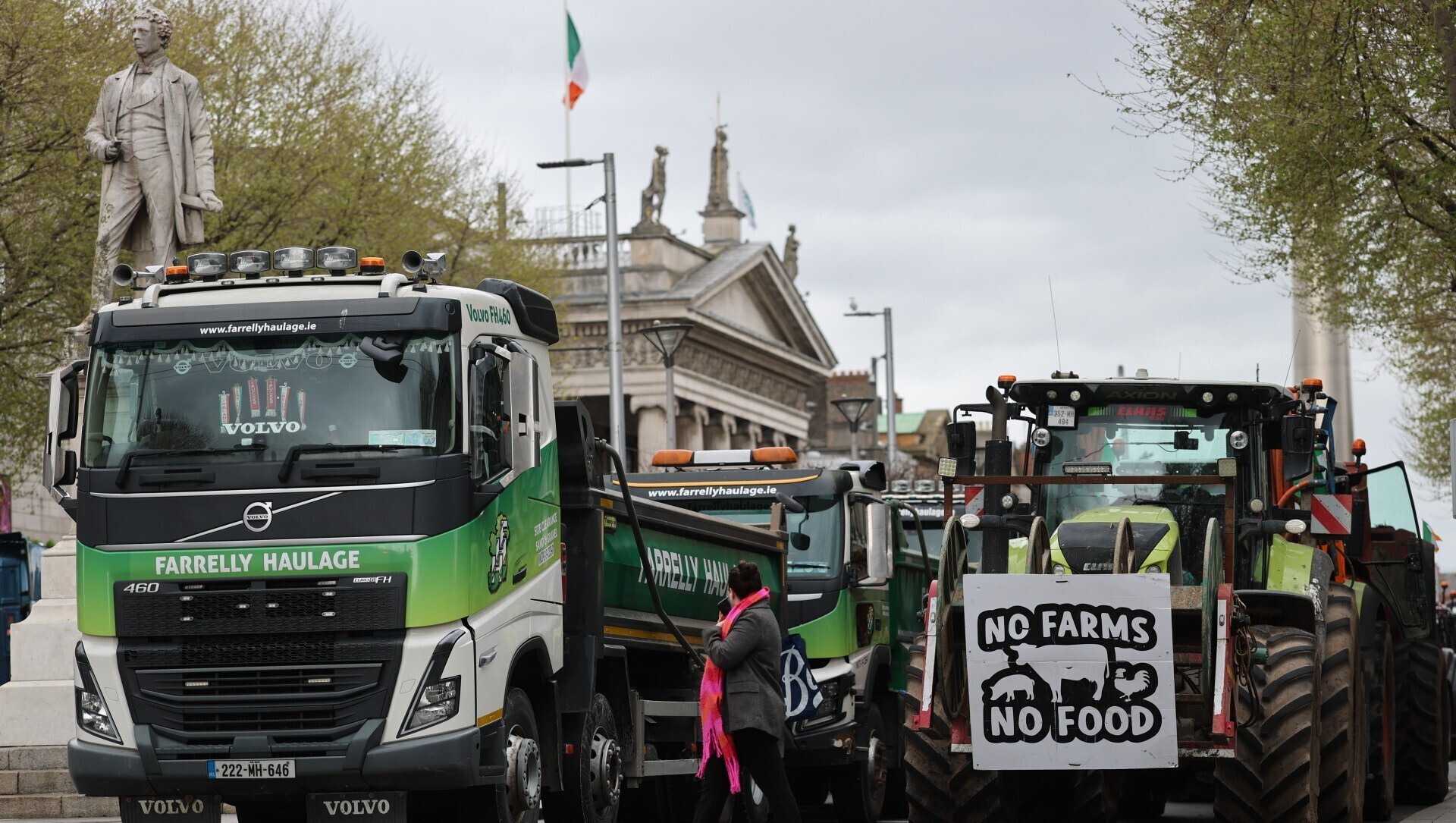
The fourth day of the fuel protest on O'Connell Street in Dublin. Photo: Liam McBurney/PA
"WTF?" It was a common sentiment all week, but from a government member on Thursday, it was surprising.
Speaking on RTÉ's , James Geoghegan, a spokesperson for the blockades which had crippled fuel deliveries and jammed up the capital said protests on O'Connell Street had been pared back as a result of a promised meeting at Government Buildings.
A meeting had been an initial demand of the loosely organised group which had spread from Dublin's main thoroughfare to the country's only oil refinery in Whitegate and terminals in Foynes and Galway, though others would later say the contents of the meeting would be the decider on whether blockades would end.
Read More
Government sources, including the text message sender, insisted late on Thursday that a meeting would take place with representative bodies, but that protesters had not been invited themselves. Whether any representative body would invite those who had spent the week telling the media that those same bodies had failed them was another matter.
That confusion reigned on Thursday evening, was a hallmark of a week that saw a popular movement sparked by a relatively small number of people, filling station forecourts run dry and the Taoiseach cancel a trip to Canada.
As word trickled out on social media on Easter Monday of a convoy protest, nobody in officialdom seemed overly concerned. Industry leaders and hauliers claimed the planned day of protests against fuel prices had “absolutely nothing” to do with them, but that they empathise with the sentiment behind the move.
Gardaí were forced to say they had no certain knowledge of whether such protests would actually materialise, given they had been organised informally primarily over social media.
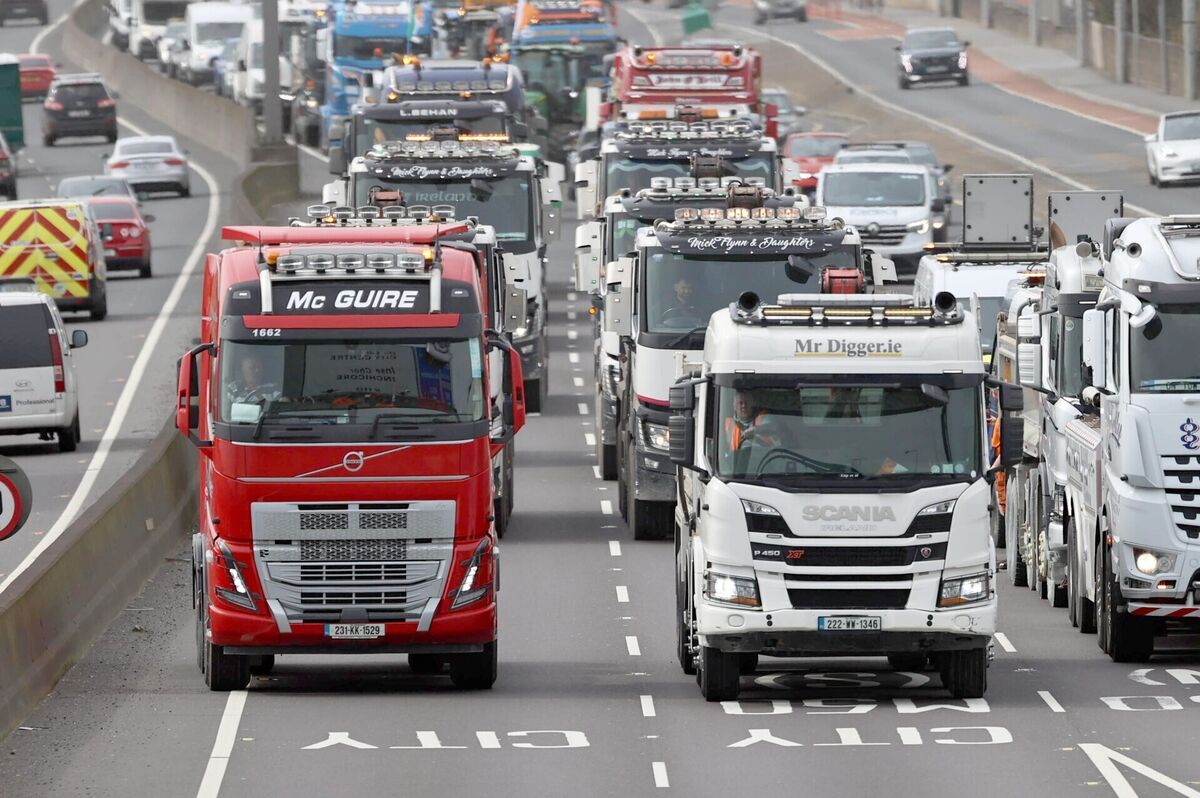
They said they were “aware” of the planned protests and noted that should the convoys materialise, there will be “significant additional traffic, including slow-moving vehicles, on the main arteries leading to Dublin” from 8am.
There was no mention of blockades and many assumed it would be a morning of bad traffic but would be mitigated by the fact it was happening on a day with no schools and many people having taken leave for the Easter break.
On Tuesday, as the protest itself got underway, the gravity of what was to come down the tracks had not yet landed with the Government.
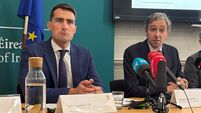
A typical press conference with finance minister Simon Harris and public expenditure minister Jack Chambers was underway at around 4.30pm as the slow convoys continued along motorways and roads.
Journalists at the press conference focused in on the day-to-day issues, overspending in the Department of Education, tax receipts coming in and the possibility of further measures to assist the public with fuel costs.
Asked about the demands of the protesters, Mr Harris told reporters that the Government was working alongside the Irish Road Haulage Association.
But as the evening drew on and drivers began to park up their trucks on the main thoroughfare of Dublin city — O’Connell Street — the situation began to evolve.
The early blockade of cities and towns had begun, with ministers beginning to sound the alarm about how the protests were unfolding.
By Wednesday morning, ministers and Government sources were getting increasingly concerned, but tried to strike an optimistic note. We are in a good position, they insisted. There is no need for panic stations just yet.
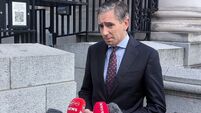
Public expenditure minister Jack Chambers was scheduled to do a press conference at 9.30am in the courtyard of Government Buildings on, ironically, the Government’s Critical Infrastructure Bill.
However, the only critical infrastructure the media wanted to talk about was the parts of the existing infrastructure that had started to be blocked by protesters.
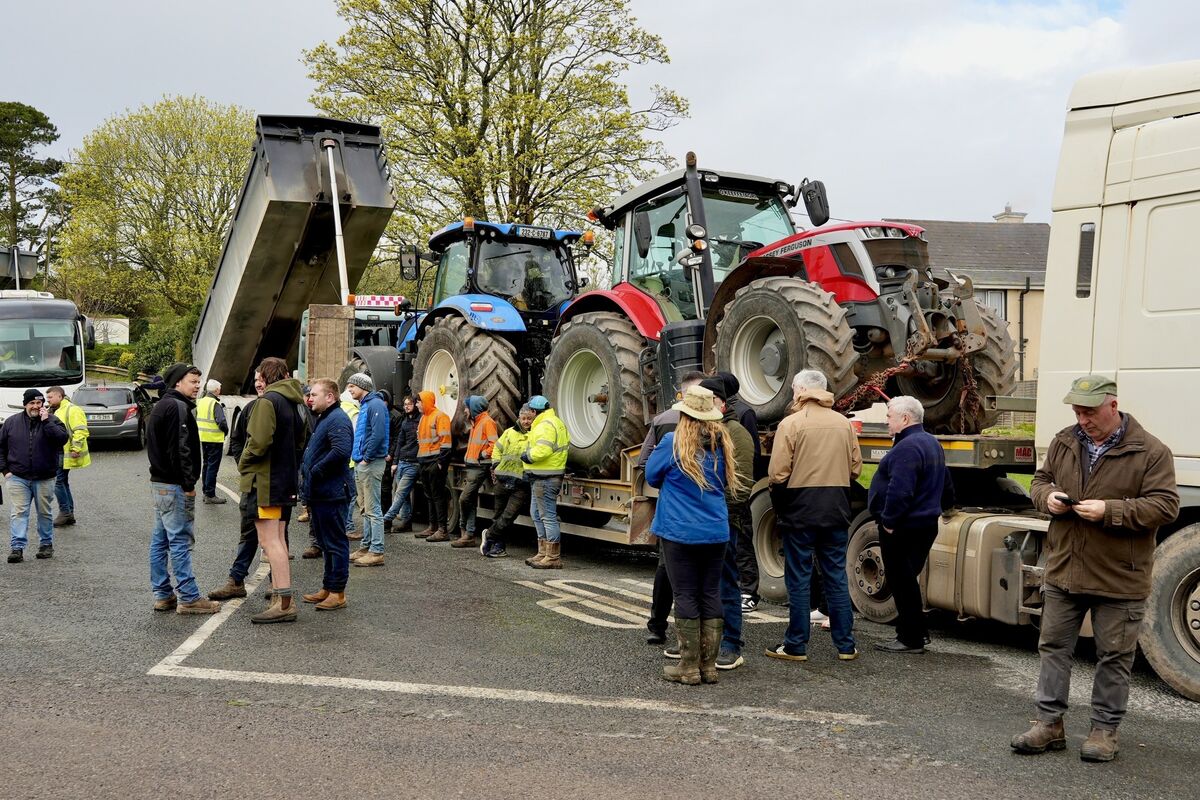
In the hours preceding the press conference, protesters had started to block fuel leaving the depot in Galway.
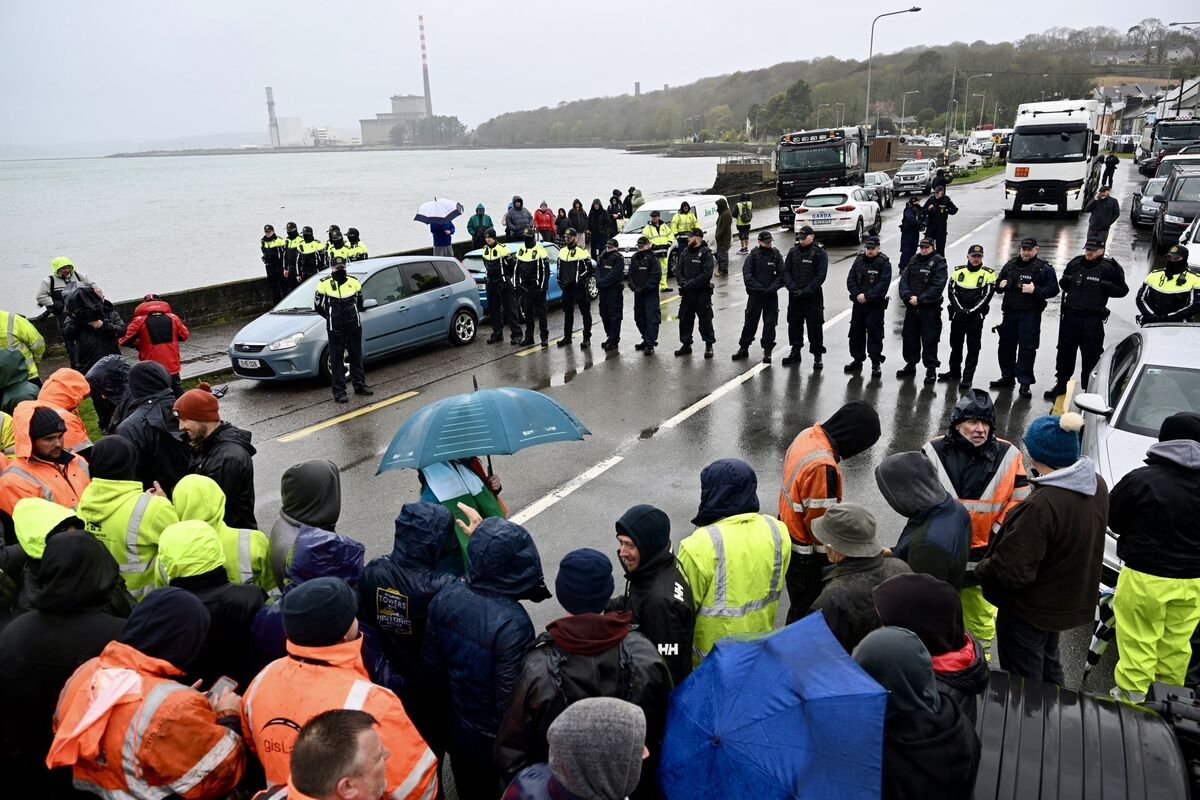
As the day went on, they would start to block Foynes and the Whitegate oil refinery in Cork.
Mr Chambers said blocking the fuel terminals was “reckless in the extreme” as he implored the protesters to stand down.
As his 23-minute presser came to an end, the freezing journalists were approached by a Government press officer and told to stick around. There was another press conference shortly, but they did not immediately say with who.
There was no advance notice given. No emails advising the media to be ready. It was then that the alarm bells started to ring.
Another two podiums were placed beside where Mr Chambers had been. It was clear the Taoiseach, Tánaiste and Sean Canney were on their way.
It felt like we were back in the days of the pandemic, when the Government leaders would appear without a moment’s notice with sweeping announcements that sent the country deeper into its spiral.
It was becoming clear how serious this was becoming for the coalition.
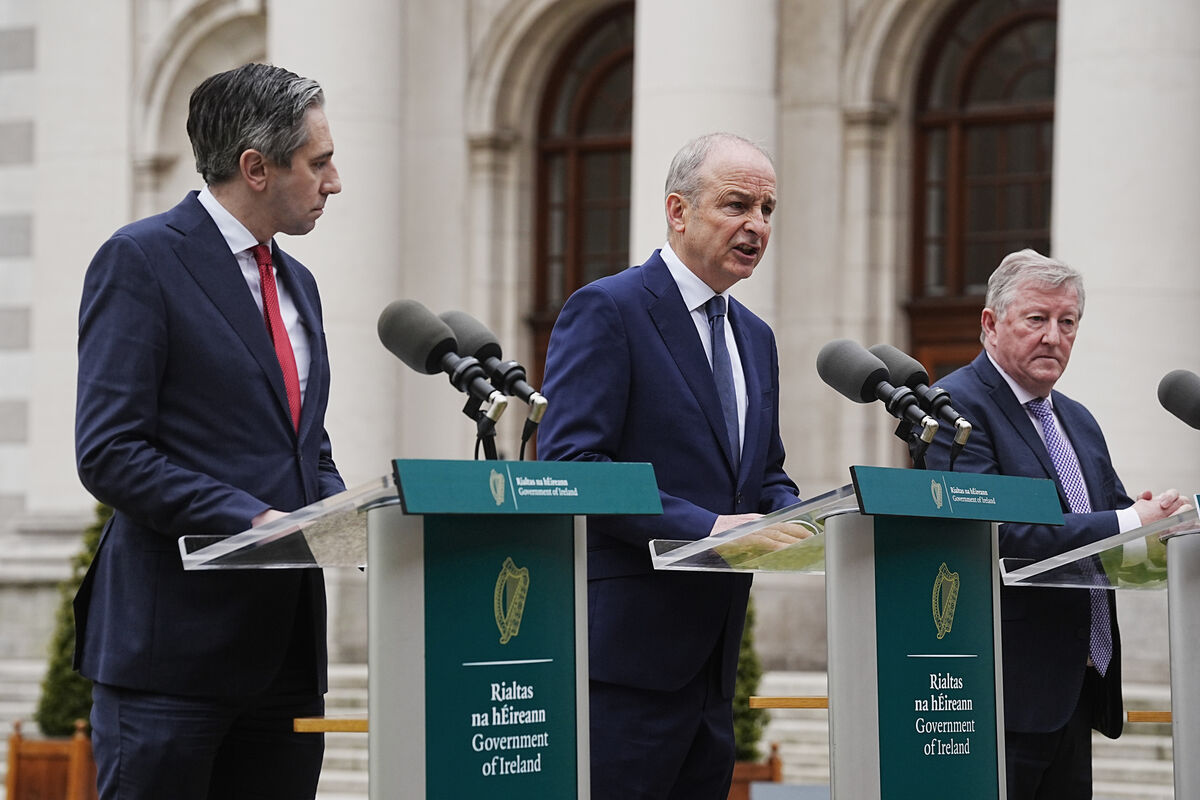
Micheál Martin was clear; we would not be talking to the protestors. If they wanted action, it would only be done through official representative bodies. This was not how we did protest.
Sean Canney said the protesters were trying to hold them to ransom. Simon Harris tried to make it clear that there were sufficient fuel supplies in the country.
The leaders, Mr Chambers, and energy minister Darragh O’Brien met shortly afterwards in Government Buildings to be updated on the situation.
After the meeting, ministers told the that there needed to be more positivity when discussing Ireland’s fuel reserves. Whitegate Oil Refinery had not been blocked off at that point.
Under the National Oil Reserves Agency (NORA) obligations, there is an average of 90 days of fuel stock. In some cases, there are more than 90 days.
This would also only be broken into in the worst-case scenario. There is a contingency plan drawn up for what happens in that case. Fuel would be prioritised for certain sections of the economy and workers.
It was stressed that this was being done because it had to be done, and it would be foolish not to prepare for all eventualities.
“We are nowhere near that,” one minister said. “It is not even on the horizon.”
Shortly after 5pm, word started to come through that the blockades had moved to Whitegate. This is when the Government started to panic.
One senior minister said that night they were “extremely concerned” about it. They noted how we have “no supply issues in Ireland other than one caused by these protesters”.
Oil prices were even starting to fall, they noted. People could not even feel the benefit of it. The frustration was palpable, but no concrete action was planned.
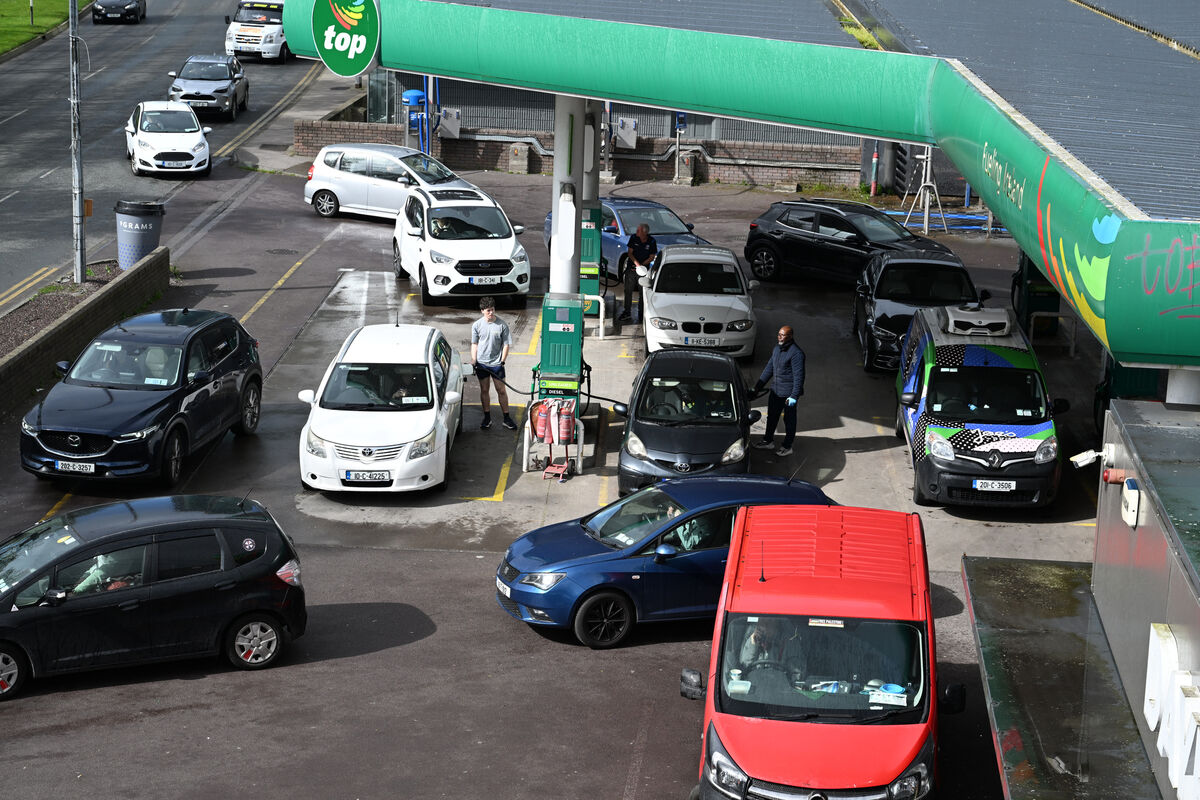
Kevin McPartlan, who heads up Fuels for Ireland, warned of forecourts running dry as key fuel supplies remained unable to make it to filling stations.
One Government source said blocks at these key fuel depots would need to be addressed by Gardaí, while a second on Wednesday night said an “escalating” response could be expected.
Statements from the justice minister appeared to outline that it was essential to keep ports and fuel depots open and signalled Garda action could be coming, but Garda sources pushed back on any kind of action, saying they remained at the “engagement” phase rather than an enforcement phase.
Ministers started to suggest that there would have to be a stronger response needed. The Gardaí would have to move beyond engagement and encouragement. They vowed enforcement was on the way.
This led to more confusion come Thursday, as the justice minister threatened a stronger response to the blockades of critical infrastructure, saying the Defence Forces would be called in alongside the Gardaí to move them on.
What form that assistance would take was left vague, with some media reporting on a "crackdown" on protesters, while sources argued it was merely the use of larger recovery vehicles to move trucks and tractors from refinery and port gates.
That lack of clarity wasn't helped when a group of army vehicles was seen preparing for deployment with the Unifil mission in Lebanon in Limerick, fuelling speculation they were on their way to Foynes which had to be clarified by the Defence Forces.
As the day wore on, up to 100 petrol stations found their pumps empty, but there was no sign of the Defence Forces or even gardaí making attempts to move protesters.
By the time Mr Geoghegan made his way to RTÉ, it was clear the protests would last into Friday and beyond.
As the morning wore on and a Garda public order unit arrived at Whitegate, Taoiseach Micheál Martin and a host of his ministers cancelled a trade mission to Canada, due to begin over the weekend as protesters arrived for "their" meeting at Agriculture House on Kildare Street.
That they were refused access capped four days of unprecedented shutdown and anger, which had snowballed from a few posts on social media to a major problem for the Government.
- Paul Hosford, Louise Burne and Tadgh McNally are political reporters for the Irish Examiner
CONNECT WITH US TODAY



Be the first to know the latest news and updates