Russia and White House doing all they can to prop up Viktor Orbán
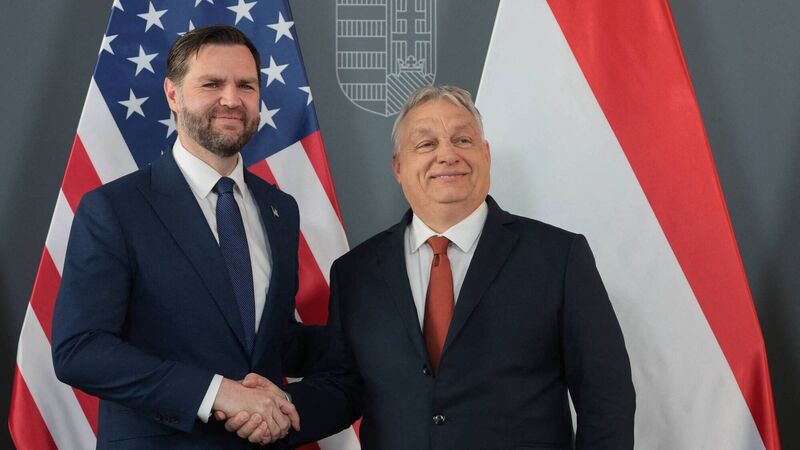
US vice president JD Vance and Hungarian prime minister Viktor Orbán shake hands as they meet in Budapest, Hungary, ahead of the election on Sunday. Picture: Jonathan Ernst /AFP via Getty Images
On Tuesday, as Donald Trump was threatening to end one civilisation, his deputy was in Budapest, attempting to save another.
As bombastic Trumpian rhetoric goes, this was nothing special. But Vance’s presence in Hungary, ahead of Sunday's crucial general election, did signify another plunge in the status of the USA as the alleged leader of the so-called "free world".
Traditionally, the US administration has never interfered in foreign elections through its leaders. Desperation this week forced Trump to dispatch Vance to attempt to prop up Orbán’s faltering campaign for re-election.
For Orbán — the prototype autocratic Western leader — is in trouble, and both Russia and the Trump White House are doing all they can to ensure he maintains his iron grip on power.
Orbán has been prime minister of Hungary for 16 years. Like Trump, this was a second coming as he had previously led for a three-year term. Since 2010, he has systemically implemented an authoritarian regime.
He recognised early on that a free media would be an impediment, so he used the law, wealthy supporters, and regulatory powers to exercise near complete control. Today, an estimated 80% of the media in the country is openly pro-government.
His party, Fidesz, is thought to have control over much of the public service, the courts, and a chunk of the economy. Concerns have repeatedly been expressed at EU level about the independence of the judiciary. There is a general wariness about expressing opinions contrary to the government. Minorities have been targeted, including the LGBT+ community.
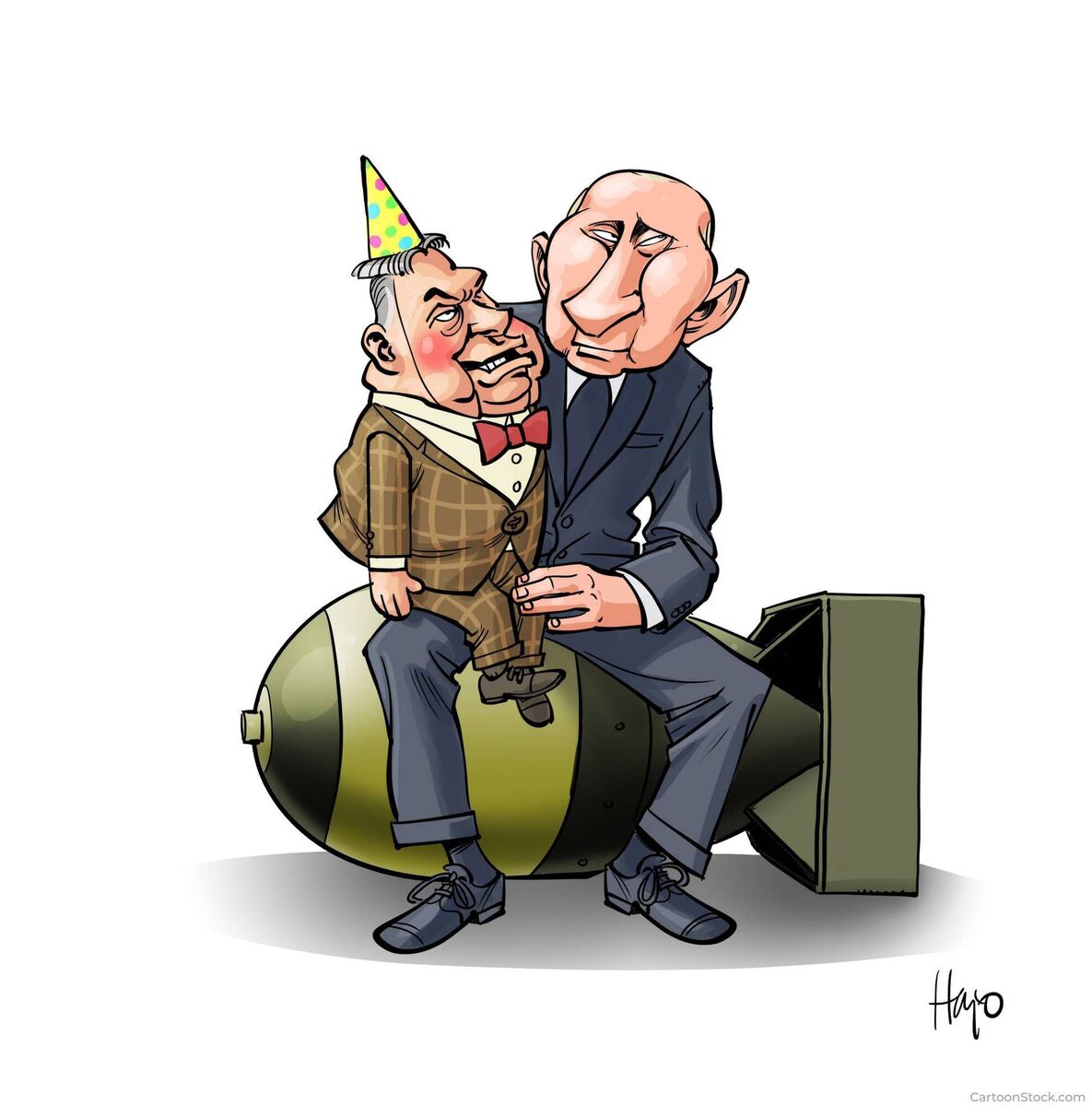
In all this, he has managed to craft the perfect society for an autocrat — but with the added bonus of a veneer of democracy and, crucially, skilfully achieved as a member of the EU. It’s no wonder that Trump looks at him through envious eyes but also as a crucial ally in an EU he is determined to weaken if not destroy.
The Americans are not the only ones who covet his role as a disruptor in the EU. Consistently, Orbán has used his country’s veto to attempt to curtail any assistance that Brussels wants to give Ukraine in defending itself against the Russians. Last week, controversy blew up when it was revealed that the Hungarian administration leaked details of EU meetings to Moscow.
“Orbán is a Trojan horse for the Kremlin in the European Union,” Euronews correspondent Shona Murray told the
“There is simply no other way of looking at it.”
Last week, reported that the Russians suggested to Orbán that he stage a fake assassination attempt as a ruse to sway voters in his favour.
As such, Orbán is in a unique historic position in global politics in that both the US and Russian administrations badly want him to maintain power because he serves both their interests.
Naturally, most of this is anathema to the EU which, whatever its faults, still attempts to uphold democratic norms. Most member states would like to see the back of Orbán, and attempt to rebuild a steadier relationship with his successor.
Ejecting Hungary from the union is not something that appeals to many. In any event, it would be extremely difficult. Murray points out that all other 26 states would have to agree to such an ejection, and there has always been at least one that is unwilling to have the country thrown out because of Orbán’s attack on democracy. That scenario is unlikely to change anything soon.
One vignette last year involving the Taoiseach reflected the general view among most other EU states. In an interview, Micheál Martin stated that the veto mechanism in the EU was being abused by Hungary. Martin called on the union to take action or the union could become dysfunctional.
Orbán responded on X, mentioning a “love story” between Irish and Hungarian patriots and asking Martin not to “ruin” it.
Read More
“We Hungarians have always regarded Irish patriots as champions of freedom and national independence,” he posted. For that reason, he said it is “always shocking when we see that an Irish patriot chooses to stand on the side of an empire instead of national sovereignty”.
The response was typical Orbán, stepping around the reality that he was standing with the dictator Vladimir Putin against a Ukraine attempting desperately to maintain its national sovereignty.
So why is such an autocrat, with near complete control over his country, in danger of not being re-elected? Because, as with all the current breed of right-wing populists, his steerage of the economy has been a disaster. While growth stagnates and unemployment and emigration rise, a small group at the top of society have been rolling in the money.
No prizes for guessing that most of these are either related to or linked to the prime minister. In this respect, Trump has in the last two years merely fastened onto Orbán’s recipe for corruptly ransacking an economy.
The result is that a large chunk of the electorate is tiring of the hard-man image projected by Orbán, no longer buying his rhetoric that foreign elements, immigrants, and minorities are to blame for the sluggish economy.
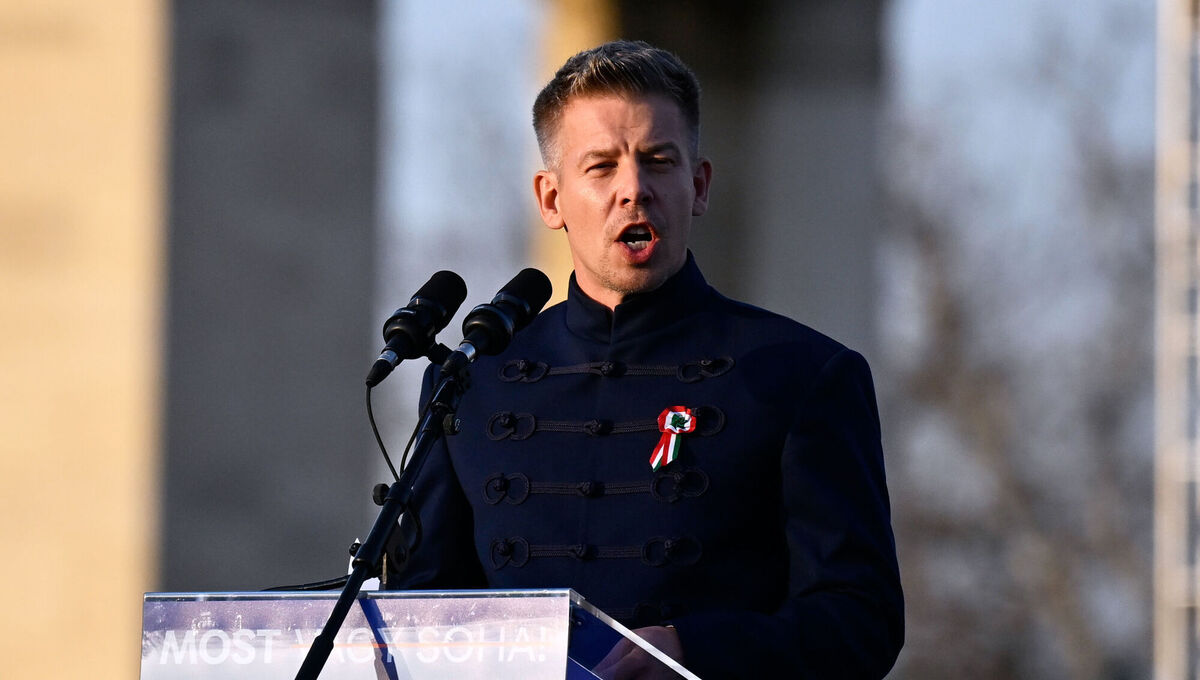
As a result, Orbán’s party is now 10 points behind in the opinion polls to the opposition, led by former Orbán acolyte Péter Magyar. His party, Tisza, is a centre-right entity, which promises change — particularly in relation to corruption.
Orbán’s response has been to run what journalist and author Anne Applebaum has described as “the first post-reality political campaign”. This involves projecting his opponents as effective foreign agents and reprobates, but doing so based on absolutely nothing at all.
One central tenet of this is to disseminate the ludicrous threat that if Orbán is not re-elected to defend the country, it will be invaded by guess who?
According to Applebaum in a piece in magazine, Orbán is avoiding domestic issues and running a campaign “backed by Russian propagandists, the European far right, and now the Trump administration directing a small fortune’s of posters and social media videos toward a different goal: Convincing Hungarians to fear sabotage, thievery, or even a military attack from … Ukraine”.
The threat isn’t just false, but ludicrous. As if Ukraine, attempting to join the EU and under daily attack from Russia, was going to invade another EU country. Yet there is a sense of desperation about it, with Orbán so behind in the opinion polls. So it was that somebody sent for the cavalry, and it arrived in Budapest this week in the form of JD Vance.
In a two-day trip, he did all he could to bolster the electoral fortunes of Trump’s great friend. Contributing to the “post-reality” content of the campaign, Vance at one point even posited that the EU was interfering in the election. The US vice president, in town to interfere in the election, kept a straight face as he conveyed that particular theory.
“Will you stand against the bureaucrats in Brussels?” he asked a rally. “Will you stand for Western civilisation? Will you stand for freedom, truth, and the God of our fathers?
“Then, my friends, go to the polls and stand for Viktor Orbán.”
The intervention could be crucial in winning voters to Orbán or, as is equally likely, in eliciting resentment at such blatant foreign interference.
One way or the other, Hungary will be on a new road after Sunday's election. Either Viktor Orbán continues to be a Trojan horse for not just Putin but also Trump within the EU, or Hungary — and by extension the union — will be starting out on a brand new day.
- Shona Murray is this week’s guest on


CONNECT WITH US TODAY



Be the first to know the latest news and updates