Shona Murray: EU faced with Russian trojan horse if Orbán gets re-elected
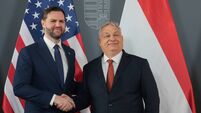
Viktor Orbán has spent 16 years chipping away at his country’s democracy. He told us his plans out loud as far back as 2012. He said he would turn Hungary into an ‘illiberal state’. File Picture: Alex Brandon/AP

Sunday’s election in Hungary is one of the most significant this year.
The consequences of Orbán’s pro-Russia, anti-democratic, eurosceptic strategy has already been detrimental for Europe. If he’s returned to power, his reign will be in full collaboration with the Maga movement in the US which sees Europe — and particularly the EU — as an enemy.
Orbán’s purposeful reshaping of Hungary — once a promising, newly democratic, post-Soviet state — into an undemocratic satellite of Russia and the US will soon be complete.
The consequences for Europe will be monumental.
Read More
Already, Orbán has spent the last 16 years chipping away at his country’s democracy. He told us his plans out loud as far back as 2012. He said he would turn Hungary into an “illiberal state”.
In the early years, he changed the constitution without any consultation by citizenry or even the rest of parliament. He went about dismantling the independence of the jury, and he ended the checks and balances and separation of powers that act as guardrails against government corruption.
With his vast majority in parliament, he introduced a law whereby “no act that violates the constitution would be illegal if a two-thirds majority in parliament simply voted to incorporate the act into the constitution”.
Orbán then changed the electoral law to favour his party, and prohibited party political broadcasts during election campaigns except for publicly owned broadcast media.
According to the Cato Institute, in the 2018 election campaign, 61% of state media stories covered the government, of which 96% cast it in a positive light.
“Meanwhile, 82% of stories covering the opposition were negative. In the 2022 campaign, the united opposition candidate for prime minister received a total of five minutes of airtime”, the report reads.
In 2022, the justice committee of the European Parliament said the situation in Hungary had “deteriorated” such that Hungary has become an “electoral autocracy.”
The committee stated that the EU’s inaction against obvious breaches of EU values and laws had “exacerbated the backslide”, saying the “lack of decisive EU action has contributed to the emergence of a hybrid regime of electoral autocracy, ie a system in which elections occur, but respect for democratic norms and standards is absent”.
In more recent years, the EU has attempted to halt the seemingly unstoppable tide of illiberalism engulfing Hungary from reaching into the policies and processes of the whole of the EU.
But the EU’s approach has been weak, tepid, and effectively an appeasement of Orbán.
At one point, in 2022, the EU had blocked around €20bn of funding from the EU budget from Budapest in response to a myriad of issues including judicial independence, corruption relating to public procurement contracts, and violations of freedom of expression.
In addition, the EU took infringement proceedings against Hungary’s so-called “propaganda law” which prohibits the depiction of LGBT+ people in public life.
The EU, alongside a wide coalition of EU member states, including Ireland, referred Hungary to the European Court of Justice, accusing Hungary of breaching the fundamental rights of the EU.
Last year, an opinion from the advocate general said Hungary’s law violates multiple EU laws, including the Charter of Fundamental Rights.
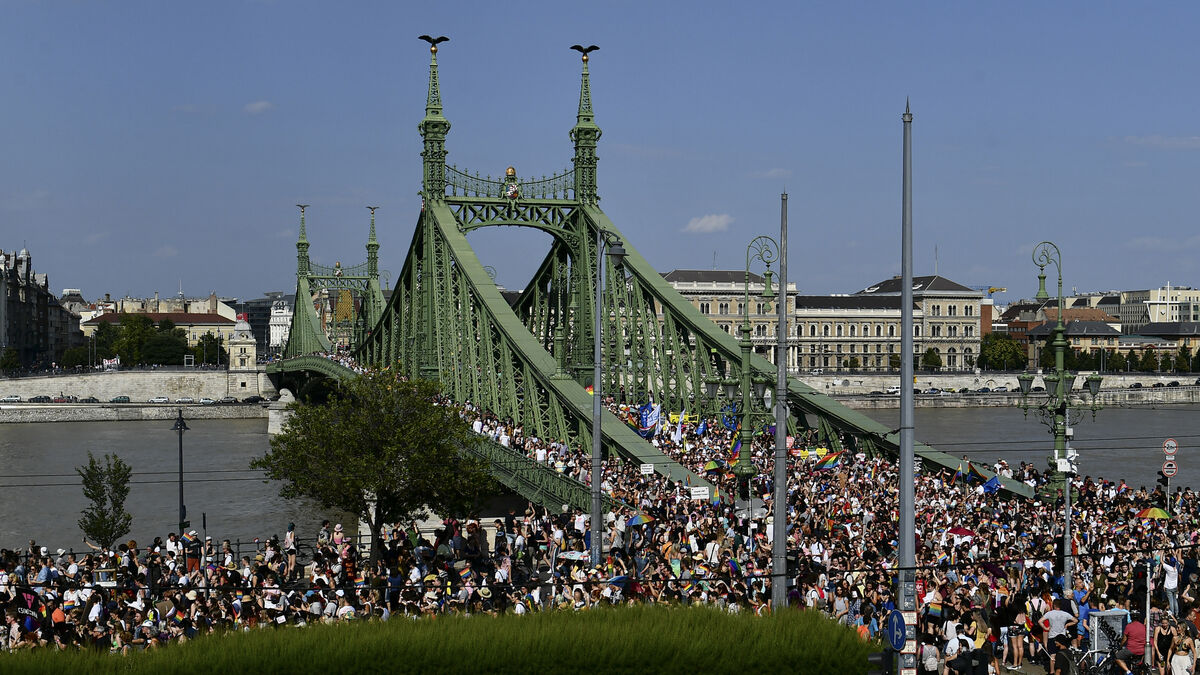
However, in December 2023, the European Commission then unblocked €10.3bn cash for Orbán a day before he was encouraged not to veto a vote on Ukraine opening accession talks on membership of the EU.
And despite this unofficial quid-pro-quo, Budapest has since vehemently stood in the way of Ukraine’s progress in his candidacy.
It’s been long accepted that Orban has been working alongside Russia since Moscow’s full-scale invasion of Ukraine.
Orbán has consistently cosied up to Putin and insulted Ukrainian president Zelenskyy.
But, in the last few days of this Hungarian election, wiretapped evidence from phone calls between Orbán and Vladimir Putin has emerged.
Among other things, in them, Orbán offers his assistance in acting as an Russian agent among the 27 members of the EU.
According to the excerpts, Orbán told Putin: “Yesterday, our friendship rose to such a high level that I can help in any way.”
He then went on to say he would be the “mouse” to Russia’s “lion”.
He was referring to an Aesop’s fable of the mouse who went on to save the life of a lion who had earlier spared him.
A similar recording of Hungarian foreign minister Peter Szijjártó updating his Russian counterpart, Sergei Lavrov, about an ongoing meeting of EU member states in Brussels has been disclosed. In another transcript, he’s heard promising Lavrov that Hungary would block the passage of EU sanctions against Russia unless the EU agrees to remove the name of a sister of Russian businessman with ties to Putin from the EU’s list of sanctioned persons.
“We will do our best in order to get her off,” he tells Lavrov.
On Wednesday, US vice president JD Vance and his wife Usha offer not only their full-throated endorsement of “Viktor”, but lay on thick the disinformation that’s become a key characteristic of Fidesz’s campaign, excoriating the European Commission over “billions of dollars withheld from Hungary because you guys protect your borders … causing suffering among the Hungarian people in an effort to influence an election”.
The polls show opposition leader Péter Magyar in a relatively comfortable lead.
Magyar, a former Fidesz party ally of Orbán, is a committed conservative. The main difference, he says, is his promise to end corruption and restore accountability.
Let’s see if the message lands.


CONNECT WITH US TODAY



Be the first to know the latest news and updates