Colin Sheridan: Lebanon’s endless war — a country trapped in other people’s conflicts
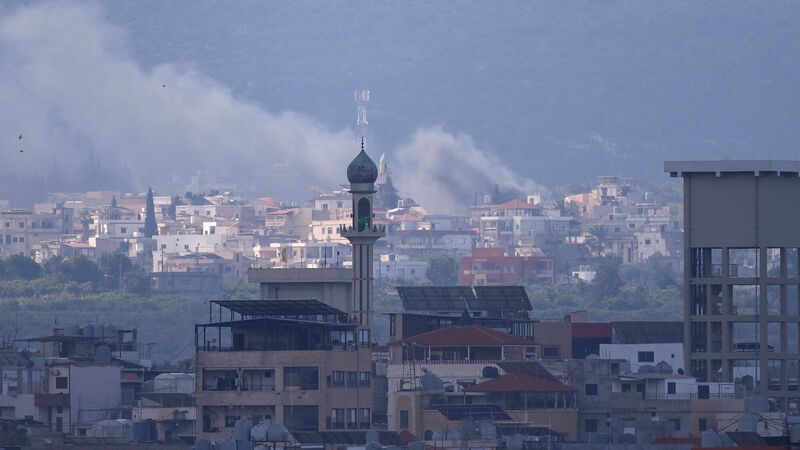
An Israeli airstrike that hit Qlaileh village is seen from Tyre city in south Lebanon on Friday. Photo: AP/Hussein Malla
We call them resilient, as if survival were a virtue freely chosen, not a sentence handed down by geography and history.
In Lebanon, wars rarely begin and never quite end; they arrive like weather systems, drifting in from elsewhere, gathering force over borders drawn by other hands. The country endures the way a scar endures — visible, unhealed, and quietly instructive.
Each generation inherits the language of recovery before it has learned the terms of peace. Homes are rebuilt, lives resumed, businesses reopened — but always provisionally, always with the quiet understanding that what has been restored can be taken again.
Lebanon does not move forward so much as it circles, returning again and again to the same point of fracture. To understand why, it is necessary to begin with the shape of the country itself.
Lebanon is not simply a nation-state in the conventional sense. It is a delicate political arrangement between three dominant sectarian blocs: Shia Muslims, Sunni Muslims, and Christians — principally Maronite.
Power is not just shared between them; it is structurally divided along these lines. The presidency is reserved for a Christian, the prime ministership for a Sunni, and the speakership of parliament for a Shia.
This system, designed to maintain balance, has instead often entrenched division. It ensures representation, but it also ensures that politics is rarely about ideology or policy. It is about identity, loyalty, and survival.
Layered onto this internal architecture is an equally complex web of external patronage.
Saudi Arabia has long exerted influence over Lebanon’s Sunni leadership. Iran backs Shia Muslims, most notably Hezbollah.
And Lebanon’s Christian factions — historically and in more complicated ways today — have found support from Western powers, particularly the United States, and at times from Israel.
This is not always declared openly. It does not need to be. Influence in Lebanon rarely announces itself; it operates through alignment, through funding, through quiet understandings that shape political behaviour.
The result is a country in which domestic politics cannot be separated from regional power struggles. Lebanon does not simply experience the Middle East’s conflicts. It absorbs them.
For Karim Makdisi, associate professor of international politics at the American University of Beirut and co-host of the Makdisi Street podcast, this dynamic is both historical and ongoing.
“There is a kind of subservience that has taken hold,” he says, describing what he sees as a persistent belief among some Lebanese that the country’s instability can be explained away internally — first by Palestinians, now by the Shia.
“There’s this idea that if they weren’t here, Israel would somehow leave Lebanon alone. That is a fantasy.” History offers little support for that belief.
When Israel invaded Lebanon in 1982, Hezbollah did not yet exist. The invasion, and the subsequent occupation of the south, helped create the conditions in which Hezbollah would emerge as a resistance movement.
At the time, elements within Lebanon’s Christian militias aligned with Israel, seeing in it a strategic partner against Palestinian groups and domestic rivals.
That relationship, while rarely spoken of in blunt terms today, forms part of a longer pattern in which external alliances are shaped less by ideology than by perceived necessity.
Lebanon’s civil war (1975–1990) was never solely an internal conflict. It was a battlefield layered with foreign interventions —Syrian, Israeli, American — each backing different actors, each pursuing its own strategic interests.
The war formally ended. The pattern did not.
One of the more striking features of Lebanon’s modern history is the role of its national army.
Nominally the guardian of sovereignty, the Lebanese Armed Forces have historically been shaped by the same sectarian dynamics as the political system.
Its upper ranks have long been dominated by Christians, reflecting both the legacy of the state’s founding and the distribution of power within it.
Yet despite decades of conflict with Israel, the army has never developed into a force capable of confronting the Israeli Defence Forces in any meaningful way.
Whether by limitation, design, or political constraint, it has remained largely on the margins of direct confrontation. That reality persists today. The Lebanese state, in military terms, is not a deterrent.
Into that vacuum stepped Hezbollah — a non-state actor that has, over time, become the only force within Lebanon capable of mounting sustained resistance against Israel.
It is this paradox that sits at the heart of the country’s current crisis: the state cannot defend itself, yet moves to restrain the one entity that can.
Makdisi sees today’s events not as a rupture, but as a continuation.
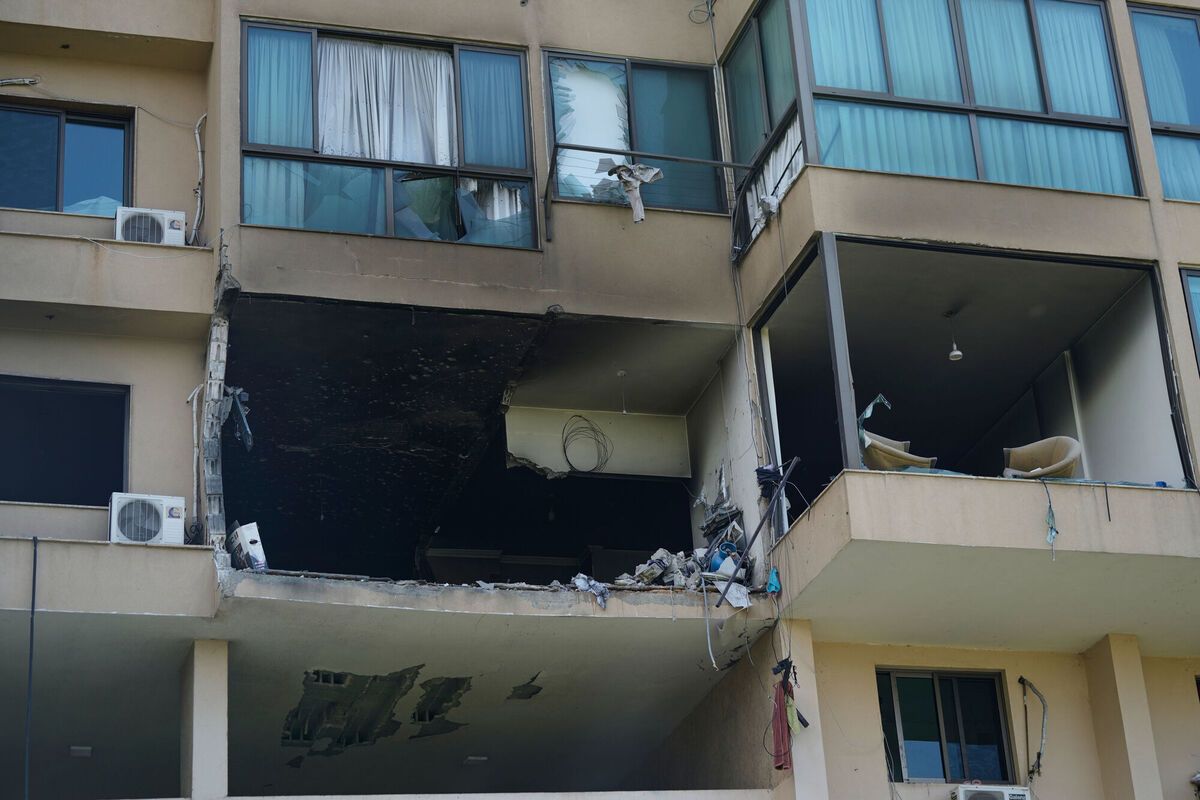
Israeli forces push northwards. Southern villages empty under bombardment. Displacement spreads. The language of security once again justifies actions that, in practice, redraw the map.
“If you occupy again, what kind of resistance do you think that will produce?” he asks.
The logic is cyclical. Occupation generates resistance. Resistance invites retaliation. Retaliation deepens grievance. And the cycle begins again, each turn more entrenched than the last.
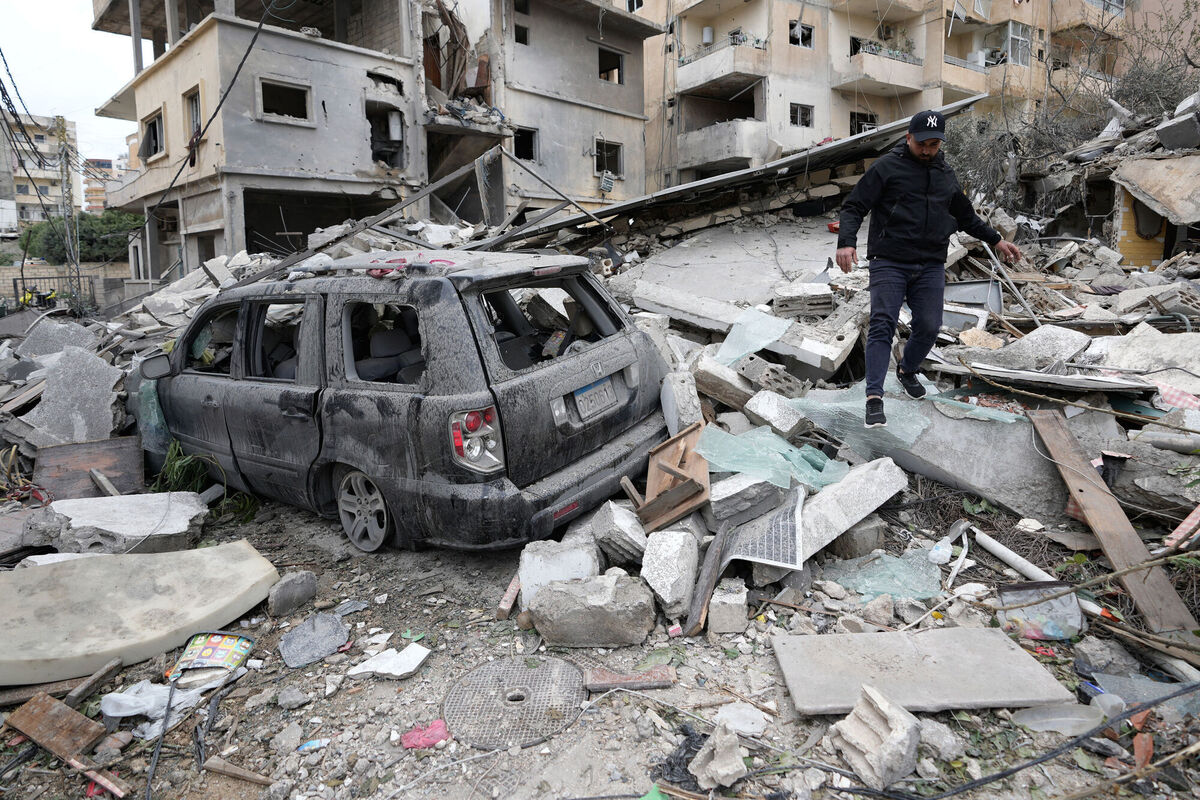
The human cost of this cycle is stark. In a country roughly the size of Ireland, close to a quarter of the population has been displaced by Israeli military action in recent months.
Entire communities in the south have been emptied. Families move north not knowing if they will return, or what will remain if they do.
Infrastructure is damaged, livelihoods erased, social networks fractured.
Displacement on this scale is not temporary disruption. It reshapes a country.
Makdisi is blunt in his assessment. If such conditions were imposed elsewhere, he suggests, the language used to describe them would be far less cautious.
And yet, even now, blame is often redirected inward.
“People will still point to the Shia and say this is their fault,” Makdisi says.
For him, this reflects a deeper pattern — one in which Lebanese society internalises responsibility for crises driven by external forces.
The same dynamic once shaped attitudes towards Palestinian refugees, who were long cast by some as the root cause of instability.
It is an argument that simplifies a complex reality into something more manageable: if the problem is internal, it can, in theory, be fixed internally.
But as Makdisi insists, that belief obscures more than it explains.
Lebanon’s government, meanwhile, appears caught between paralysis and calculation. It lacks both the capacity to deter Israeli aggression and the cohesion required to present a unified strategy.
Recent moves against Hezbollah reflect a belief within parts of the political class that compliance — whether with the United States, Israel, or regional powers — might offer a path to stability.
Makdisi is sceptical.
“There is this assumption that if Lebanon complies, it will be rewarded with peace,” he says. “But what if that was never the objective?”
In this reading, Lebanon is not being stabilised. It is being managed.
What external powers require is not a strong Lebanon, but a functional one — capable of absorbing shocks, containing unrest, and serving as a buffer. A country kept in a state of permanent near-crisis: wounded, but not beyond use.
This is where the language of resilience becomes dangerous.
There is, undeniably, something remarkable about Lebanon’s ability to endure. But resilience, when demanded repeatedly and without relief, ceases to be a virtue. It becomes an expectation.
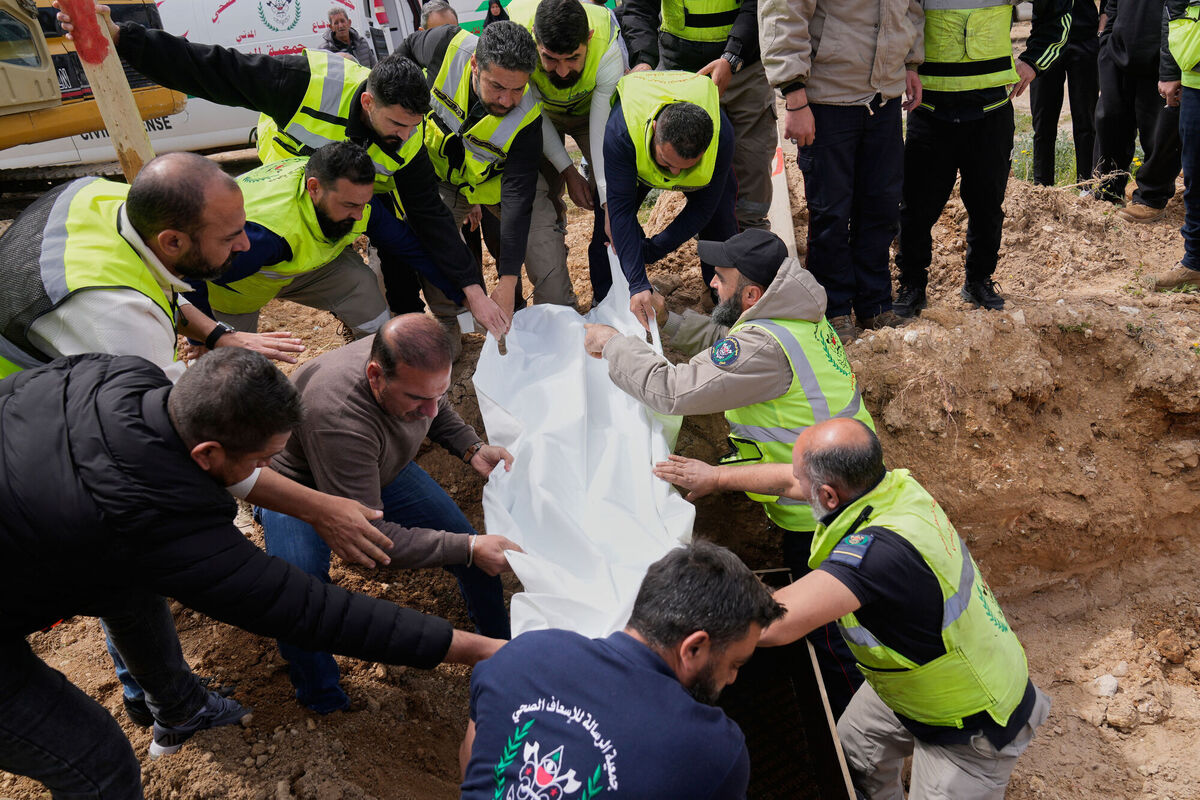
To call Lebanon resilient is, in some ways, to normalise its suffering — to suggest that what would be intolerable elsewhere is simply part of its nature.
And in doing so, it lowers the threshold of outrage.
We would not accept such conditions in Ukraine. We did not accept them in Bosnia. In Ireland, the memory of conflict remains too close, too raw, for such language to pass unchallenged.
We would not accept the displacement of a quarter of a country’s population. We would not accept the routine violation of sovereignty. We would not accept a situation in which war becomes cyclical, expected, almost ambient.
Why, then, is Lebanon different?
Why is its instability treated as inevitable, its suffering as familiar, its crises as somehow self-explanatory?
Lebanon’s tragedy is not only that it is repeatedly drawn into other people’s wars. It is that this condition has come to be seen as natural.
But there is nothing natural about it. It is the product of history, of geography, of external intervention layered onto internal division. It is the result of decisions — made in capitals far beyond Beirut — as much as those made within it.
To recognise that is not to deny Lebanon’s own failures. It is to place them in context. Because until that context is acknowledged, the cycle will continue.
And Lebanon, resilient as ever, will endure, but only because it has to.
CONNECT WITH US TODAY



Be the first to know the latest news and updates