Could AI be as transformative as the emergence of agriculture?
At last year’s Law Society massive open online course on AI, one expert compared AI’s impact not just to the internet or even the printing press but to the shift from hunter gathering to agriculture. Picture: iStock
A of mine in his late 50s writes code for a small financial firm in Ireland. The company handles reporting work for very large US financial institutions.
He’s good at his job, likes his colleagues, and had assumed he would keep going until retirement. Now he’s being told that, unless the firm expands quickly, his role could be made redundant as software and AI take over more of the routine work.
At his age, looking at a market where more than one in 10 job ads already mention AI, that is a frightening prospect.
We talk a lot about AI as “transformational”. But transformational for whom, and on what terms?
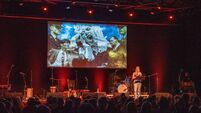
At last year’s Law Society massive open online course (MOOC) on AI — attended by 6,450 people from 84 countries — one expert compared AI’s impact not just to the internet or even the printing press but to the shift from hunter-gathering to agriculture.
That may sound grandiose, but it’s worth unpacking what that older shift actually involved.
If you ask most people about the move from foraging to farming, they’ll say it was progress: More food, settled life, the path to towns, and eventually modern civilisation. Yet historians and anthropologists have been pointing out for decades that for many ordinary people it was, at least at first, a raw deal.
Skeletal evidence suggests that early farmers were often shorter, sicker, and more overworked than the hunter-gatherers who came before them. Diets narrowed from a wide range of wild plants and animals to a few staple crops, which meant more malnutrition and bad teeth. Living in permanent villages, side by side with other people and with domesticated animals, created perfect conditions for infectious diseases to spread. On top of that came new hierarchies, landlords, and rulers.
This is why Jared Diamond, the American geographer and author, famously called agriculture “the worst mistake in the history of the human race”. He argued that it brought inequality, disease, and despotism as well as surplus grain. The total amount of food increased, and populations boomed, but individual lives often got harder.
The fear is that AI could follow a similar pattern.
Ireland’s own Department of Finance has warned that around 63% of employment here is exposed to AI, with finance, ICT, and other white-collar workers among the most affected.
Reports already point to entry level and junior roles being automated away, particularly impacting younger workers trying to get that first foothold on the ladder. The only safe jobs are in the healthcare sector, and even there…
Agriculture really did change everything. It wasn’t like upgrading from a Nokia to a smartphone. It rewired how people got their food, how they organised work, who held power, and what counted as a “skill”. Once a community had committed to farming and population grew, it was very hard to go back to the old way of life.
Second, that transformation did not automatically improve life for the majority. It increased the total wealth of societies, but often left individuals with less autonomy and worse health for centuries. Progress at the level of civilisation did not mean progress for every farmer, labourer, or child.
In other words, the technology may raise productivity and profits, but those gains may not be evenly shared. Some will own the “fields” and the machines. Others will be told their skills are obsolete.
A recent episode in the US shows how quickly these anxieties can spread.
Citrini, described by The Guardian as “a little-known US firm that provides insights into transformational megatrends” published a “scenario” — not a “prediction” — about a “global intelligence crisis”.
Citrini called AI profits “ghost GDP” — output created by machines that never turns into household income because “machines spend zero”.
Thus aggregate productivity gains can mask worsening conditions for individuals and communities. The Citrini note knocked billions off the paper value of the AI ecosystem in a single stock market session last month as investors abruptly re-priced the very companies meant to profit from the technology.
For readers in rural Ireland, none of this will sound entirely new. Farmers have lived through their own versions of “innovation” — from chemical fertilisers to quota systems — that were sold as progress, but they often shifted risk onto those working the land while concentrating power and profit further up the chain.
The emerging AI economy shows similar patterns. Big tech firms and large financial institutions are investing heavily in AI tools that promise efficiency gains. Research suggests Irish SMEs are adopting AI too, but without dramatic changes in staffing numbers.
Larger players, however, are already using automation to trim back office and graduate roles in finance and tech.
Out in the countryside, there is a real possibility that more and more decision making about credit, insurance, compliance, even land use and planning will be done by systems designed and controlled elsewhere. The local credit union staff member or small accountant who understood the nuance of a farm business may be replaced by a centralised algorithm that does not.
For my friend in his 50s, the question is simple: If his sort of skilled, steady job in a small Irish firm is being squeezed out, where does he go? For younger people, the question is whether there will still be entry-level positions where they can learn at all.
The point of the hunter-gatherer analogy is not to say we should smash the machines and go back to the Stone Age, though the Citrini note suggests “Occupy Silicon Valley” protests by 2027.
Very few would seriously argue that the world would be better off without agriculture, towns, hospitals, or schools. The point is to warn that we can sleepwalk into a “new normal” that benefits the system more than the people living inside it.
Similarly, if we treat AI as an unstoppable force that cannot be shaped, we risk locking our children and grandchildren into a work regime that they did not freely choose. Ireland is not powerless here. We have an AI strategy, an advisory council, and a tradition of social partnership that insists the future of work is negotiated rather than simply handed down.
We can demand that the gains from AI are used to shorten working hours or expand services, not just cut headcount. We can use AI to retrain and garner mid-career support so that a 58-year-old coder is not simply thrown on the scrapheap. We can protect and strengthen local institutions so that decisions affecting rural livelihoods are not entirely outsourced.
The agricultural revolution was not one clean step for mankind. It was a long, messy, often painful, bargain. With AI, we have a chance to be more honest at the outset.
The question for Ireland, urban and rural alike, is whether we let this new “revolution” happen to us, or whether we insist on shaping it so that ordinary people, not just distant owners of code and capital, come out ahead.
- Tony Lowes is a director of Friends of the Irish Environment.


CONNECT WITH US TODAY



Be the first to know the latest news and updates