Teachers are not trained as first responders to students’ mental health needs
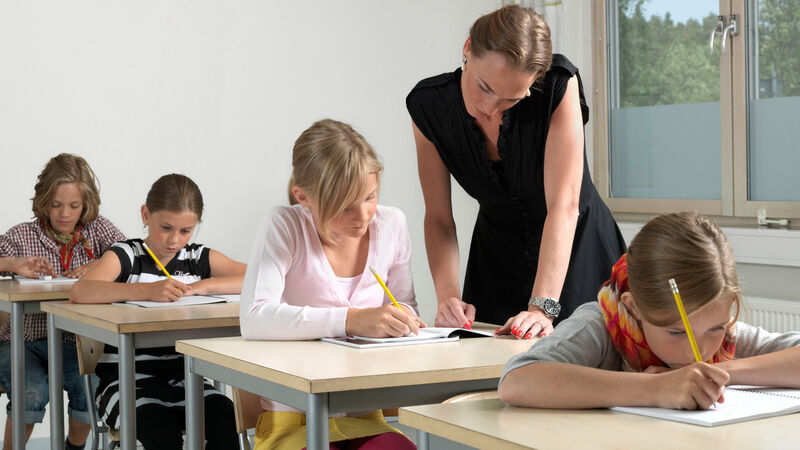
Emotional wellbeing is closely tied to school engagement and academic success. File picture
Mental health difficulties among school-age children are a significant concern, both in Ireland and internationally.
Irish research suggests that between 10% and 20% of children and young people experience mental health difficulties, with anxiety and depression among the most common among these. These challenges are linked to poorer physical, psychological and behavioural outcomes, both in childhood and later in life.
Emotional wellbeing is also closely tied to school engagement and academic success. When children struggle emotionally, their ability to learn is significantly impacted.
Teachers are expected to act as first responders to students’ mental health needs. However, teachers often do not have the time, training or resources required.
In Ireland, schools operate within a three-stage model for identifying and supporting children with additional needs, including mental health difficulties.
Read More
At Stage 1, teachers respond to concerns through classroom-based supports. If progress is limited, Stage 2 involves more targeted interventions and further assessment, often with support staff. At Stage 3, if school-based supports have been unsuccessful, schools may, with parental consent, seek input from external professionals such as educational or clinical psychologists.
While this model provides a structure, it also places teachers firmly on the frontline of student mental health. This creates uncertainty about the role of the teacher.
For some, teaching remains primarily academic; for others, it includes a broader responsibility for student wellbeing. In the absence of clear guidance, their role can become blurred.
Irish research reflects this tension, suggesting that while teachers are expected to contribute to mental health support, there is little clarity about what this should look like in practice
A further challenge lies in the mismatch between responsibility and authority. Teachers are expected to act on concerns about a child’s wellbeing, yet they often have limited control over what happens next.
This is particularly difficult where parents decline assessment or support — sometimes due to stigma surrounding mental health challenges. For teachers, this can be particularly frustrating.

In a recent study of teachers' views on mental health assessment in Irish primary schools one teacher noted that if assessment “is not a priority for parents, then I don’t see any change taking place”.
Even when concerns are acknowledged, long waiting lists and limited access to services can leave children without timely support.
Accessing external supports is often a slow and complex process too. Teachers may spend hours completing referral forms and assessments, only for children to remain on waiting lists for extended periods.
In some cases, a child may still be waiting for support by the time they move into the next class by which point their needs may have changed or intensified.
Teachers are acutely aware of the pressures facing support services. One teacher described the National Educational Psychological Service (NEPS) as “always understaffed, even in the good times”.
There are also gaps in what is known as teachers’ mental health literacy — their understanding of mental health difficulties and how to respond to them.
Professional development often prioritises literacy and numeracy, while mental health receives much less attention.
Importantly, this is not just a teacher issue. School leadership plays a critical role and mental health must be a priority for the school leaders, as training for teachers alone is unlikely to have a meaningful impact.
Debate continues around the use of universal mental health screening in schools.
In Ireland, children are routinely screened for hearing, sight and dental health, and standardised testing is used to monitor academic progress. Yet mental health, which is a key component of overall wellbeing, is not universally screened.
One of the main barriers is workload. Administering and interpreting screening tools can be time-consuming for already stretched school staff.
However, advances in artificial intelligence may offer new possibilities. AI could assist in analysing data, identifying patterns and flagging concerns, reducing this burden.
Importantly, such tools should not be seen as diagnostic. Rather, they could support early identification and help schools track changes over time.
At the same time, universal screening is not a panacea in and of itself. Identifying children who may need support is only meaningful if appropriate services are available.
Where access to support remains limited, screening risks highlighting needs that schools are not equipped to meet.
Access to specialist mental health services remains limited. Another study also found fewer than half (44%) of children identified as needing specialist mental health support are actually accessing services.
This raises an important question: what can schools do in the meantime?
Recent commentary in the media has been critical of wellbeing programmes in schools. However, many of these programmes provide practical, accessible tools for children and are free to use.
They teach simple strategies such as breathing techniques, managing anxious thoughts and developing healthy relationships with technology. These are not abstract ideas, they are everyday skills.
So, urgent recalibration is needed. Firstly, we must equip teachers and resource schools and external services appropriately, and secondly we need to draw on evidence-based wellbeing programmes to help children to better navigate and communicate mental health pressures as they arise.
Supporting student mental health cannot mean shifting responsibility onto teachers without the resources to match. Teachers are already on the frontline — it is time the system supported them.
- Dr Pia O’Farrell is an assistant professor in the School of Policy and Practice at the Institute of Education, DCU


CONNECT WITH US TODAY



Be the first to know the latest news and updates