An education or a meal: A choice no mother should have to make
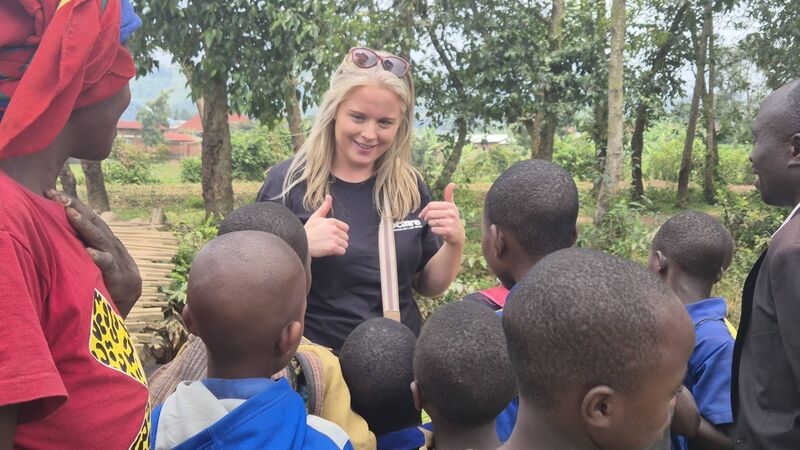
Claire Kelly of Trocaire talking with school children in Rwanda
Last week I travelled to the Karongi district in Rwanda as part of my job with Trócaire.
On Tuesday night, I was jolted awake by what sounded like the room I was staying in being pelted by rocks. I realised then that the sound was torrential rain slamming the roof without relenting — I've never heard noise like it. But while it was the storm that woke me, it was a conversation I had earlier that day with a young mother that kept me awake long after the rain stopped.
Standing next to her storm-damaged home, Nyirahabimana Pascasie told me that the roof can't keep the water out anymore. When the rains come at night, her family move around the mud brick home trying to find a dry patch of floor where they can huddle together and sleep. As the rain seeps further in, they move again. And again. They spend the night like this, shifting from corner to corner in the dark, waiting and hoping the house will still be standing by morning.
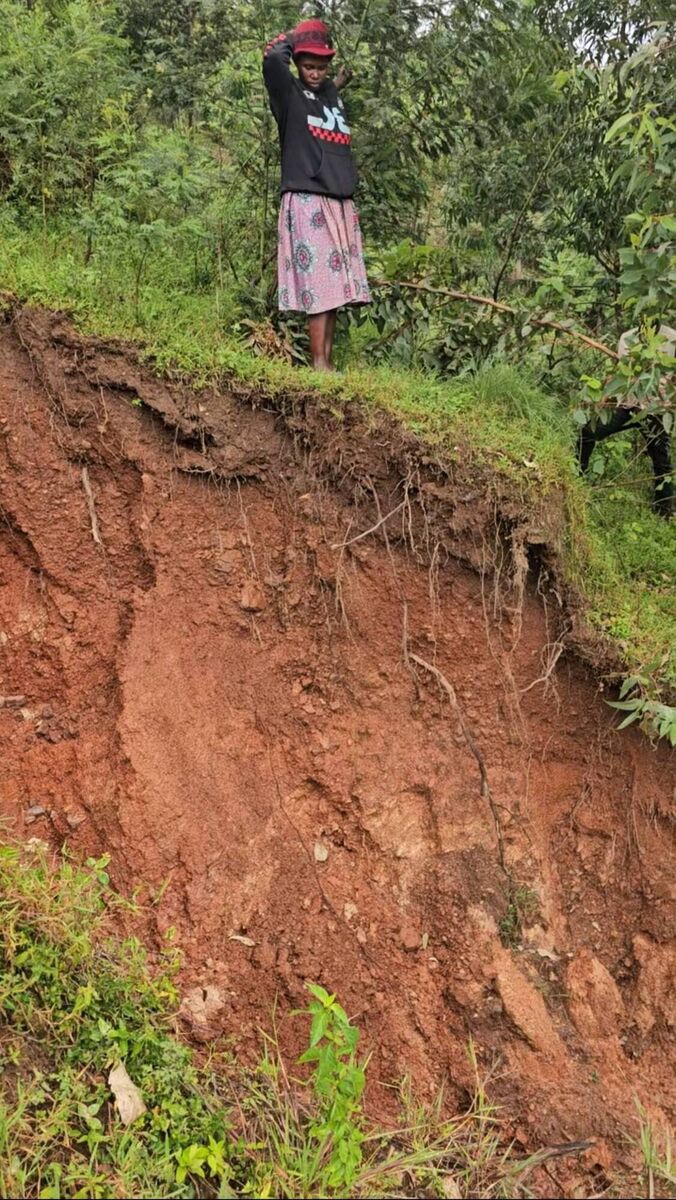
This is no longer an unusual event. In Rwanda, extreme weather caused by the climate crisis is now a regular part of life. The impact is immediate: torrential rain triggers landslides that destroy homes and wash away farmland in minutes, wiping out the crops that families depend on to survive. Lying there that night listening to the storm, I kept picturing those families — mothers and children moving around their homes in the darkness, trying to find somewhere dry to sleep.
I met another mother, Uwamahoro, 28, who features on the Trócaire Box this year. She is raising her seven-year-old daughter, Ineza, and her 12-year-old niece, Vanessa, and supporting her mother, Verediana, who has a disability. Three generations of women under one roof. She bears full responsibility for them. After a landslide destroyed the farmland where she used to earn a living, she now survives on the equivalent of about 60 pence a day to feed four people.
That means that some days she has to decide whether they will eat or whether the girls go to school. This is an unbearable decision: food or education.
On our visit, we spoke to teachers at the local school, who said that the weather extremes often prevent the children there from getting an education.
Some children are too exhausted to focus after not sleeping well due to the water coming into their homes throughout the night. Often, the school becomes too difficult to access in the rain. Without electricity at home, Uwamaharo took a loan from her neighbour to buy a torch so the girls could do their homework in the evening.
As a mother of three children myself and with a daughter the same age as Ineza (7), hearing about the challenges these families and children face sits heavily in my heart. Especially since the people of Rwanda have done so little to cause the climate crisis and yet they are the ones feeling its worst impacts — to me, that is the greatest injustice of all.
In Uwamahoro, I saw a familiar determination to do the best for her children. Every generation of women faces unique challenges, but in Rwanda, I witnessed the defining pressure of the climate crisis shaping lives today. This crisis, however, does not affect everyone in the same way. The imbalance becomes especially clear when we consider the roles women play in their communities.
In many of the countries where Trócaire works, women produce up to 80% of the food in some regions, yet they own less than 20% of agricultural land. When extreme weather destroys crops or farmland, women often have the least power and resources to recover. Globally, women are estimated to be 14 times more likely to die during extreme weather events.
That is why Trócaire is working to tackle climate injustice, working with partners in Rwanda, including Duterimbere, to rebuild homes that can better withstand climate extremes and support alternative livelihoods for families who have lost their land.
What moved me most about Uwamahoro was the strength she shows in the face of such hardship. Speaking about the future, her dream was simple: to repair her home and buy a sewing machine so she could start a tailoring business, making clothes and school uniforms for people in her community. That one opportunity could mean stability: food on the table and the certainty that the girls can stay in school.
Recent flooding here in Ireland has reminded us that no country is immune to the climate crisis. But communities like Uwamahoro's face these challenges with far fewer resources to recover.
As Mother’s Day approached, I reflected on the invisible thread connecting mothers across countries, cultures, and generations: he instinct to protect our children and ensure a better future. These instincts are universal. But for millions of mothers like Uwamahoro and her neighbours, the climate crisis turns that task into a daily struggle.
Their courage demands more than admiration; it calls for urgent action. We must raise our voices, push for systemic change, and ensure that families do not have to choose between a child's education or their next meal. Every effort counts; we must stand up for climate justice; we must support those who have done the least but suffer the most.
So, while the situation for many in Rwanda is so difficult, witnessing their courage, faith, and resilience is awe-inspiring. To be able to share their story with the world, and, together with our partners and with the support of the Irish public, to make a difference, is the privilege of a lifetime.


CLIMATE & SUSTAINABILITY HUB
CONNECT WITH US TODAY



Be the first to know the latest news and updates