Reflections of a blow-in after 25 years living in Cork
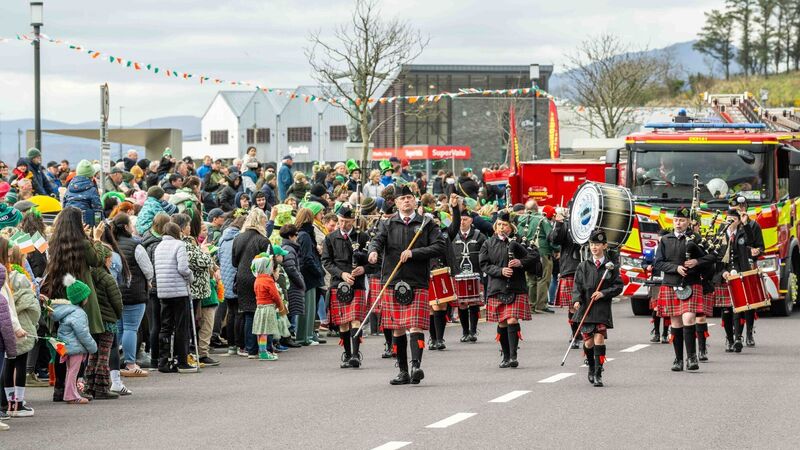
Ahead of St Patrick's Day, Vittorio Buffacchi reflects on his two and half decades living in Cork and the connection between identity and place
Reflections of a blow-in after 25 years living in Cork

ā€˜Arts and culture are, and always have been, an integral part of the fabric of Irish society.’ File picture: Andy Gibson

I movedĀ to Cork just over 25 years ago. I’ve lived in Cork longer than anywhere else I have lived during a nomadic life that has taken me from my birthplace in Rome, to my current place of residence on the northside of Cork, via Canada, England, the United States, a short stint in Venezuela, and yes, also one year in Dublin.
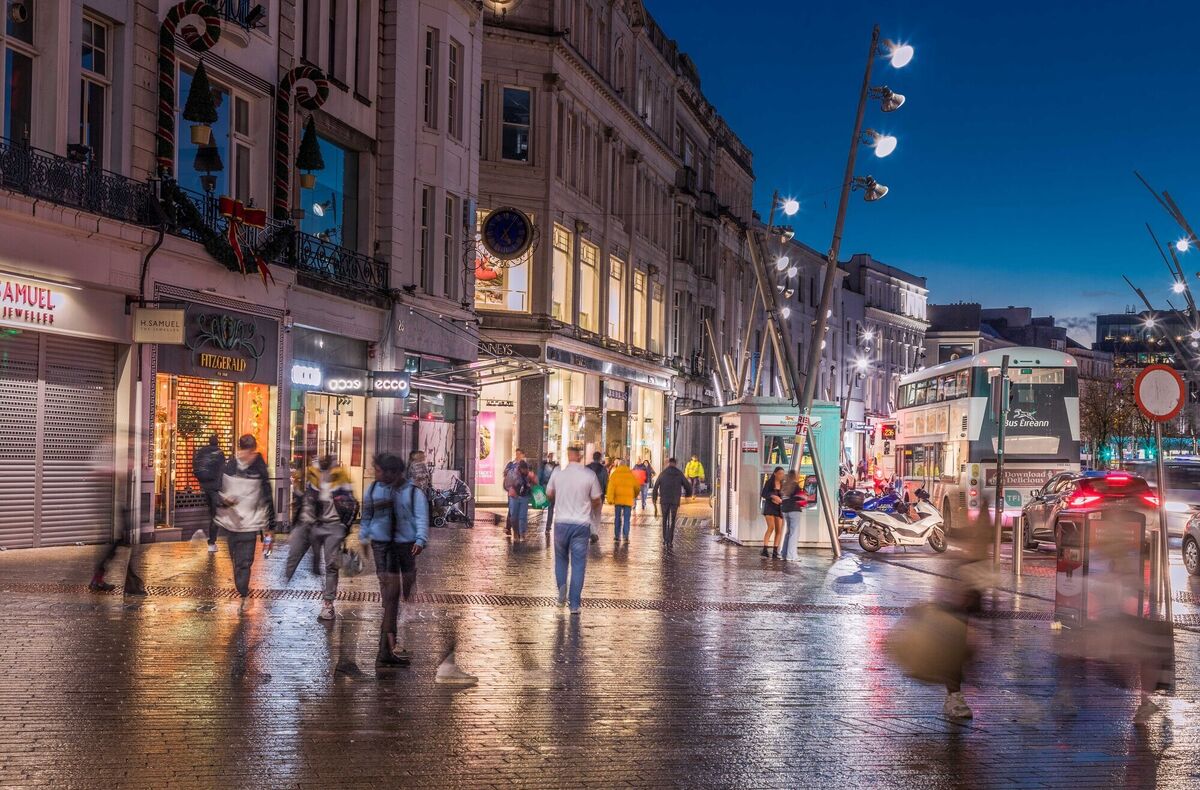
Like all peripatetic philosophers, you could argue that spiritually I have no fixed abode, a perpetual voyager without a strong sense of identity, but that’s not the case.

I may not be an Irish citizen, but I still consider Ireland my home. I call it my home not because this is where I pay my taxes, but because I feel I belong here. I’m also well aware that even if I stay in Cork for the next 25 years, I’ll always be a blow-in. That’s fine, I have no intention of leaving.

Being a blow-in has some advantages. It gives one a perspective that natives don’t have. My attachment to Cork, and Ireland, is not based on a sentimental affection grounded on ancestral lineage.

I don’t speak Irish and I’ve never held a hurley or a sliotar in my hand. I have no nationalist fervour and even less patriotic enthusiasm. I’m here out of choice, and Cork has a special place in my identity.

But I didn’t always feel this way about Ireland. In fact, when I arrived in Ireland in the late 1990s I didn’t particularly like what I saw. The Ireland of the Celtic Tiger years was arrogant, superficial, vulgar. The inequality generated by ten years of unprecedented rapid economic growth was indefensible, and devastating.Ā 

For all its newly found economic prosperity Ireland was still very backward. This was the Ireland before the abortion referendum of 2018, and before the same-sex marriage referendum of 2015.

For decades Ireland’s political class had abdicated the country’s moral compass to the Catholic Church, and it took a very long time before public consciousness woke up to the unimaginable horrors inflicted on young girls and women for many decades in Magdalene Laundries. This systematic brutality was facilitated by the highest degree of omertĆ”; many key players in the Irish state and civil society would give the Sicilian mafia a run for its money.

And let’s not forget the citizenship referendum of 2004, which was an anti-immigration referendum to stop predominantly African black women from attaining Irish citizenship after giving birth in an Irish hospital. Many years later my children, adopted from Guatemala through the Irish Adoption Board, were denied an Irish passport because of that awful referendum. But that’s another story.

Apart from its dubious politics, spearheaded by a Taoiseach in the late 1990s who dubiously did not operate any bank accounts between 1987 and 1993, there is another aspect about this country I deeply disliked when I first arrived. Twenty-five years ago, Cork was shockingly homogeneous: no diversity of languages, or race, or religions, or culinary traditions. Everywhere I looked I could only see white people, which made me feel uncomfortable, and I say that as a white, middle-class, man.Ā 

But Ireland had the courage to change. These changes have not come easily, or without personal costs. As often the case, cultural changes occur only after long and costly litigation, as documented in the important book by Ivana Bacik and Mary Rogan, Legal Cases That Changed Ireland (2016).

'The article you are reading is my love letter to Cork.' File picture: David Creedon

All these changes are welcomed, and long overdue, but even more changes are required. Personally, I would love to see a radical redrafting of the Irish constitution: the preamble should be scrapped, and Articles 41 and 44 need to be rewritten from scratch, for starters.

Like many fellow non-Irish blow-ins, I find the lack of separation between church and state in Ireland not only antiquated, but embarrassing. This is one of the most peculiar aspects of Irish life, inconceivable in a modern society. It’s as if the philosophy of the Enlightenment, the Age of Reason that lifted the mantle of mystery and the dead hand of dogmatism throughout Europe, never reached Ireland.

What makes it even more bizarre is that still today more than 90% of schools in Ireland are under Catholic denomination, notwithstanding the well documented attempts by many authorities to cover up the long history of sexual abuse by Catholic priests in Irish schools. I felt so strongly about this issue that in 2009 I wrote about it in an article for The Guardian, where I openly accuse the Irish state of violence by omission. For what it’s worth, I didn’t send my children to a Catholic school.

I’m aware that I may come across as very harsh on the country that has adopted me, in fact my views could be construed as disrespectful. Dearest gentle reader, you are missing the point. The article you are reading is my love letter to Cork.

Two aspects of life in Cork are particularly dear to me: the university, and the thriving art and culture scene. Today many universities around the world are curbing freedom of expression, and campuses are no longer an open forum of exchange of ideas. In the US lecturers are being monitored, and in extreme cases fired, for verbalizing their beliefs. That’s never been the case at UCC, where I’ve been teaching since 1999 in a work environment that has always been open-minded, progressive, and supportive. For a lecturer that’s the greatest privilege, and not something to be taken for granted in these times.

Arts and culture are, and always have been, an integral part of the fabric of Irish society. In Cork the arts are so ingrained in our everyday life that they are part of our metaphysical sustenance. I feel nourished by the poetry of Jennifer Horgan and John FitzGerald, the novels of William Wall and Doireann NĆ­ GhrĆ­ofa, the short stories of Madeleine D’Arcy, the sculptures of Maud Cotter, the contemporary dance at Dance Cork Firkin Crane. Nothing is more Cork than the ā€˜Knitting Map’ installation by Jools Gilson. And how lucky were we, in Cork, to see Eileen Walsh on stage at the Cork Opera House last year performing for 24 hours ā€˜The Second Woman’ as part of the Cork Midsummer Festival.

Identity is an artificial construct. The Enlightenment Scottish philosopher David Hume argued that there is nothing permanent about ourselves, instead our identities are in perpetual flux and movement, and we are merely a bundle of different perceptions and experiences which succeed one another.Ā 

I’ve come to think that David Hume was right. My bundle is made up of many threads, perceived in many parts of the world over a period of time spanning 60 years, but within this bundle some strands are more robust than others. For me, the filaments ā€œmade in Corkā€ are at the core of my bundle, and for that I’ll always be grateful.

  • Vittorio Bufacchi is Professor of Philosophy at University College Cork, and author of Why Cicero Matters (2023).
x

Your home for the latest news, views, sports and business reporting from Cork.

More in this section

Revoiced

Newsletter

Sign up to the best reads of the week from irishexaminer.com selected just for you.

Cookie Policy Privacy Policy Brand Safety FAQ Help Contact Us Terms and Conditions

Ā© Examiner Echo Group Limited