Maybe Trump's war will finally wean us off our oil dependency
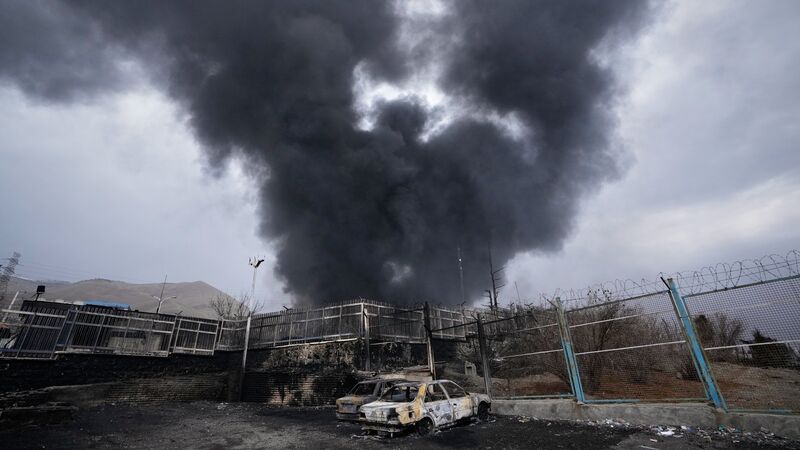
A thick plume of smoke rises from an oil storage facility hit by a US-Israeli strike in Tehran, Iran, on Sunday. Picture: Vahid Salemi/ AP
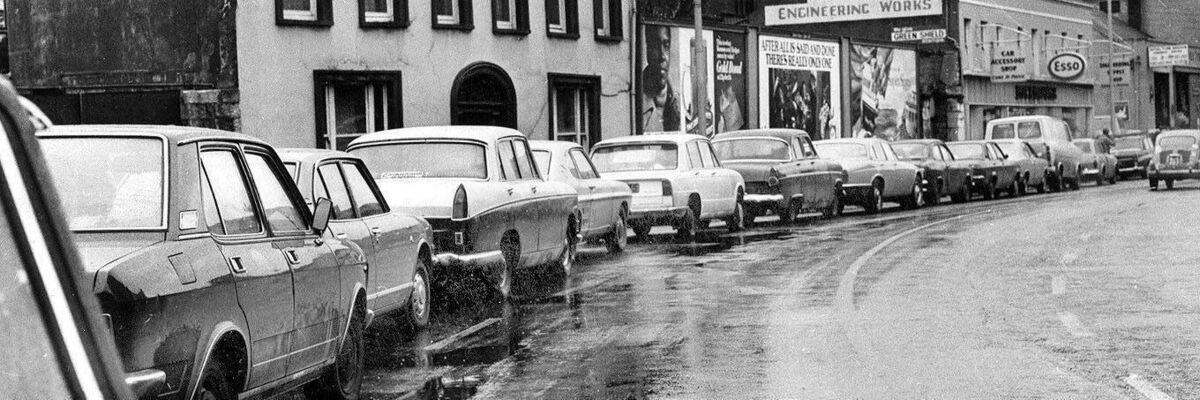
It feels like déjà vu all over again. I was in primary school when the oil shocks of October 1973 brought Ireland and much of the developed world to its knees.
I well remember waiting in our family car for hours to be allowed to buy £5 worth of petrol.
Everyone felt helpless as events unfolding thousands of kilometres away in the Middle East came crashing home to affect our lives.
Now, more than half a century later, here we are again, as seemingly helpless as ever as the Middle East is once more in turmoil, with petrol and diesel prices spiralling.
And, lest we’ve already forgotten, a similar scenario played itself out almost exactly four years ago, in the wake of the Russian invasion of Ukraine.
While the illegal war on Iran by the US and Israel is the trigger for the latest energy crisis, it would take an epic leap of faith to imagine this will not happen again — and soon — given the rapidly deteriorating global geopolitical situation, with democracies ebbing and militant authoritarianism resurgent.
Back in 1973, there were few other choices than oil to keep the wheels of industry and transport turning.
While the strategic risks of oil dependence were well understood, what was far less clear at the time was the catastrophic long term environmental impacts of emissions from the mass burning of fossil fuels.
In the 2020s, the evidence of global climate destabilisation as a result of greenhouse gases is all around us, its worsening impacts in fuelling ever more extreme weather events undeniable to all but the most intractable anti-science zealots.
These same fundamentalists are, unfortunately, now in control of the world’s most powerful military.
Since his return to office in January 2025, US president Donald Trump has worked hard to repay his fossil fuel industry sponsors.
The regime’s reversal of a crucial 2009 ‘endangerment finding’ from the Environmental Protection Agency that classified greenhouse gases as a threat to human life was a gift to the oil barons.
The US president has also eliminated federal emissions standards for motor vehicles, meaning more pollution and bigger fuel bills for motorists.
Trump’s mercurial warmongering is, however, yielding some positive, albeit entirely unintended, climate outcomes.
First, spiralling oil and gas prices reduce demand for and consumption of these products, and that in itself is a boon for climate and for human health.
Second, the hyper-volatility of fossil fuel prices make them a lousy long term economic bet, and give real momentum to concerted efforts to finally break our addiction to these deadly substances.
Crucially, unlike in the 1970s, a clear pathway to decarbonisation now exists; all that is needed is the political will to push ahead with the transition to an electrified society and economy.
For Ireland, that consists of a rapid roll-out of offshore wind to supplement the huge progress already made in building land-based wind farms.
Globally, the amount of solar now being deployed annually has grown more than 300-fold in just the last two decades.
Even in Ireland, solar is hugely valuable. A mere 0.25% of our farmland is enough space to deploy solar farms capable of producing 8GW at peak — similar to the output of eight giant Moneypoint power stations.
Wind and solar are variable — but predictable. They need to be backed up with reliable energy storage systems, typically industrial sized battery arrays, with undersea interconnectors to the UK and the continent to allow Ireland to plug into a European ‘supergrid’.
The Celtic Interconnector linking Cork with France is due for completion in early 2028, and is capable of importing or exporting enough electricity to power around 450,000 households.
Ireland needs to immediately prioritise the construction of multiple additional interconnectors to provide an export channel for the glut of offshore wind energy due to start becoming online from early in the 2030s.
While we have made dramatic progress with renewables, electricity still accounts for only around a fifth of our total national energy consumption, and around 80% of our total energy consumption still depends on fossil fuels, while the mushrooming of data centres is playing further havoc with our efforts to decarbonise.
While many have been horrified at recent surges in prices at the pumps, around 110,000 Irish motorists are now driving full electric vehicles (EVs), and will have been largely unaffected by the turmoil, especially if they also have home solar panels.
Next, we need to electrify our buses and trucks, while doubling down on active and public travel investment.
Ireland’s 2024 climate action plan targeted 400,000 Irish homes being fitted with electric heat pumps by 2030, but we’re far behind on these goals.
However, homeowners who’ve just seen the cost of a fill of heating oil rocket up by several hundred euro may now be far more amenable to dumping their oil boiler and making the switch to energy efficient electric heat pumps.
Three in four Irish homes are still heated using gas or oil.
Strong government intervention with grants for heat pumps and retrofits as well as, for instance, lower electricity tariffs for heat pumps, would help many people to finally break their dependence on dirty, unreliable fossil fuels and the dictatorships and endless wars the €5bn Ireland spends annually on these fuels help fund.
The State should strongly resist the clamour for cuts to the carbon tax (as road hauliers have been demanding) as a quick fix to liquid fuel cost shocks.
The carbon tax is vital in helping us transition away from fossil fuel dependence by funding home retrofits and tackling energy poverty.
If anything, the carbon tax should be levied at a much higher rate, both to reflect the actual damage caused by fossil fuels and to help fund the move to clean, locally-produced energy.
In 2026, with EVs now at price parity with internal combustion engines, anyone who now chooses to buy a new petrol or diesel vehicle when clean alternatives exist has only themselves to blame as prices shoot up as a result of the next oil war.
The simple truth is that fossil fuels were only ever cheap if you ignored the vast collateral costs of political violence, corruption, environmental wreckage and climate breakdown.
Consider the shocking aftermath of the Israeli bombing of four oil refineries close to the Iranian capital, Tehran.
This blotted out the sun and triggered a black oil and acid-laden rain, a horrifying chemical cocktail descending on a city of some 16m people. This was just one of many serious pollution events across the region as a result of this war.
This is a price the world can no longer afford to pay.
- John Gibbons is an environmental journalist and author of


CONNECT WITH US TODAY



Be the first to know the latest news and updates