Elon Musk is wrong about empathy — and Irish film proves it
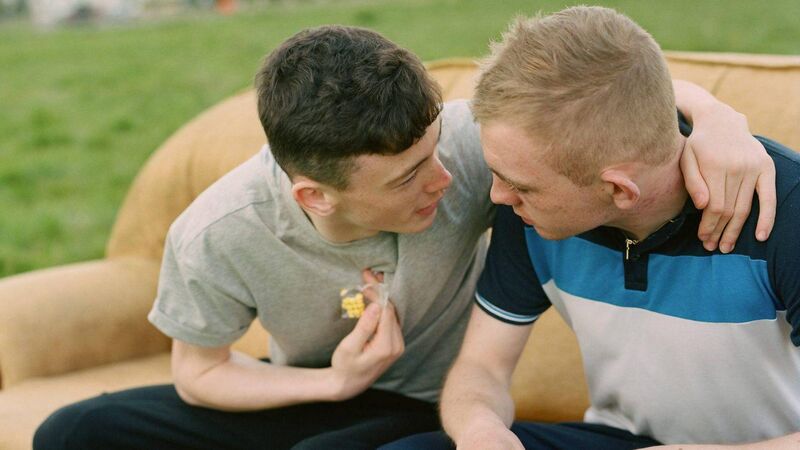
The film 'Christy' is about community — how belonging and love can rehabilitate a young man who might otherwise be lost to violence.
Last week, I spent four wonderful days at the Chicago Irish Film Festival, during which I was mostly offline.
It’s hard to reconcile the cognitive dissonance in celebrating cinema, community and creativity, then turning your phone back on at the airport and reading that a school full of girls has been bombed. It’s almost impossible to hold those two realities at once.
As a mother to a young son and daughter, the emotional reality of that hits viscerally. We have all felt this too many times over the last couple of years.
Roger Ebert famously said: “Movies are the most powerful empathy machine in all the arts.” As an actor and filmmaker I’ve always felt this to be true.
Read More
I think the value of storytelling is that it helps us make meaning of the human experience. You walk a mile in the protagonist’s shoes and no matter how different your own shoes may be, that experience creates empathy.
Right now, empathy is taking a lot of hits — Elon Musk went so far as to call it “the fundamental weakness of Western civilisation”. In truth it is the most essential quality we possess, and we are at one of those moments in history when it is more needed than ever.
My Irish cinema immersion extended to watching Irish films on the flights both ways. On the way home, I watched — very deservedly the recent IFTA winner for Best Film.
At its heart, this moving film is about community — how belonging and love can rehabilitate a young man who might otherwise be lost to violence.
It felt like the flipside to one of my all time favourite Irish films, by Frank Berry. That film shows how the incarceration system drags a young man further into violence.
shows what happens when someone is welcomed by a community instead of processed into a punitive system. Same type of protagonist. Different structure around him. Completely different outcome.
I also watched the gorgeous Oscar-nominated and though they are very different films, they have similar themes about foster care and community and the importance of showing love to a child or young adult.
As we head into Seachtain na Gaeilge, two notable highlights at the festival fittingly included two Irish language features.
— in which I play Garda McNally — is a sweepingly beautiful 1970s cold case mystery drama, rooted in themes of family and community and Irish culture, just opening in Irish cinemas.
is a heist film with a difference — with three unlikely women the perpetrators, which changes the motivation behind the crime.
It’s a clever and funny Robin Hood story rooted in solidarity, with that same thread of looking after one another and community-driven values at its core.
Berlinale Jury President Wim Wenders’ sparked controversy recently stating that cinema should be "the opposite of politics". Like many filmmakers, I strongly disagree.
However, there was perhaps some nuance lost in the storm which followed. Underlying Wenders' apparent spinelessness, his point has value: that film can act as an empathetic counterweight to the business of politics.
All human stories are political whether we label them as such or not. They spotlight the systems we live under. What kind of values shape what kind of outcomes.
There is a ruthlessness to the world right now — the glorification of domination and aggression. A world in which the loudest and most domineering personalities are elevated.
Systems built that way reward bullying and greed. And then we are shocked when catastrophic, inhumane decisions follow.
And conversely, there is nothing more monstrous that we are capable of than deliberately harming children. It is the clearest moral line that exists.
Yet the most evil men who currently occupy the highest positions of power in our world have shown us they think nothing of harming, abusing and murdering children. Indiscriminately. Repeatedly.
That reality is almost beyond comprehension. It’s exhausting to even try and make sense of it all.
If the dominant global systems are being steered by aggression, ego and economic power, then the counterforce has to be made of different values entirely.
Compassion. Protection. Community. These are traditionally matriarchal values, rooted in the instinct to safeguard the vulnerable. They are not weak. They are civilisation-sustaining.
Female writers Claire Keegan, Sarah Gordon and Sheena Lambert were three of the writing talents behind these Irish language films. Perhaps it’s no coincidence that we have an appetite for stories with these themes at a time like this.
I met so many warm-hearted, generous Americans during my time in Chicago, all of whom feel devastated by the actions of their government. As with so many US cities I was amazed by the scale, the energy, the culture.
I also felt the intensity of a system driven almost entirely by profit. It’s capitalism on speed. The pressure is immense. I loved visiting. But I could never thrive long-term within the belly of that beast.
Flying back over Ireland and seeing green fields instead of endless blocks of high rise buildings, I felt relief. I literally breathed easier. Despite all our challenges, I feel lucky to live here.
But I worry about how our current government is aligned more with American economic priorities at the expense of our own values, and those we express through our art. Art is not apolitical.
Everywhere I look, the people pushing back most audibly against cruelty and injustice are artists — filmmakers, musicians, theatre-makers, writers. Storytelling slows the pace. It humanises. It resists dehumanisation.
As Irish people, we have a particular history. We are white, yes, but we are also a people who were colonised for centuries. Our language was suppressed. Our culture was marginalised.
That gives us a particular sensitivity to the experiences of others who are under the boot of colonisation today.
With that understanding comes a responsibility to speak up — especially within Western spaces where our voices can be more easily heard.
So when trying to reconcile my personal experience of an inspiring film festival with the horror of the news cycle, I don’t think the answer is swapping one for the other.
I think storytelling is part of the counterweight. Community is part of the counterweight. Our collective maternal instinct — the fierce instinct to protect children, all children — is part of the counterweight.
The values I saw reflected in Irish cinema this week — belonging, compassion, solidarity — feel less like escapism and more like a blueprint. We fought so hard to become an independent republic. Protecting that independence matters.
Maybe instead of bringing shamrocks to the White House this year, our Taoiseach should be sharing our stories as a colonised people, whose language is fighting its way back after centuries of being stamped out.
Maybe the gift we must bring to the West is empathy.
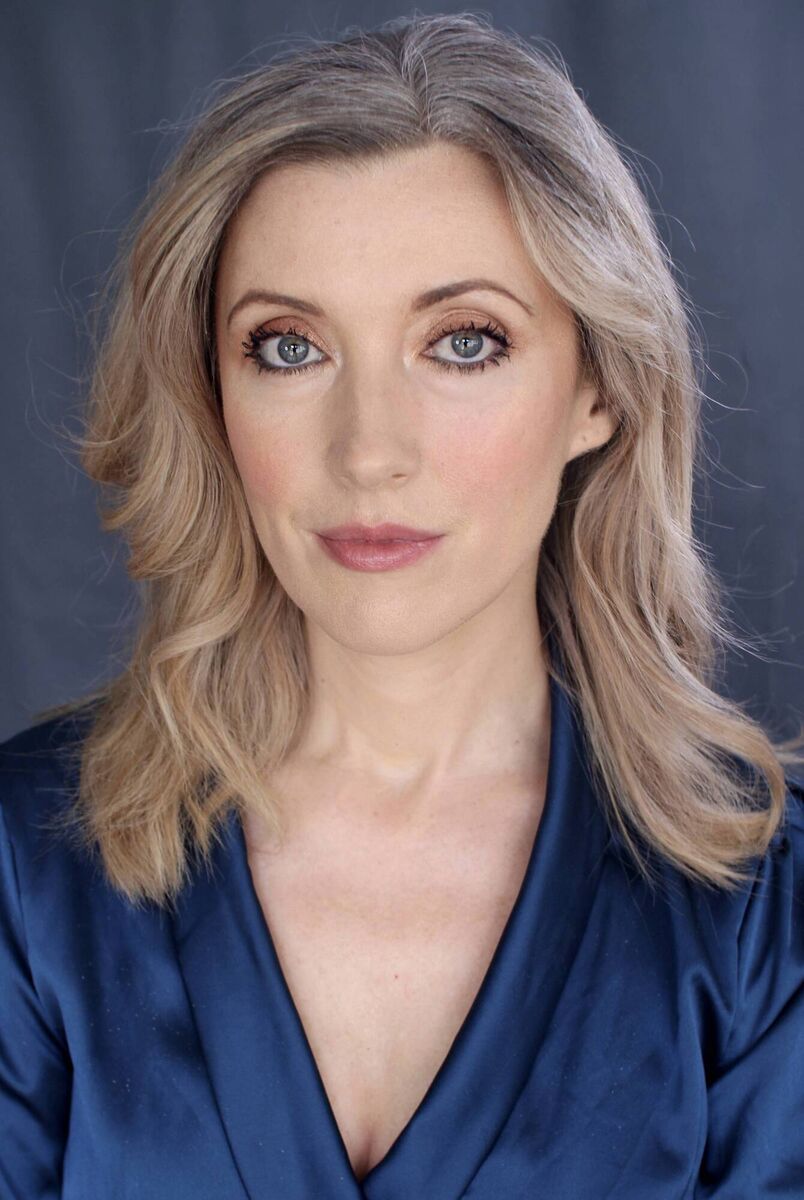
- Amy-Joyce Hastings is an IFTA-nominated actor, and award-winning filmmaker from Galway, as well as a mother of two. opened in cinemas on Friday, March 6.


CONNECT WITH US TODAY



Be the first to know the latest news and updates