Experts and voters agree that green space in cities has major health benefits
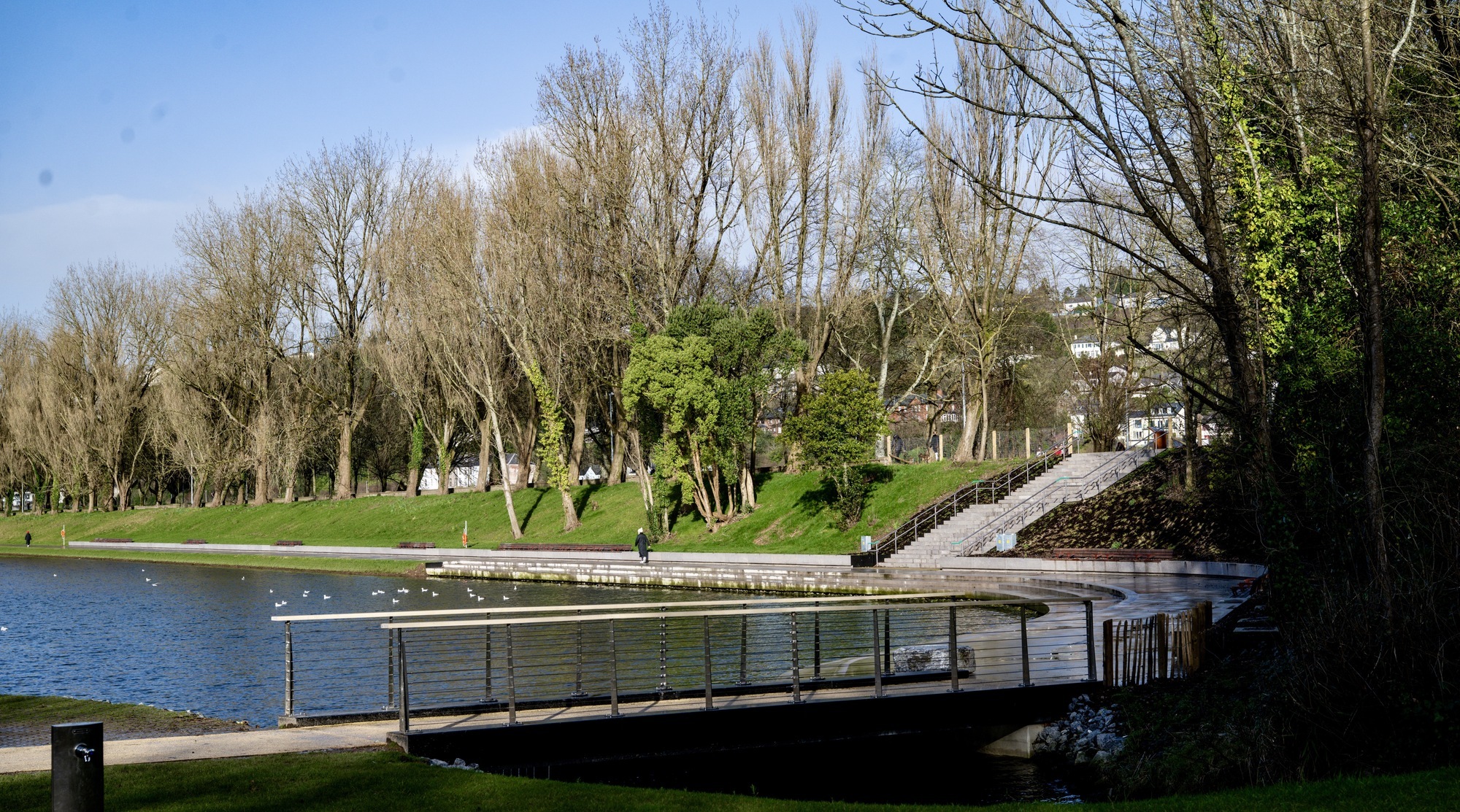
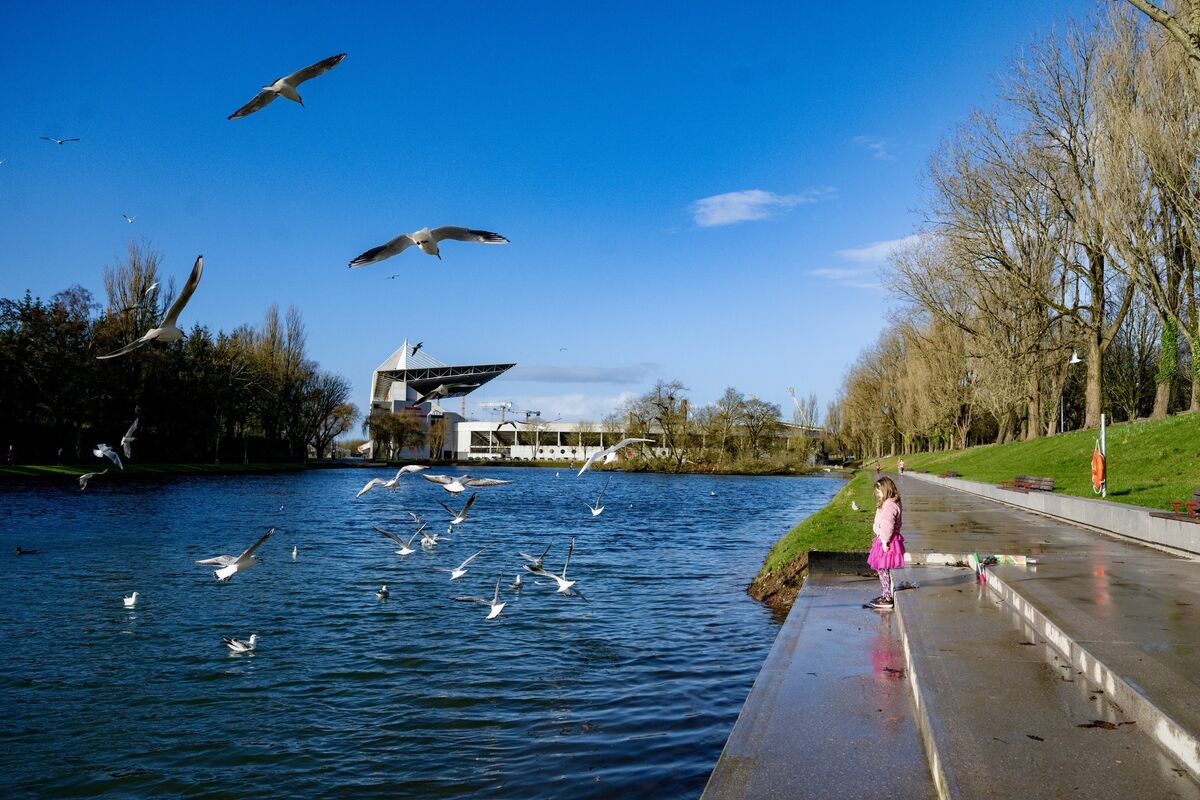
The Atlantic Pond in Marina Park, Cork. The city planners recommend more green space and fewer cars. Picture: Chani Anderson
At last week's event examining the Future of Cork, hosted by the , a key priority that emerged for the city over the next decade is more green space.
Principal city planner with Transport for London (TfL), Monika Jain, said she saw “a lot of paved surfaces” around Cork, suggesting that this presented a key opportunity to increase greenery in the city.
The city planner also recommended reducing the amount of space dedicated to cars, which could be “taken for the people” and suggested creating more public spaces along the River Lee to maximise the potential of “assets Cork already has”.
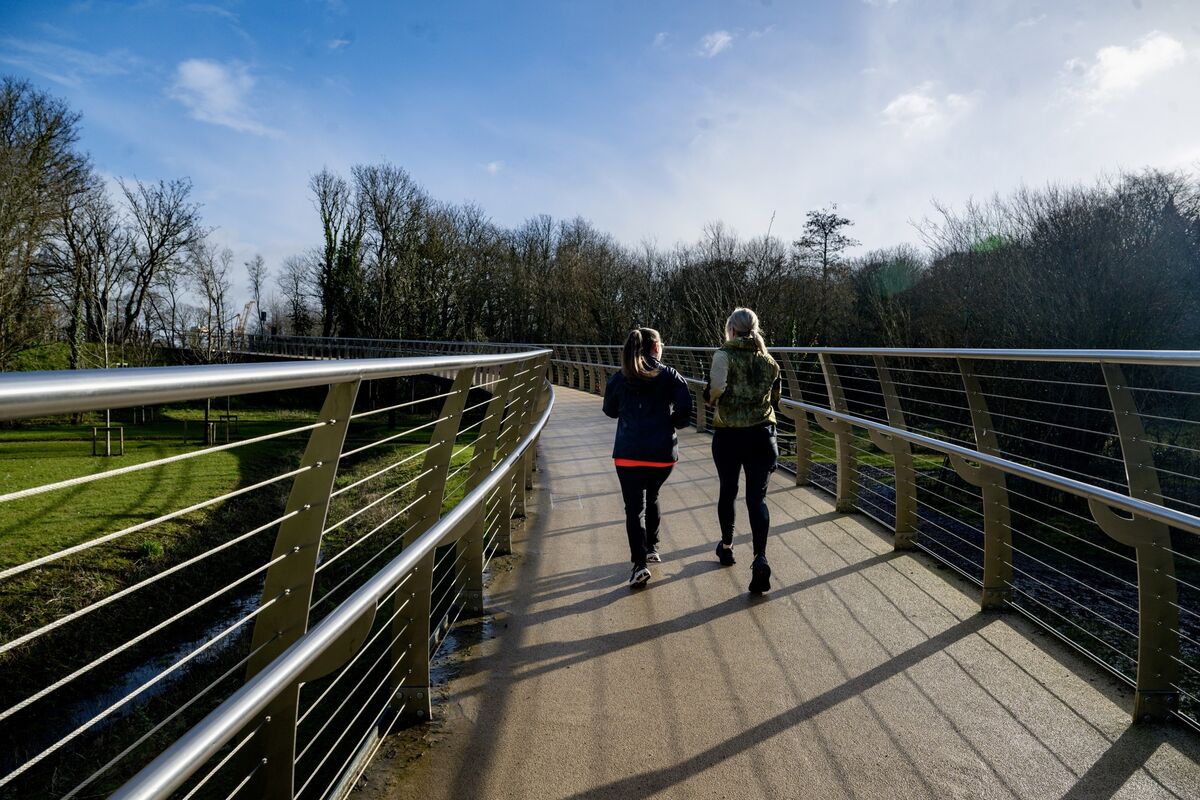
Days later, the Walking and Cycling Index for Cork confirmed that is exactly what the people of Cork want — with more opportunity to walk and cycle through their native city, even if that means taking space away from cars.
The Walking and Cycling index found that two thirds (66%) of adult residents walk or wheel five or more times a week, up from 52% in 2023. This amounts to up to 82,000 cars being taken off the road in the Cork Metropolitan area every day.
These figures include almost one-in-10 (9%) of adults over 65 who cycle at least once a week, almost double the figure for this age group (5%), in 2023.
The benefits to health, the economy and the environment are enormous. The National Transport Authority estimate the annual economic benefit for individuals and the Cork Metropolitan area of €9m.
Public health is improved, preventing 775 long-term health conditions, saving the HSE €9.8m; and greenhouse gas emissions equivalent to 130,000 flights from Cork to London are saved.
Read More
Critically, it’s what the people want. More than half (52%) of adult residents want to walk more; more than a third (38%) want to cycle more and three in four (75%) support additional investment in walking and wheeling, up from 71% in 2023.
Despite the popular narrative that there is too much scope for cycling, over two thirds (67%) of residents support more investment in cycling and almost one in three (73%) support more protected cycle tracks.
The city planners recommend more green space and fewer cars. The majority of adults in the city agree. So, let’s make it happen.
Cabinet is reported to be considering a range of options on how to reduce traffic gridlock in major cities, including a review of taxation and low emission zones.
A new transport options paper, Moving Together, was approved this week that includes options such as congestion charging or low emission zones, in which higher emission vehicles are not permitted.
Cork is the 42nd most congested city in the world, according to the latest figures from the TomTom Traffic Index. Better than Dublin (3rd) but much worse than London (75th).
While much of the prevailing discourse on congestion charges has been negative including concerns of a negative impact on businesses in the city, this is not the reality of what happens when congestion charges are introduced.
A congestion charge was introduced in New York City (NYC) in January 2025.
Since its introduction, pollution and traffic have declined by 11% in the toll zone. The Metropolitan Transportation Authority (MTA) has generated more than its targeted $500 million of revenue from the programme after expenses.
Visitors have increased by 3.4% and sales tax revenue has risen by 6.3%.
Robust evidence suggests that a congestion charge in Cork, far from bringing the city to a standstill would free up clogged city streets, facilitate buses and taxis to move freely and allow us all to breathe a sigh of relief as we traverse the city and avail of green spaces — be it rush hour or any other time of the day.
We don’t spend nearly enough time in natural environments. The diverse health benefits that have been reported include lower blood pressure, improved sleep health, reduced cardiovascular disease, improved cognitive function, better immune system response, reduced stress and alleviation of symptoms of depression.
A US study of more than 20,000 participants found that good health was significantly greater with just two hours a week exposure to nature, such as parks, woodlands or beaches.
That’s the hour or two your kids spend running onto the green after school. That’s the time you bring your lunch to the park on a workday.
A much larger study from over 400,000 UK Biobank participants with 12 years of follow-up showed that long-term exposure to residential greenness was associated with much less (15%) depression and anxiety.
That’s just scratching the surface of the body of evidence. Eric Topol in , outlines how an exhaustive review of more than 140 studies emphasised the benefit of time spent in green space for reducing all-cause mortality and fewer physical and mental health ailments.
Now, a Naturescore has been derived from aggregation of satellite images, air and noise pollution, open water, and trees to provide a high-resolution map across the United States, accessible through a smartphone app.
Significantly less stress, anxiety and depression is seen in places with a Naturescore above 80, adjusted for socioeconomic and demographic factors.
Residential green spaces were assessed specifically in one study (the US Nurses’ Health Study) of more than 13,000 middle-aged women with better scores on cognition, psychomotor speed and attention linked to participants with higher levels of green space in their community.
These findings have led to healthcare professionals writing nature “prescriptions” that recommend a fixed time per week in nature settings.
And they work. A compressive review of nature prescriptions showed less anxiety, less depression, improved blood pressure and increased physical activity.
The future of Cork is one of massive growth. The National Planning Framework 2040 anticipates that Cork will become the fastest-growing city in Ireland with a projected 40% to 60% increase in its population by 2040.
Gardener, broadcaster and sustainability advocate, Peter Dowdall is in no doubt about the importance of green space being incorporated into these ambitious plans. He suggests that every new housing development should be required to be designed as a real living environment, not as an aspiration, but as a condition of planning permission.
“In practical terms, this would mean that new residential, educational, commercial and mixed-use developments must incorporate functioning green infrastructure as part of their core design,” Dowdall said.
“This would include, planted streets and street trees, accessible green space within walking distance of every home, nature-rich school, university and childcare grounds, green walls, and publicly accessible roof gardens where ground-level space is limited.
“Just as importantly, they provide regular contact with the green environment, something increasingly rare in modern urban life.”
At your lunch break, between showers, walk or cycle to your local park, soak up the dappled shade, inhale the spring fresh air filled with birdsong, and know that physical activity and time spent in Nature is doing wonders for your lifelong health.
- Dr Catherine Conlon is a public health doctor in Cork

CONNECT WITH US TODAY



Be the first to know the latest news and updates