Ireland’s prison system under fire over treatment of inmates with mental illness
RTÉ documentary lays bare how prisoners with severe mental illness are failed by the State, with devastating consequences for families
Ireland’s prison system under fire over treatment of inmates with mental illness

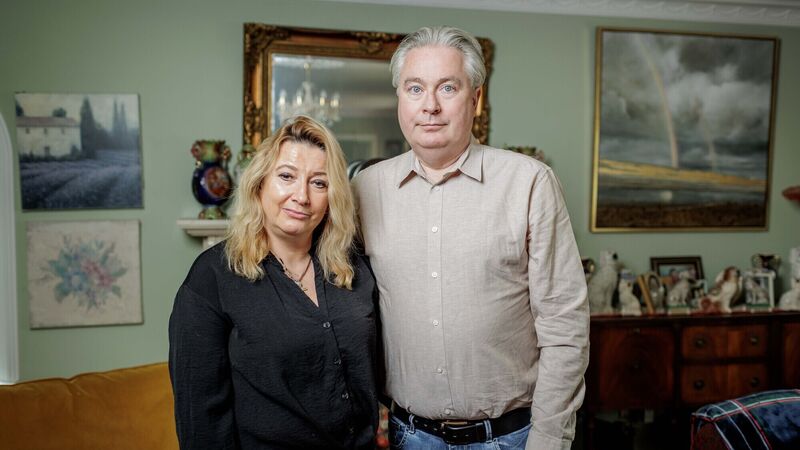
Paula and Michael Loughlin, parents of Jimmy Loughlin who died in 2018, when Richard McLaughlin burst through the front door of his home in Sligo and killed him with a crowbar. Picture: James Connolly

There was merely fair-to-middling concern this week over the exposure of a scandal that involves dehumanising and degrading vulnerable human beings, despite thinking of ourselves as a caring and compassionate society.

A two-part documentary entitled The Psychiatric Care Scandal was broadcast on RTÉ at prime viewing time. 

It was a first-class piece of journalism by reporter Conor Ryan and those behind the programme. Ordinarily, a broadcast of this nature is greeted with outrage on the floor of the Dáil, across the media, and on social media.

There was precious little of that outrage, even though the issue was damaged lives, and the taking of the lives of others and suicide, not to mention lifelong pain for families and the bereaved. In a society that considers itself civilised and is capable of genuine empathy for all sorts of people, the reaction of fair-to-middling concern was a damning indictment.

One can only assume that the complete dearth of societal or political outrage had to do with the reality that many of those featured in the documentary had spent time in prison. 

In our current cultural and political dispensation, there is precious little understanding of, or interest in, prison and why some people end up there.

The programme mainly concerned prisoners whose primary motivator in being involved in any alleged crime was a mental health illness. These days, at least one in seven of all people admitted to prison requires psychiatric care. 

Beyond that, another huge cohort is either undiagnosed, has a condition that is not clearly defined, or suffers from some form of addiction that is often attributable to an underlying mental health issue.

History of incarceration 

We have, in this country, an appalling record of locking up people in a cruel manner. In the mid-20th century, Ireland had a record of keeping people in one form of custody or another that equalled that of totalitarian states in places like the Soviet Union.

But societally and politically, we have cleansed ourselves of those sins of the past. The government has apologised to those who had to be shovelled into dark corners so that a respectable veneer could be maintained. 

Never again would such an outrage be committed on those least able to represent themselves.

It’s still going on. Today, it’s not institutions run by the Church where vulnerable people are being held, but prisons. Repeatedly, the government has been told — by national and international bodies — that this is cruel, inhumane, and highly inappropriate treatment. 

Repeatedly, successive governments wring their hands but ultimately conclude that such talk will butter no parsnips at the next election.

'There will never be closure for me'

The programme interviewed a succession of families of people with mental illness, or their victims. I have met a number of them over the years — like Sean Barrett, whose son Sean Hayes Barrett took his own life in Limerick prison in May 2017.

He had been admitted for less than a week and was denied access to the medicine that kept him on an even keel. He had spent time in psychiatric hospitals, and he should never have been left in a cell unobserved, not to mention a prison in the first place.

His father, when I met him in Limerick three years later, was like a broken man — just holding himself together after the loss of his only son.

“I reared him on my own in that house,” he said. “All those years and then he’s gone forever. Sean was my life. I’m on my own now. There will never be closure for me. How can there be?”

Sean Barrett died in December 2022. I can only hope, but find it difficult to believe, that he found some peace in the last years of his life.

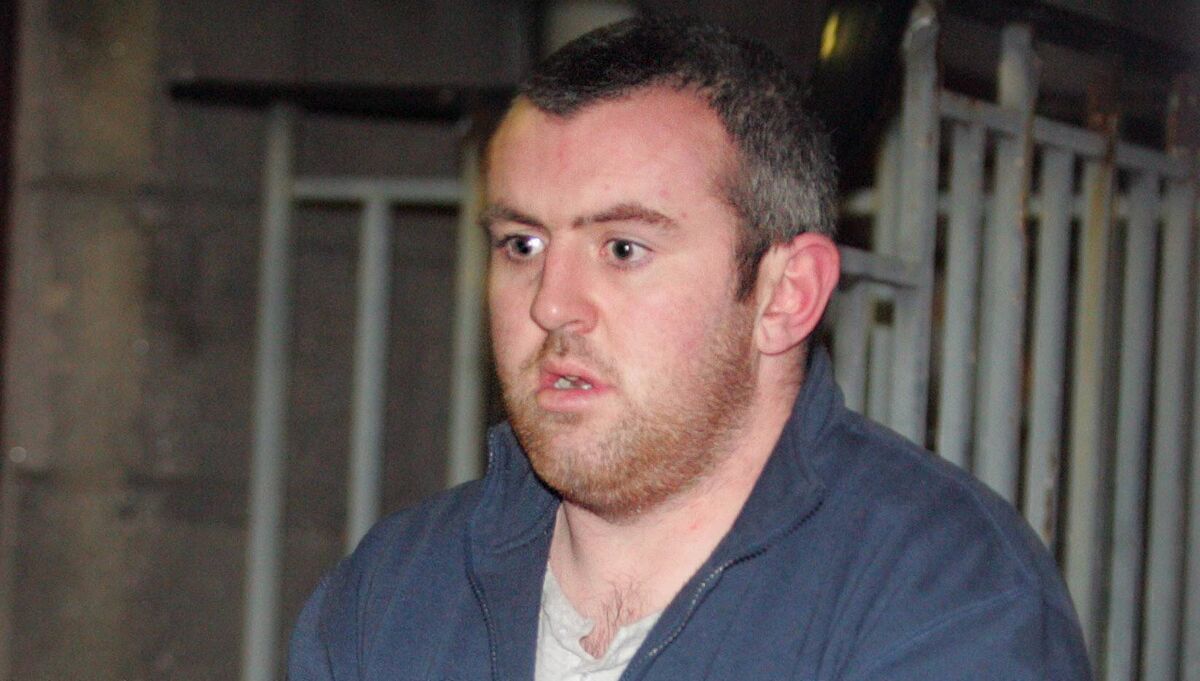
Mark Lawlor, who was beaten to death by his cellmate at Cloverhill Prison, in November 2019. Picture: Collins Courts

The case of Mark Lawlor featured on these pages in 2023. He was beaten to death in Cloverhill Prison in 2019 by a cellmate. 

A judge subsequently noted that Mr Lawlor was “a good and decent person” about whom “nobody had a bad word to say”. He had mental health difficulties and got into trouble with the law on minor stuff like theft.

Yet, he ended up on remand in a cell with a dangerously ill man who beat him to death on a premise associated with paranoid delusions. What kind of a system, with the acquiescence of an elected government, allows that to happen?

The programme also featured Michael and Paula Loughlin, whose son Jimmy was beaten to death in his own flat in Sligo in a completely random attack by a very sick man in 2018.

Richard McLouglin had been in and out of psychiatric care over the previous decade. He was not getting the care in the community, which was supposed to be a hallmark of psychiatric services. He walked into Jimmy Loughlin’s flat in the town at lunchtime one Saturday afternoon and violently ended Jimmy’s life.

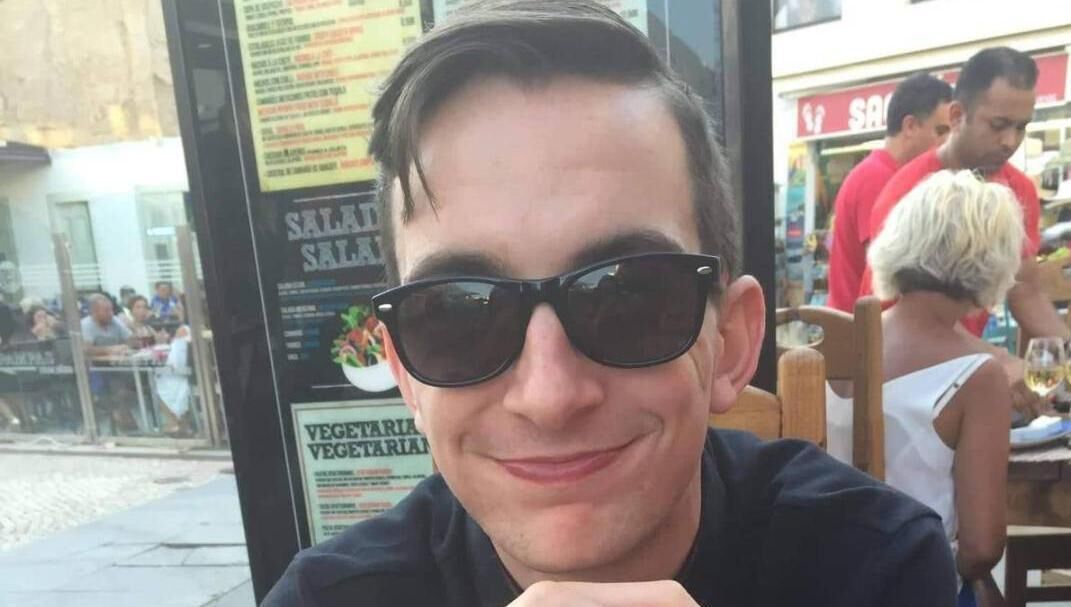
Jimmy Loughlin, who was killed in an assault at his home in Sligo in 2018.

“It’s unbelievable how he was left for all those years and never treated properly,” Paula Loughlin told me in 2024. 

“It beggars belief really, all the serious things he was involved in before he killed Jim. 

He was just a very ill person and should have been in secure accommodation, not a block of flats where people were in and out of and where he could do what he wanted.”

These, and the others featured in the programme, are all real people, with real emotions — their lives, in one form or another, utterly transformed as a result of a psychiatric condition and the State’s inability to properly treat those afflicted.

The institutional themes that peppered this week’s broadcast will be familiar to anybody who has ever examined this area. 

Ivan Rosney was a 36-year-old father of four who died in Cloverhill Prison in 2020 while being restrained by prison officers.

He suffered from schizophrenia and was on remand over an episode he went through outside his home in Co Offaly, when he was in the midst of a mental health crisis. There were major questions about his care in custody.

“We were told at the start there were about five or six prison officers restraining dad... We haven’t been told what exactly went on or why he wasn’t brought to Portlaoise [Hospital],” his daughter Courtney told the programme.

A death in custody report was forwarded to then justice minister Helen McEntee in October 2024. She didn’t publish it. Later that year, backbench TD Jim O’Callaghan asked a parliamentary question on behalf of the Rosneys over why it wasn’t being published.

Three months later, backbencher Jim became justice minister, and yet it still wasn’t published. It emerged this week that plans are now in train to have it published. So there was no urgency until the matter was aired on the powerful medium of TV. Is that the way to treat a bereaved family about the death in custody of their loved one?

Delaying the publication of reports into conditions, care, and particularly violent deaths is a well-worn tactic by the arms of the State that come under the Department of Justice.

Delays to mitigate reactions

Over the years, I have repeatedly encountered scenarios where completed reports are simply left unpublished. This persists often for years, and sometimes it is only pressure that ensures they ever see the light of day.

This has been my experience when looking for reports from the Inspector of Prisons, chaplains’ reports, and reports from investigations. The only conclusion that can be reached from this form of stasis is that it is done in the hope that delay will dilute negative reaction.

If an incident, particularly concerning death and violence, is far enough in the past from when it becomes public, the State apparatus will claim that was ancient history and how they are doing things much differently now. 

Of course, the State will deny any such underhand or cynical behaviour. However, when it happens time and time again in the same institutions and concerning similar issues, it’s difficult to continue ascribing it to coincidence.

There was one other theme in the programme that reflects a wider malaise in governing. The new blueprint for mental health in 2006 was called ‘Vision for Change’. 

This was to herald an enlightened approach to treating mental illness by transferring care from the large, often ancient institutions to the community.

The big psychiatric hospitals were closed. That part of the deal went down without a hitch. Problems arose, however, with what replaced the old model. The community care was simply not put in place. This effectively left former psychiatric patients to fend for themselves.

Alice Leahy, who has been campaigning and providing services for homeless people in Dublin for over 50 years, has repeatedly referenced how she came across so many people on the streets who had previously been in-patients and were supposed to be catered for under this new, allegedly enlightened, model.

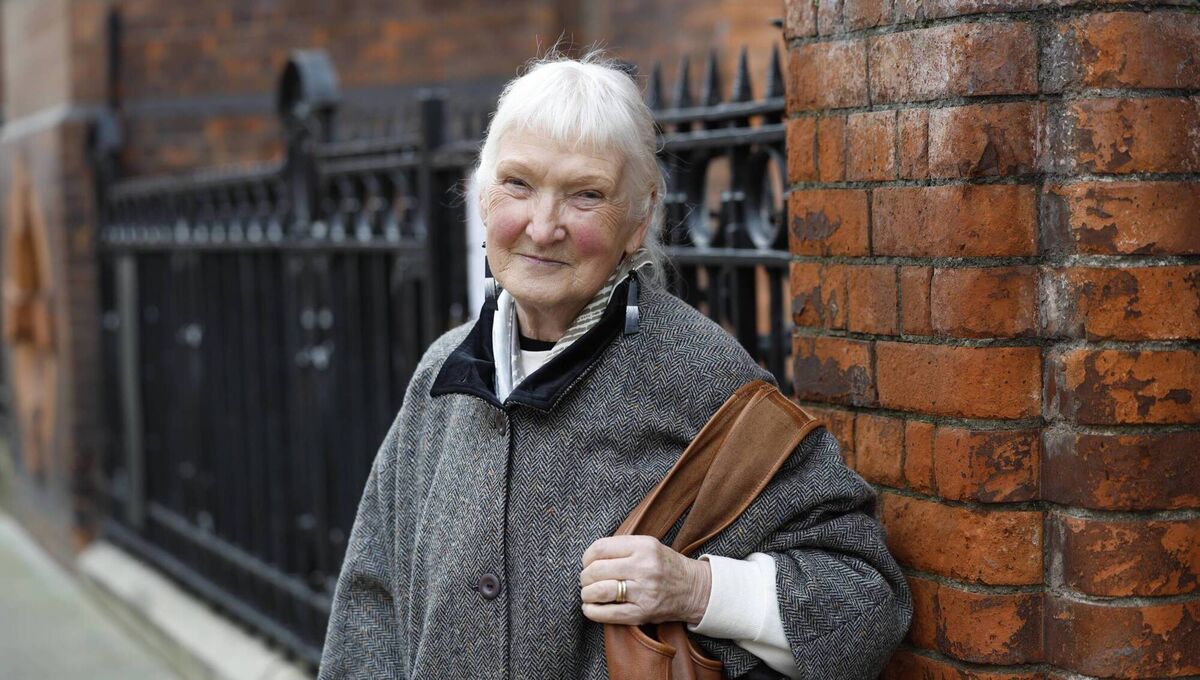
Alice Leahy, who has provided services for homeless people in Dublin for over 50 years, has spoken about how she has encountered people living on the streets who had been in-patients of mental health care previously. Picture: Nick Bradshaw/The Irish Times

It didn’t happen. Without the appropriate care, the answer lay in simply shoving the afflicted into the wholly inappropriate environment of prison.

Nothing has changed

This has been the half-assed approach in other areas. The closure of small emergency departments in hospitals was supposed to be part of a plan for a small number of centres of excellence. 

The departments were closed, but the designated centres never achieved anything like excellence. The plight of the public in the greater Limerick area in this respect says all you need to know.

A similar scenario developed in relation to rural Garda stations. It made sense to close them, but the inhabitants of these rural locations were assured that foot patrols and pop-up clinics would replace the bricks and mortar. Sure, in some cases that came to pass — in many others, it didn’t.

Above all, these bright shining plans for reform, whatever the area, appear to concentrate on out with the old, with precious little time and resources given to ushering in the new.

As for the fair-to-middling concern about what is a human catastrophe? In a civilised society, the government of the day would take due care of all its citizens as a matter of duty rather than political manoeuvring. Not so when it comes to psychiatric care.

Instead, prison is used. Things don’t change that much. We now just have a new dark corner, to be used until the time comes along when it is decided the State must repent for its cruel and inhumane treatment of more vulnerable human beings.

More in this section

Revoiced

Newsletter

Sign up to the best reads of the week from irishexaminer.com selected just for you.

Cookie Policy Privacy Policy Brand Safety FAQ Help Contact Us Terms and Conditions

© Examiner Echo Group Limited