The tricolour's contested origins show how myths are made
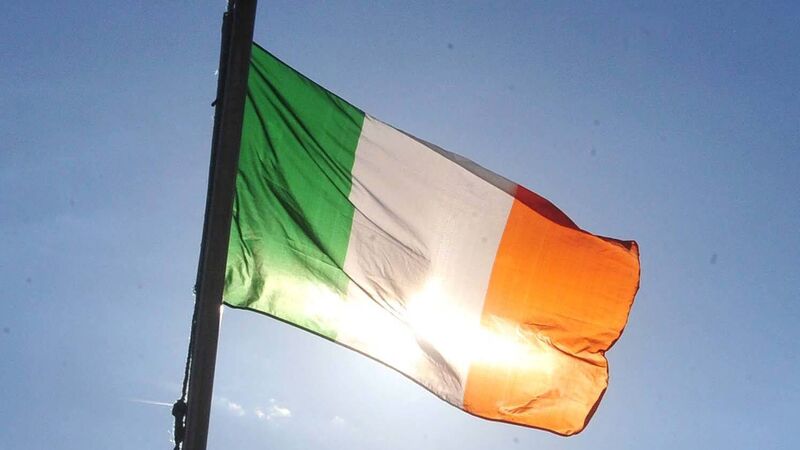
What the future holds for the Irish tricolour, contested once more in its use by anti-migration factions, we cannot yet say. That chapter is still being written. File picture: Denis Minihane
One could be forgiven for thinking we know all there is to know about Irish history.
However, we live in a remarkable time in which technology is not so much revising the history books as recommencing them. New tools of analysis have brought new understanding, with my focus on the emergence of the Irish tricolour flag.
We can now relocate its emergence two decades earlier than previously thought, to 1830s Dublin, and inspired by an event of note in Cork City.
The story of the flag that is taught in our schools claims Thomas Francis Meagher flew the first Irish tricolour on March 7, 1848, from the window of Waterford’s Wolfe Tone Club. The orator and revolutionary supposedly did so upon receiving the flag from a group of sympathetic French women. So established is this story it will surprise many to learn that none of these statements is true.
On my five-year journey to understand the truth of the tricolour, discrepancies appeared early on. Meagher is claimed to have flown a flag in Waterford that he allegedly received one month later in Paris.
Stranger still are reports of Irish tricolours flying as early as 1830. Research efforts around 1940 identified that the story had gone awry, but no one pried further. In the 1990s that 1848 fluttering of a French tricolour in Waterford was misidentified as the first Irish flag, with this inaccuracy broadcast to the nation in a RTÉ news report.
Since then, organisations connected with Meagher have eagerly run with it, attracting long lists of sponsors and celebrity patrons. Alas, no historian makes the list, raising the reasonable question of who we trust with our history.
The tricolour's journey began with the green harp flag of the Irish Confederates in 1642, their choice marking the colour's ascension to national status. This likely drew on the frequent eulogizing of Ireland’s lush pastures in Gaelic texts. The flag was a twist on the first ‘formal’ symbol to denote Ireland, the harp on azure (blue) chosen by French heraldists in the 13th century.
In the same century that green assumed primacy, the endeavours of William of Orange on Irish soil brought that colour into the lexicon of Irish identity. This conflict created the need for a conciliatory flag.
The green harp ruled supreme when Wolfe Tone commenced Ireland’s republican tradition in the late 18th century. But Daniel O’Connell was also instrumental in the appearance of the first Irish tricolour.
Early in his career O’Connell stated:
He continually called for green and orange to unite, with Catholic Emancipation in 1829 creating a rising tide of good will. O’Connell’s supporters and nationalist groups like the Ribbonmen were already wearing green and white to support their causes in the 1820s.
When O’Connell turned his attention to repealing the Union and the re-establishment of an Irish Parliament, he sought new audiences and new symbols. He was supported by ‘honest’ Daniel Steele, a Protestant who took to wearing a green sash to support unity. From O’Connell’s words and Steele’s actions came a symbol which first found physical form in Cork City in March 1830.
At an election event attended by O’Connell’s son John, a green and orange cockade was worn, prompting comment on its benevolent message of union. More would appear in the coming months before the first tricolour appeared.
It was a forgotten female patriot, Emilia Eleanor Hamilton, of Annadale Cottage in modern day Fairview in Dublin, who crafted the first orange, white and green cockade to be presented to a meeting to salute the French Revolution. The wife of trade unionist, writer and civic champion Joseph Hamilton, Emilia wished it to be "worn near the heart of every Irishman".
She was very clear on the tricolour's message with two lines of an accompanying poem — ‘Let orange and green no longer be seen distained by the blood of our island’, birthing a device and symbolism familiar to us today.
Her effort gained notable press including London’s newspaper, which suggested it as a national flag. Despite this it did not gain an immediate national adoption, and Emilia’s actions were lost to the mists of time.
On Daniel O’Connell’s triumphal return from Parliament in December 1830 the tricolour got a national launch. The felt "one might justly suppose that the return of Mr O’Connell was chosen as the period for the grand reconciliation of Irishmen — The Orangemen and the Catholic renounced their inveterate dissensions, and the colours which have been hitherto the emblems of the opposite factions, were blended together".
Over the coming years the colours were the banner of the Repeal campaign, usually in original green-orange design but often tricolour. Its symbolism was adopted by the anti-tithe movement and later teetotal campaigns of Father Matthew, a device of multiple utility.
The first flight of an Irish tricolour overseas came in 1931 when a green, white and orange flag, identical in format to the modern tricolour, was presented to a meeting of the Association of the friends of Ireland in Charleston, South Carolina.
The first recorded flight of an Irish tricolour over a building in Ireland also came in 1832, following an anti-tithe meeting of the united parishes of Finglas and St Margarets, Dublin. A ‘tricolour flag, of orange, green and white colour’, flew from Dunsoghly Castle, a 15th century tower house still standing tall but unused today.
The tricolour's use decreased as O’Connell’s Repeal campaign stuttered, the torch of increased Irish autonomy passing to the Young Irelanders following his death in 1847. The group adopted the O’Connellite green-orange device as their symbol for 1848.
The French Revolution of the same year gave nationalists much hope, the French flag flying in locations like Cork City and Cappoquin. So too in Waterford City on March 7, this French flag flight later misidentified as an Irish tricolour.
Rather, it was in Enniscorthy, County Wexford, that a patriot unfurled an ‘Irish tricolour, orange, green and white’, in a very public return of a decades old symbol. This would prove highly inspirational.
The Enniscorthy event, much broadcast in nationalist press like the United Irishman, cannot have been missed by Ireland’s would-be revolutionaries. Within weeks there were reports of Limerick’s Young Irelanders flying the Irish tricolour.
By Saint Patrick’s Day a joint Irish Confederate - English Chartist event in Manchester saw speakers wearing tricolour rosettes, identical to Emilia Hamilton’s 1830 effort. In attendance was Thomas Francis Meagher, later among a deputation to France issuing salutations and seeking support, the group led by William Smith O’Brien donning their green-orange device.
No support was forthcoming as France considered its own future, but the Young Irelanders did return to Ireland with a secret weapon to infer French support — a striking Irish tricolour of the finest French silk. It fell to Meagher to present the rejuvenated symbol at a meeting to welcome the group home, the fiery John Mitchel proposing it as a ‘national banner’.
British newspapers were quick to imply Meagher’s presentation was a solo run, a fact used against him in his later trial for treason and paving the way for future misrepresentation. Meagher had been careful to emphasis a group effort, never claiming originality in the design.

One week later William Smith O’Brien declared in Limerick "Henceforth that flag will be the Irish tricolour", becoming the first to fly the flag in battle during the failed rebellion of July 1848. It was an ignominious debut, the rising's failure driving the symbol underground.
Within a few years a policeman come travel writer, F.B Head, recorded a visit to Dublin Castle and was shown ‘Meagher’s flag’, allegedly received from "certain Paris ladies of easy political virtue". The mythmaking had begun in earnest. The donation story was a slur against the Young Irelanders which became woven into the fabric of the flag’s origins.
Multiple other aspects of the flag’s history prove inaccurate upon review. The tricolour did not disappear after 1848 to re-emerge like some Republican phoenix in 1916. It was adopted by groups like the Irish Democratic Alliance who carried the torch of Repeal from 1850 with no notable success.
The symbol joined the pantheon of Irish association, never stealing first place from the favoured green harp flag. It vied with shamrocks, round towers, Gaelic knots and wolfhounds in a particularly colourful and expressive period of Irish nationalism.
The most important adoption came in secret. As the Fenians lamented another disastrous Irish rising in 1867, their American arm regrouped and formed around Clan na Gael. In the lead-up to this moment, in the Alleghenies Mountains, Pennsylvania, a group of Fenians raised a ‘tricolour of green, white and gold (yellow)’ in 1868.
Within a few years, the Irish tricolour was flanking Fenian conferences across America, the adopted symbol of Clan na Gael as evidenced in surviving rule books. Audiences in Ireland were regularly reminded of the tricolour's utility by newspaper reports, as were Republican visitors to America like Thomas Clarke and Diarmuid Lynch.
In Ireland, the tricolour saw a secretive adoption around 1870, becoming the clandestine flag of the Irish Republican Brotherhood. It appeared at reverential events like the funeral of high-profile Fenians and the pilgrimage to Bodenstown for Wolfe Tone. In the decade leading to 1916, many were inducted into a secretive world with a not-so-secret symbol.
The flag's use in the 1916 Rising offered a new device for a new Republic, the lauding of this generation ensuring swift supremacy. There was little debate on flag choice following 26-county independence in 1922.
In uncovering the truth of the tricolour, a new story emerges. Not one of French invention but of manifestation from the ambitions of Wolfe Tone. A device birthed by the hugely influential words of Daniel O’Connell, first appearing in green-orange format in Cork City. A symbol first fused with white by a forgotten female patriot, Emilia Hamilton, in an egalitarian Dublin home.
It was a symbolism to the liking of Republicans in 1848, its destiny secured by secret societies and the actions of those involved in the Easter Rising. The Young Irelanders of 1848 can claim a role in the tricolour's adoption, but not its design or originality. That credit belongs to the woman behind the flag and those who preceded her.
What the future holds for the Irish tricolour, contested once more in its use by anti-migration factions, we cannot yet say. That chapter is still being written.
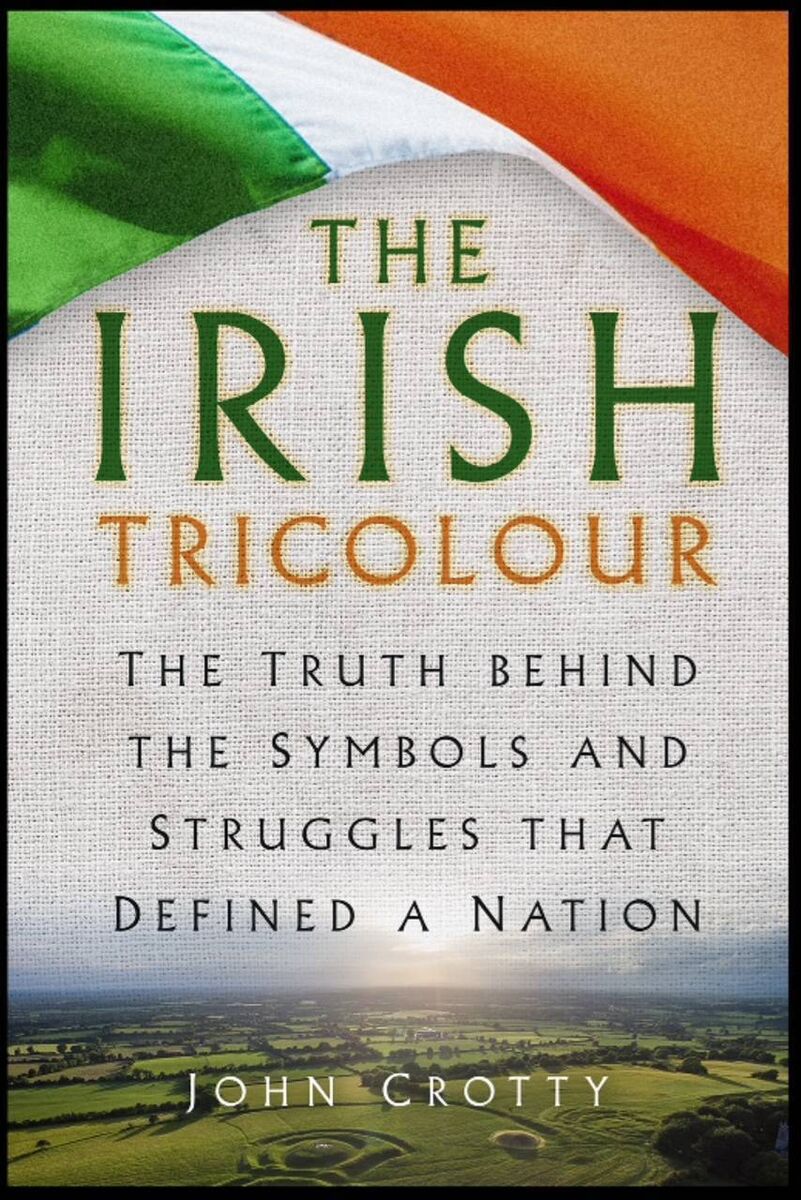
- , by John Crotty, published by The History Press is available now.
CONNECT WITH US TODAY



Be the first to know the latest news and updates