Public service media in a united Ireland: RTÉ, BBC and beyond?
A new model of public media with regional hubs in Cork, Limerick and other cities could become a positive facilitator rather than a problem to be solved, write Dawn Wheatley and Roddy Flynn
Public service media in a united Ireland: RTÉ, BBC and beyond?

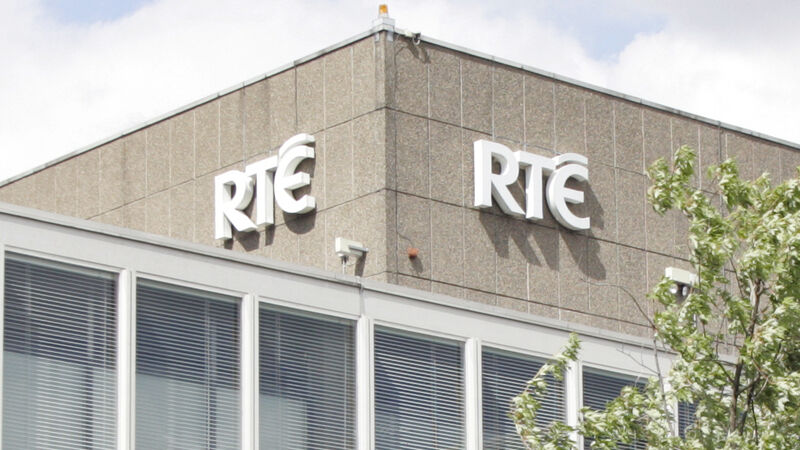
What would a united Ireland mean for RTÉ and the BBC? File photo: Mark Stedman/RollingNews.ie

Audiences and citizens rightly have very strong opinions about journalism and the media - how they function, and any apparent flaws and failures. 

Even more intense passions are aroused by debates around the politics and complexity of a united Ireland. So what happens when the two topics become part of a single debate?

Discussions around Irish reunification tend to focus on the mechanics of the economy, healthcare, education, and overall governance on both a practical and ideological level. 

That the future of Public service media (PSM) is rarely part of such discussions points to a widespread failure to properly grasp the fundamental constitutive role PSM will, and must, play as part of the democratic infrastructure of a united Ireland. 

Public media can play a valuable, constructive role in transition, social cohesion, and the emergence and evolution of contested national identities; it could become a positive facilitator rather than a problem to be solved.

With our colleagues in Ulster University, we have begun exploring what shape public media could take, with our steering prompt: “If you started with something close to a blank piece of paper, what kind of PSM organisation would you create for a new Ireland?” 

Whatever immediate reactions it might inspire, there are some existential questions underpinning such a thought experiment.

Public service media's relevance

First, should public service media continue to exist at all in an increasingly fragmented media landscape? Are one-size-fits-all PSM models tied to the State’s notions of what media should comprise still relevant? 

How can/should they align with the abundance of the free market and the highly personalised, streamable content defining individual media diets in 2026?

Yet there is still space for aspiration: we argue that public service media — defined by the Public Media Alliance as publicly owned multi-platform media organisations providing relevant, credible and impartial news, entertainment, and education to their audiences — remain an important counterpoint to both international streaming platforms and purely commercial media.

The latter may, of course, produce content that is in the public interest, but a crucial consideration is the extent to which formal, statutory guardrails are in place to protect indigenous creative industries, journalists, audience interests and overall standards, rather than prioritising purely corporate values and commercial metrics of success.

RTÉ and BBC in a united Ireland

If we accept some form of public service media is important, the second key question is what would a united Ireland mean for RTÉ and the BBC? 

In our report published today, we identify five options: 

  • A status quo retaining the BBC and RTÉ. However, it is difficult to see how BBC NI could stay as is, stripped of both the programme content drawn from the rest of the BBC network and suddenly cut off from the current UK TV licence framework. 
  • RTÉ absorbing BBC NI, with RTÉ becoming the island’s main PSM organisation. 
  • The formation of an entirely new institution, and the shuttering of RTÉ and the BBC as media brands and institutions. 
  • Marketisation, little or no formal public service media provision, and commercial media dominance. 
  • Some combination of the first three options, which might mean multiple different institutions: some new ones established, with some existing ones retained.

Our report advocates for option three, creating a new institution, or series of institutions, initially drawing on the infrastructure and human resources of RTÉ and BBC NI. This option, “Public Media Ireland”, would protect jobs and pension provisions in both, recognising the existing value and skillsets within these organisations. 

We also suggest that TG4 continues to operate as a standalone body.

A decentralised PSM

The final big-picture question for any new institution/s in a united Ireland is what form any novel organisation or networks should take. 

It is useful to ask what lessons have been learned from the past century of public service media, and how the most valuable elements can be retained and applied to a digital age. We argue that a contemporary PSM model should be decentralised, moving away from monolithic institutions to embrace wider participation.

Taking the role of journalism and the “blank piece of paper” prompt as an example: what would the ideal set-up for public service journalism look like, if starting from scratch? 

There are often accusations of a Dublin bias in media reporting, because of the geographical location of the main studios and newsrooms. A new model could, for example, prioritise geographic spread by positioning 10 multi-platform journalism hubs around the island. 

These hubs could source and support cross-platform content from both professional journalists affiliated with Public Media Ireland, and more open opportunities for content creation, such as independent podcasts from those based in these areas.

Financing

Understandably, financing such new institutions and initiatives will be one of the most common queries about our proposal. In the report we outline how the Finnish model for its PSM, Yle, could be a feasible model. 

Since 2013, Yle has been financed by individuals paying 2.5% of their incomes over €14,000 (with a max €163 payment per year). Organisations with taxable incomes above €50,000 pay €140 + 0.35% above €50,000 (up to a maximum of €3,000).

This raises over €500m for public service media annually, from a population of 5.6 million people.

The challenges with working out the details, practicalities and values underpinning any new entity cannot be overstated. 

Yet films, documentaries, journalism, podcasts, drama, theatre, music: the potential directions and contribution of a novel public service media institution, fit for purpose and unshackled from “how things have always been done here”, presents an exciting opportunity for rethinking the fabric, function and relevance of media in any newly expanded state. 

If nothing else, the “blank piece of paper” question affords us all the opportunity to evaluate what we think matters and what a public service media could be. 

There is no single correct or inevitable direction: priorities will vary depending on who is drawing the map, but starting the conversation is a crucial first step.

  • The report Public Media Ireland: a New PSM Organisation for a New Country is written by Dr Phil Ramsey (Ulster University); Dr Stephen Baker (Ulster University); Dr Roddy Flynn (Dublin City University) and Dr Dawn Wheatley (Dublin City University)

More in this section

Revoiced

Newsletter

Sign up to the best reads of the week from irishexaminer.com selected just for you.

Cookie Policy Privacy Policy Brand Safety FAQ Help Contact Us Terms and Conditions

© Examiner Echo Group Limited