Judge's comments show bias against cyclists is 'deeply embedded' in Irish society
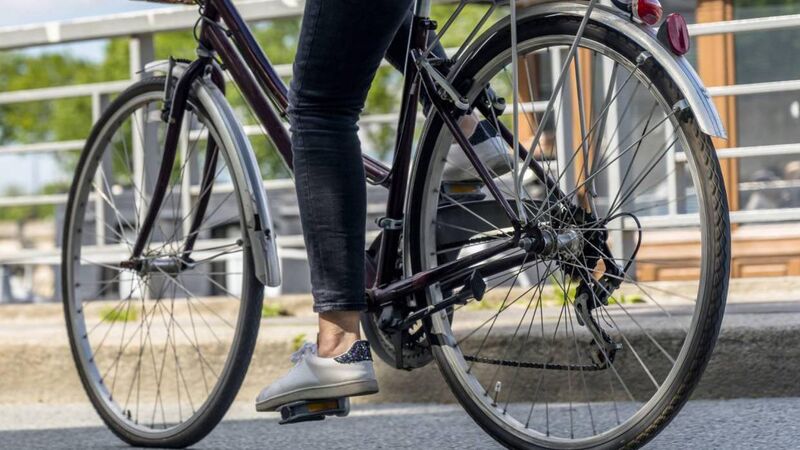
In a widely reported court case, Judge James O'Donohoe said cyclists had become a nightmare in Dublin, as he reduced a €50,000 damages award by 80% to a cyclist injured in a collision with a motorcyclist.
When a judge dismisses cyclists as a “nightmare”, it exposes how deeply embedded bias against vulnerable road users remains in Irish society. These are not throwaway remarks — they reflect how far we are from the cultural shift required to build genuinely safe streets.
In a widely reported court case, Judge James O'Donohoe said cyclists had become a nightmare in Dublin, as he reduced a €50,000 damages award by 80% to a cyclist injured in a collision with a motorcyclist.

If Ireland is serious about Vision Zero — the EU pledge to eliminate road deaths by 2050 — we must confront not just policy failures, but the attitudes that excuse them.
One hundred and ninety people were killed on Irish roads last year, including 45 pedestrians and 14 cyclists. For years, people walking and cycling have accounted for about 40% of all road deaths and serious injuries. Those who pose the least danger are paying the highest price for a broken system, a fact Judge O’Donohoe seems to have overlooked.
This is not an unavoidable toll of modern life; it is the predictable result of policy choices. If 190 people were dying each year from a preventable disease, we would call it a national emergency. On our roads, we offer thoughts and prayers, and move on.
When Taoiseach Micheál Martin introduced the workplace smoking ban in 2004, he faced fierce opposition but acted decisively and courageously, backed by health professionals and the evidence. The evidence on how to save lives on Irish roads is just as clear today, but the same courage is missing.
Ireland has committed to Vision Zero, yet we are moving in the wrong direction. With a target of just 72 deaths a year by 2030, this is not a marginal failure, but a systemic one.
Here are five actions that will save lives, if we choose to implement them:
First and foremost, road safety needs clear ownership at the highest level through a fully independent road safety commissioner. Responsibility is currently fragmented across national and local government, the gardaí and a number of State agencies.
We urgently need a commissioner with the legislative authority, independence and resources to coordinate action, demand delivery and hold failure to account — including calling out harmful narratives that undermine the safety and dignity of vulnerable road users.
The financial cost of road traffic collisions in Ireland is estimated at €1.4bn a year. A tiny fraction of that would be sufficient to resource the office of road safety commissioner.
Ireland has repeatedly created similar roles to address major public policy challenges, including the Mental Health Commission, the Office of the Police Ombudsman, An Coimisinéir Teanga and the Health Information and Quality Authority.
The absence of an equivalent role for road safety, despite hundreds of preventable deaths, tells us much about our priorities.
The physics are stark when cars collide with humans. At 30km/h, one in 10 pedestrians will die. At 50km/h, half will die. At 60km/h, death is almost certain.
For that reason, the Department of Transport’s own Speed Limit Review, involving international experts, the Road Safety Authority, An Garda Síochána and Transport Infrastructure Ireland, recommended a default 30 km/h limit in towns and cities. The Government has now abandoned that approach and pushed responsibility onto local authorities to implement piecemeal bye-laws, a process that will take years.
Across Europe, decisive action has saved lives. Wales moved from legislation to countrywide implementation of a 20mph urban speed limit in just 14 months and recorded a 28% drop in casualties. When London lowered speeds, deaths and serious injuries fell by a third, and child deaths fell by 75%. Helsinki did the same and went a full year without a single road death.
Ireland passed the law for 30km/h in 2024, and while others saved lives within months, we have chosen delay, dilution and drift, with a human cost every single day.
Enforcement works, but only when it is visible, routine and relentless. Just a year ago, former road safety minister Jack Chambers said enforcement had “collapsed”. That was the word he chose to use.
In 2009, more than 1,000 gardaí were assigned to roads policing. Today, that number has fallen to just over 600. That collapse is indefensible. Occasional holiday crackdowns do not change behaviour. They simply tell drivers enforcement is temporary.
If we are serious about saving lives, our gardaí must be properly supported and resourced to fully restore roads policing to previous levels, and beyond.
Enforcement must be treated as a core element of our road safety strategy, not an optional extra wheeled out every bank holiday weekend.
The Road Safety Strategy is clear: automated enforcement saves lives.
Yet Ireland has just 12 static speed cameras countrywide, while Lithuania, with just over half our population, operates more than 400. We installed two red light cameras in Dublin, detected more than 300 offending motorists, and then switched them off. Plans for a citywide network of cameras have now been shelved indefinitely.
Transport Infrastructure Ireland tells us average speed camera systems reduce fatal and serious injury collisions by half. Ireland has five such camera systems.
Road safety cameras should be permanent, widespread and treated as life-saving infrastructure. At this stage, inaction is no longer passive. It is measured in lives lost.
Our gardaí cannot be on every road. Traffic Watch was launched in 2004 to empower responsible road users in reporting dangerous driving. Since going fully online in mid-2024, 8,000 reports have been submitted by the public. Only 146 resulted in a prosecution.
In the UK under Operation Snap, a similar reporting system, 70% of submissions lead to police action. The difference is not behaviour, it’s follow-through.
Ireland must modernise Traffic Watch, enable easy uploading of footage, and ensure reports lead to real consequences for those who endanger others on our roads.
Five actions. Five signals that Ireland is finally taking road safety seriously. Create strong leadership, lower speeds, enforce them consistently, automate where possible, and fix accountability.
The evidence is clear. The deaths are preventable. The failure to do so is ours.
- Ciarán Cannon is president of Cycling Ireland and a former minister of state