Telling the truth about Ireland’s climate future
To avoid the political polarisation we see in the US, climate action needs to remain a shared national priority, grounded in evidence rather than ideology
Telling the truth about Ireland’s climate future

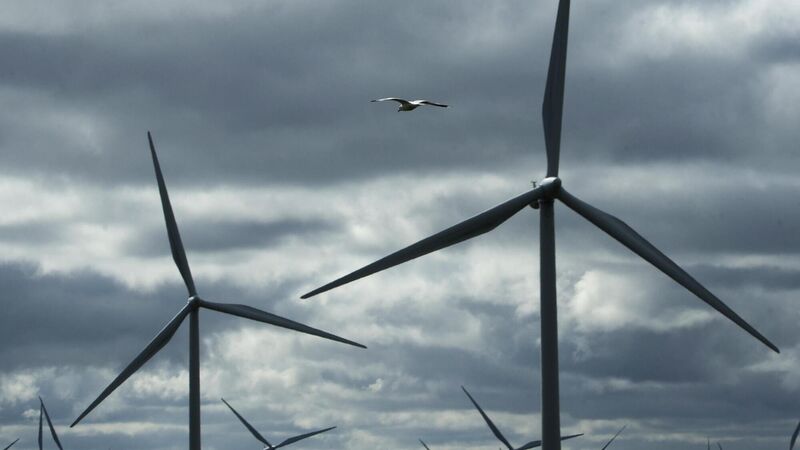
If offshore wind is to be a pillar of Government strategy, we need to see the roadmap of scenarios, decision points, trade-offs and choices informed by the best research evidence and followed by a plan of action to deliver it. File picture

In 1979, long before climate change got a mention in nearly every major political speech, former Fine Gael TD, later minister and one-time Dublin lord mayor, Michael Keating first raised the issue in the Dáil. Referencing recent UN reports, he asked what would happen if we kept burning fossil fuels and the consequences for the reported "greenhouse effect".

The answer from the late Des O’Malley, then Fianna Fáil minister for energy, was cautious: the science was uncertain, but the best policy was to “develop diverse sources of energy” so we weren’t over-dependent on fossil fuels. Yet the question remains: how can we cut emissions without cutting people out of prosperity?


Answering this honestly requires acknowledging some key principles. Climate action cannot be something we pursue only when it affects us directly, nor can we pretend there are no difficult choices. 

To avoid the political polarisation we see in the US, climate action needs to remain a shared national priority, grounded in evidence rather than ideology and not the preserve of any single constituency, whether in politics, activism, or elsewhere. 

Researchers, including environmental economists at UCD, who have studied these issues since 1981, remind us climate is not only an environmental challenge but an economic one, and good policy depends on continued support for the research that underpins it.

How are we progressing?

While renewable energy capacity continues to expand, pushing our electricity system to decarbonise, progress in sectors like transport and agriculture is lagging. The Environmental Protection Agency estimates Ireland is likely to achieve a 23% national reduction in emissions by 2030, well short of the 51% national target. This points to the scale of policy, investment and behavioural change required.

At the level of the individual, you can see the evidence of citizen participation in the climate transition. Photovoltaic (PV) solar panels now cover 155,000 rooftops, 54,000 homes received energy upgrades in 2024, and new battery electric vehicle (BEV) registrations now exceed those of diesel cars, although uptake has taken time. 

Regardless of the motivation pushing personal decisions (whether that’s environmental, financial, home comfort, technological desire or energy security), the outcome is what matters. Social norms in homes, businesses and on farms are also influential, but individuals ultimately make choices from within the options, signals and policy supports that exist.

Telling citizens the truth 

Speaking at the annual climate gathering of leaders in Brazil (Cop30) last November, Taoiseach Micheál Martin said: “If we are not prepared to tell our citizens the truth about this, we are failing them and this planet in the most profound way.” 

He’s right. Truth-telling must start at home. The policy agenda is clearly determined; climate-related pollution has been priced and our failure to reduce emissions will impose a significant financial burden on us in one form or another.

The Government has acknowledged we will not meet our 2030 target, but it hopes compliance can be achieved early in the 2030s, with offshore wind seen as a game-changer, and high-level groups coordinated by the Department of Climate, Enercy and the Environment and the Department of An Taoiseach respectively, investing significant effort in this. 

Missing our target will require the national emissions shortfall to be covered by purchasing carbon credits from other EU states that overperform in reducing their emissions. The cost of this has been forecast at somewhere between €8bn and €26bn, depending on various scenarios. 

However, climate minister Darragh O’Brien has said no agreed formula exists for calculating such a bill, referencing his own discussions with the European Commission, and argues we should get credit for major investments, for example, in the national grid, that will advance decarbonisation.

The Department of Finance’s recent Future Forty report warns the most significant financial exposure over the next 40 years will arise from the most extreme outcomes of climate change and the transition to a low-carbon economy. 

Eoin O'Neill: 'Climate change is not abstract, it is here, shaping our weather, threatening water quality, accelerating the introduction of invasive species, damaging homes and property.'

Wherever possible, State investment needs to maximise co-benefits to achieve both mitigation and adaptation objectives, as well as securing other environmental benefits, such as improving air and water quality and nature restoration. 

In addition to wellbeing benefits, investment in climate action will benefit businesses. The Action Plan on Competitiveness and Productivity, published in September, acknowledges this: “Industrial decarbonisation is not just an environmental, but also a competitive and economic imperative for Irish businesses.” 

We need a plan, not just promises 

Looking beyond the environmental necessity and, given the importance of decarbonisation to competitiveness and the implications of climate emissions compliance for medium-term State budgeting, it is time to respond to the Taoiseach’s comments about telling citizens the truth. 

Delivering on that begins with a detailed, credible plan outlining how the Government will lead us right through the transition, how and when compliance will be achieved, and the priorities for investment sequencing as part of an overall roadmap. This should clearly identify where it is anticipated targets will be missed, for how long, the anticipated cost of non-compliance, and when we realistically expect to meet the 2030 target in the first instance.

Adaptive planning is essential, anticipating that if offshore wind does not materialise on time or at the required scale, alternative pathways must be clear. 

This is a real concern given Ireland currently has no operational offshore wind farms and the acknowledged challenges delivering critical infrastructure. The first and only offshore wind farm built on Arklow Bank in the early 2000s has reached the end of its operational life and is entering decommissioning. 

If offshore wind is to be a pillar of Government strategy, we need to see the roadmap of scenarios, decision points, trade-offs and choices informed by the best research evidence and followed by a plan of action to deliver it.

Why research matters more than ever 

A major change from those initial "greenhouse effect" discussions more than 40 years ago has been the emergence of meaningful research funding on environmental issues. This research provides a base of evidence, helping to inform choices. 

At UCD’s Earth Institute, more than 200 researchers are working to understand and repair our changing world. Their work spans everything from restoring Europe’s wetlands (WaterLANDS), to building a circular bioeconomy (BiOrbic), to helping farmers diversify crops for a changing climate (DIVERSICROP). This breadth and interdisciplinary collaboration is what makes the Earth Institute nationally important. Their work demonstrates science, knowledge creation and evidence to inform policy truly matter.

Two years ago, we launched the UCD Climate Fellows programme to bring that evidence beyond the campus into public life, into communities, into policy. Our first cohort came from 10 schools across UCD, sharing science and a drive to share their knowledge. The response has been powerful. People want to know and understand the choices that have to be made.

Climate change is not abstract, it is here, shaping our weather, threatening water quality, accelerating the introduction of invasive species, damaging homes and property. The first Dáil question on climate was asked in 1979. The response then could form a core part of any current minister’s response today. But that other question, how to cut emissions without cutting people out of prosperity, still remains.

Whatever the answer, there will be a price, and we need to face it.

  • Professor Eoin O’Neill is director of UCD Earth Institute and professor in environmental policy at University College Dublin

CLIMATE & SUSTAINABILITY HUB

More in this section

Revoiced

Newsletter

Sign up to the best reads of the week from irishexaminer.com selected just for you.

Cookie Policy Privacy Policy Brand Safety FAQ Help Contact Us Terms and Conditions

© Examiner Echo Group Limited