Liam Quaide: East Cork is stuck in traffic — the train is the way out
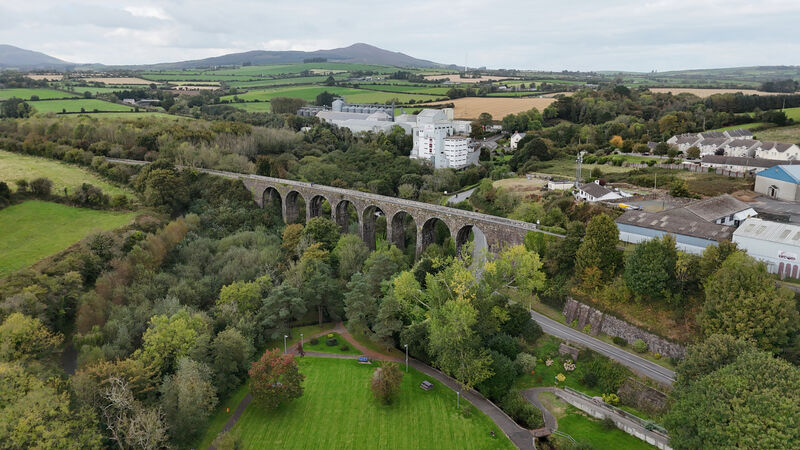
Despite being firmly in favour of cycleways, it struck me as gravely short-sighted to tarmac over this rail corridor for a recreational amenity when East Cork’s transport system was increasingly seized up with traffic. Picture Dan Linehan
My entry into politics was shot through with irony. In May 2018, I organised a public meeting in the Walter Raleigh Hotel on the need to reinstate the Youghal-Midleton rail link. I was, unusually, a Green Party election candidate arguing against a proposed greenway along the rail corridor between those towns — the only local representative to take that position.
Despite being firmly in favour of cycleways, it struck me as gravely short-sighted to tarmac over this rail corridor for a recreational amenity when East Cork’s transport system was increasingly seized up with traffic. The greenway risked scuppering any hope of restoring a key infrastructural link that would transform mobility and enhance economic opportunity in Youghal and its surrounding areas.
Eight years on from that public meeting, and now as a Social Democrats TD, I have never been more convinced of the need for this service.
The rail connection between Cork and Midleton was reinstated in 2009, and it was a colossal error not to extend it to Youghal at the time. This was a serious injustice to the population living east of Midleton — one that will be acutely pronounced if Youghal remains excluded from rail connectivity following the development of the Cork Luas.
While the greenway has since progressed and there is no turning back the clock on that, recent developments offer renewed hope. Feedback from Irish Rail to East Cork councillors in 2024 suggested the corridor is wide enough to accommodate a single-track rail alongside the greenway.
This has reignited public momentum, channelled by a dynamic grassroots campaign group — the East Cork Rail Alliance — whose members include former Youghal town councillors Michael Beecher and Liam Burke. The group has collected over 20,000 petition signatures calling for the train line to be restored, and is engaging with public representatives across Cork and Waterford.
Vulnerable groups, including children with disabilities travelling to special education facilities in Carrigtwohill or Cork City, are afflicted with particularly gruelling journeys. Traffic collisions on this over-capacity road are frequent — some serious and fatal.
The Youghal-Midleton rail service opened in 1860 and served communities for over a century before passenger services were withdrawn in 1963, with goods traffic ceasing in 1978. The restoration of the Midleton-Cork line has defied sceptics, with passenger numbers now growing year on year.
Ten-minute frequencies following the completion of twin-tracking in 2026, alongside planned new stations at Water Rock and Carrigtwohill West, will radically enhance the network.
Yet Youghal, Mogeely, Killeagh and Castlemartyr are being completely left out of this revolution in rail transport. Why should such a large section of East Cork’s population have to resort to a primitive bus service that often leaves people standing on a street indefinitely, unsure when they will reach their destination?
Despite the €215m investment in the Dunkettle Interchange, journey times from East Cork to the city remain prone to extreme delays. We have learned, from the M50 in Dublin and internationally, that increasing road capacity beyond a certain point simply entrenches congestion. It is an infrastructural fallacy to believe we can build our way out of transport failure with ever more road projects. A decisive shift towards rail and light rail is imperative.
We should be under no illusions about the scale of the challenge involved in restoring the Youghal-Midleton line. Our Government has placed multiple proposed rail re-openings into cold storage, including the Waterford–Wexford/Rosslare line, and those linking Mullingar with Cavan, Monaghan and Portadown, as well Mullingar-Athlone and Limerick-Shannon. They have also shelved or seriously delayed several Luas projects in Dublin.
We are not seeing the density of housing development or associated population growth in Youghal that would naturally occur around a functioning train service. Between the 2011 and 2022 censuses, Midleton’s population grew by 16% and Carrigtwohill’s by over 26%, while the figure for Youghal was 10%. Without rail connectivity, Youghal’s growth potential remains constrained.
Car dependency also makes it next to impossible to meet our legally binding climate action targets by 2030, putting Ireland at risk of billions in EU fines.
As unassailable as the case for restoring the Youghal rail link is, it will require serious political ambition and leadership to take us there. When this service is eventually linked to the Cork Luas, it will be truly transformative for East Cork.
Yet this is not a pursuit of luxuries; it is about meeting a basic need in a modern society with a growing population. It is incumbent on all public representatives in the region to go after it.
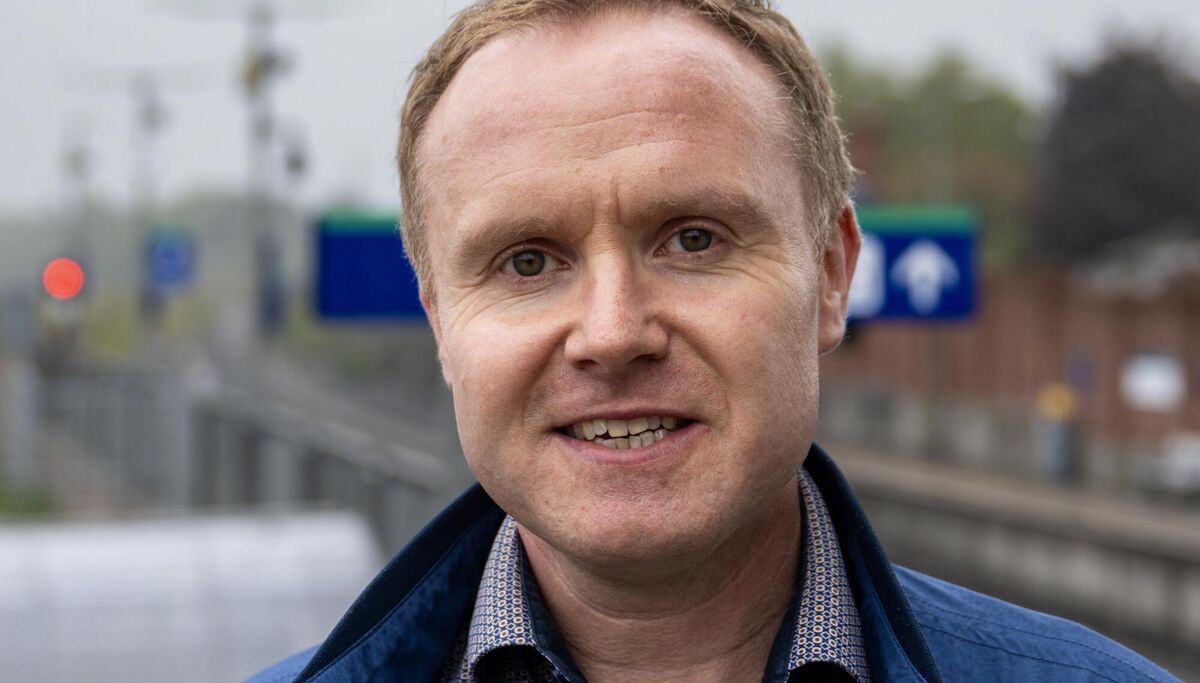
- Liam Quaide is a Social Democrats TD for Cork East


CONNECT WITH US TODAY



Be the first to know the latest news and updates