Parents raise alarm at repurposing of special classes
Re-classification of early intervention classes as autism classes is raising concerns, writes Education Correspondent Jess Casey
Parents raise alarm at repurposing of special classes

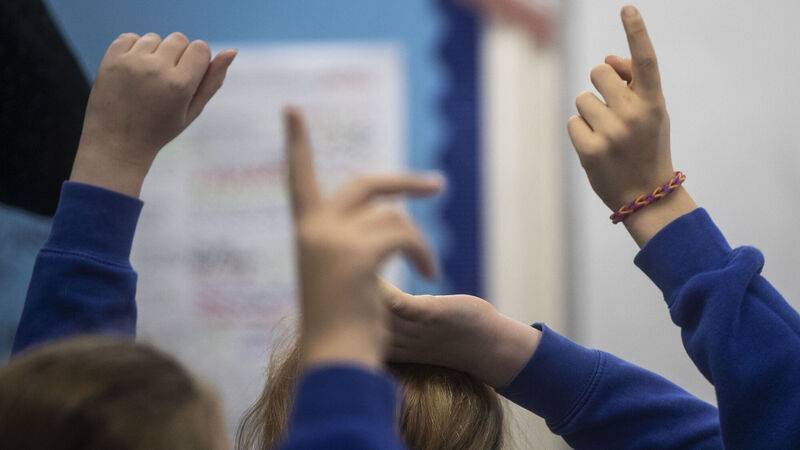
At least 25 early intervention classes open in 2020 have since been ‘redesignated’ as primary school autism classes. File picture: Danny Lawson/PA

Parents and educators have sounded the alarm over the repurposing of early intervention classes for pre-school children into autism classes in recent years.

At least 25 early intervention classes open in 2020 have since been ‘redesignated’ as primary school autism classes. Since 2023, 11 early intervention classes have been closed or repurposed into autism classes.

Early intervention classes are for children between the ages of three and five and are intended to provide early support to autistic children before they start school.

They provide more targeted support for children whose needs cannot be met through the Access and Inclusion Model (Aims) in mainstream pre-schools.

Children lack rights 

Children do not have the same legal and constitutional right to access an early intervention class as they do to a primary education.

According to the National Council for Special Education (NCSE), there are 163 early intervention classes across Ireland.

However, both Cork and Dublin have fewer early intervention classes in 2025 than they had in 2020.

Early intervention classes reclassified as autism classes 

In Cork, seven of the early intervention classes attached to primary schools that were open in 2020 have since been reclassified as autism classes.

For the current school year, Cork has 21 early intervention classes, data from the NCSE shows; the last early intervention class in Cork to open was in 2023.

In the same year, Dublin had 23 early intervention classes.

Four of these have since been redesignated by the NCSE as autism classes.

'Alarming' re-designation

Bridgette Farrell, whose child attended an early intervention class, described the closure or repurposing of early intervention classes as “alarming”.

“There is absolutely no way that my son’s needs could have been met in a mainstream Early Childhood Care and Education setting with 15 to 22 children in a class,” said Ms Farrell. 

“No increase in the adult-to-child ratio via Aims support can take away the utter sensory overwhelm of putting a child like my son into such an environment.

“There are no winners when parents are left with no option but to do this. 

It is unfair on the children themselves, their classmates, and the staff in the early years setting.

“In closing and repurposing early intervention classes at the rate that they are, the NCSE and Department of Education and Youth are leaving parents with no option but to do just that, and that is absolutely wrong.”

The early intervention class was “transformational” for her son, Ms Farrell added, “and for us as a family”.

His communication and emotional regulation “improved beyond recognition,” and he mastered key life skills.

He also learned that school was a “safe, fun and happy place”.

“The impact of him having such a positive experience of education early in life has been so significant and far-reaching,” she added.

School principal speaks out

School principal Anne-Marie Ford, who is also a Fine Gael councillor for Drogheda, said early intervention is key to getting the right support to students at the right time.

Ms Ford is the principal of Scoil Naomh Cholmcille in Louth, which has four early intervention classes.  

“If we don’t get in early, especially in terms of areas of concern, it’s very, very hard to pull back,” she said. 

If you bring children through the early intervention process, you are giving them every potential to go to mainstream school, which is what we have.

“A lot of our children are heading to mainstream school because of the supports in early days. I don’t think there’s anybody who would deny that the system is not working at the minute. I think the only way of getting a system that will work, and a system that will support children and parents, is through early intervention.

“Unless we look at early intervention, we’re always going to be on the back foot in terms of catch-up.”

Department response 

A spokesman for the Department of Education and Youth said the primary responsibility for supporting pre-school children with special educational needs lies with the Department of Children through Aims.

In some counties, the number of classes may have fallen “where the NCSE have redesignated the class as a primary special class to support the students transitioning from early years to primary school”.

“These classes are redesignated after careful consultation with schools and parents,” he added.

“Parents and schools are often anxious to ensure that a group of six children in an early intervention class can continue to attend the same school and have the class redesignated as an autism special class.”

NCSE response 

A spokesman for the NCSE said the process of redesignating classes occurs when there is “a shift in local demand”, such as when an early intervention cohort “transition out and a notable need arises for primary autism class placements”.

“In these circumstances, redesignation allows children who are ageing out of an early intervention class, and who have the relevant recommendations for a primary-age placement, to remain in the same school community.

“These decisions are made on an individual basis in collaboration with school patrons and in line with the NCSE Guidelines governing the establishment, resourcing, and reclassification of special classes.”

Admission to an autism class is not guaranteed for a child who has previously attended an early intervention class.

“Placement decisions are governed by individual school admission policies and eligibility criteria, ensuring that children are integrated appropriately with their mainstream peers.”

More in this section

Revoiced

Newsletter

Sign up to the best reads of the week from irishexaminer.com selected just for you.

Cookie Policy Privacy Policy Brand Safety FAQ Help Contact Us Terms and Conditions

© Examiner Echo Group Limited