Chris Luke: Children need a healthy fear of inhaling gases

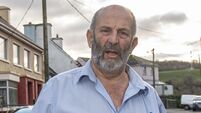
Derrdre and Joe Mescall from Kilnamona, Co Clare, whose 14-year-old daughter Sarah Mescall died after inhaling an aerosol as part of a Tiktok challenge, leaving Dublin District Coroner's Court last October with Garda Luke Doyle of Crumlin Garda Station. Picture: Colin Keegan/Collins
One of the most painful duties for a clinician in an emergency department is telling a parent that their beloved young son or daughter is dead. And I speak from bitter experience.
It’s hard enough when the death is due to a gradually overwhelming infection like meningococcal meningitis or an end-stage brain tumour. However, when it was caused by the can of deodorant that was sitting on the bathroom shelf that morning, the message can be a nightmare to deliver and — even more so — to receive.
Two such tragic deaths have been in the news in Ireland lately: That of Sarah Mescall from Co Clare in September 2023, and Daniel Maguire from Dublin in September 2025. Both were “happy and healthy” and hugely loved 14-years-olds when they inhaled the gas sprayed from deodorant cans, apparently for the first time, and succumbed to sudden and lethal cardiac arrest (notwithstanding the heroic efforts of pre-hospital and hospital professionals in Crumlin and Temple St).
Re-reading these devastating stories, I agree wholeheartedly with the bereaved parents’ campaign to get all parents to speak to their children about the dangers of sniffing gas, glue, or aerosols (so-called “volatile substance abuse”, or VSA).
It’s something I’ve done myself in school lectures on drug misuse for years.

What is clear to me is that such education should be routine in every school, for all pupils and parents.
And here are the key ideas that I think should be conveyed in such a campaign.
Humans have always periodically sought altered consciousness to alleviate boredom, sadness, or stress by getting “high” or seeking hallucinatory “enlightenment”.
Humans have also been sniffing fumes or vapours, with those aims, since the dawn of time. We often forget that the Victorians had “laughing gas”, chloroform, and ether parties.
We’ve largely forgotten how, in ancient times, people regularly heated cannabis, opium, (hallucinogenic) henbane, and incense — and inhaled.
It’s even speculated that the Oracle of Delphi achieved her legendary trance state by breathing ethylene gas emanating from a subterranean fissure beneath her temple.
What is relatively new is that, since the industrial revolution, the number of man-made volatile solvents (such as petrol, glue, and acetone) has exploded, and these useful but hazardous products are found in homes, petrol stations, building sites, and factories everywhere.
Children are naturally inquisitive and many experiment with “smelly chemicals” (like deodorant, nail polish remover, lighter fuel, or spray paint) from the age of about 10.
Across Europe, roughly 7% of people have tried sniffing such volatile agents — with slightly more men overall than women.
The data for Ireland is patchy, but a 2004 community survey in North Dublin indicated that 16% of respondents had used inhalants at some stage, and roughly 4% reported recent use.
I think these figures are still applicable (and down a little from the 1990s).

In terms of mortality, the best guestimate is that between one and four youngsters a year may be dying as a result of volatile substance abuse in Ireland.
In Britain, the current annual mortality is said to be about 50.
There are probably four kinds of medical or behavioural consequences of VSA to consider.
• , there is the intoxication — which can involve confusion, slurred speech, mood swings, aggressive behaviour, unsteadiness, hallucinations, vomiting, blackouts, and breathing difficulties.
The user can look “drunk” (which can be frightening in a youngster) and is vulnerable to fatal asphyxiation if they vomit or put their head into a plastic bag containing a solvent.
There is also a risk of accidental injury such as burns, for instance, if someone is smoking near the gas source.
• , there is the risk of immediate death — especially if a gas like butane is squirted directly into the mouth.
It can sometimes cause intense swelling of the throat and suffocation.
Even without the throat damage, the use of gases such as butane, freon, or nitrous oxide (“laughing gas”) can provoke a respiratory arrest when spontaneous breathing fails, or a cardiac arrest due to an abrupt irregularity of the heartbeat.
It is thought that the chemicals render the heart tissue over-sensitive to adrenaline, so a “shock” of any sort can trigger fatal ventricular fibrillation.
Toluene, a compound in paint thinners and glues, can also precipitate cardiac arrest through changes in the blood etc. Such cases involve what is called sudden sniffing death syndrome (SSD), which can have better results from resuscitation if it is immediate.
• , there are the features of long-term volatile substance abuse.
These include episodes of dizziness, slurred speech, confusion, chemical smells on the breath or clothing (youngsters may spray deodorant onto a sock or pillowslip), and frequent nosebleeds or sores around the mouth.
Long-term solvent use damages the muscles, liver, and kidneys, and can cause lasting brain impairment, with difficulty controlling body movement.
• , persistent misuse of volatile substances — known as chroming, huffing, or bagging, depending on the agent and the way it’s inhaled — vaping, and repeated use of nitrous oxide may be followed by misuse of illicit drugs, tobacco, or alcohol. Inhaled chemicals may be “gateway drugs”.
Three factors affect the popularity of any recreational drug: How they alter consciousness; their availability; and people’s attitude.
The biological side effects of a chemical may not be amenable to “fixing” because the main use of the product is what sells it, and changing that may render it less commercially viable.
Availability is already theoretically limited: It is basically illegal in Ireland to sell volatile materials to those under 18, and it is hard for a parent to ensure that there’s no access to any potentially inhalable products in the home.
As with most drug use, the key driver of use is attitude — creating a healthy fear is key. I recall seeing, as a boy, the spine-chilling Pathé News footage of the notorious Nazi death camp at Auschwitz. Those arriving were told to strip and “take a shower”, the pretext being prevention of infestation.
Once in the shower chambers, pellets of Zyklon B containing cyanide were dropped in through vents in the roof and, after interacting with heat and water, a lethal gas was generated which killed hundreds of victims in about 20 minutes. I’ve never forgotten that image (nor the medical horrors of gas warfare in the 20th century or the cases of VSA death I’ve encountered over the years).
I remain convinced that the best way for parents to prevent children taking life-threatening risks of any sort is to create the kind of healthy fear that has kept homo sapiens alive for the past 300,000 years. It’s somewhere halfway between a phobia and a toddler’s inclination to pop everything new into their mouth. We do it with brightly-coloured berries on bushes, busy roadsides, clifftops, and riptides at the seaside: We just need to add toxic chemicals to that list. Remember: What we’re wary of, they’re usually wary of.
Chris Luke is a retired consultant in emergency medicine and host of the Irish Medical Lives podcast