Defence spending: Ireland must take security risks seriously 
Ireland has one of the lowest rates of military expenditure and capability of any advanced economy — and our position at the edge of Europe is no longer a guarantee of safety
Defence spending: Ireland must take security risks seriously 

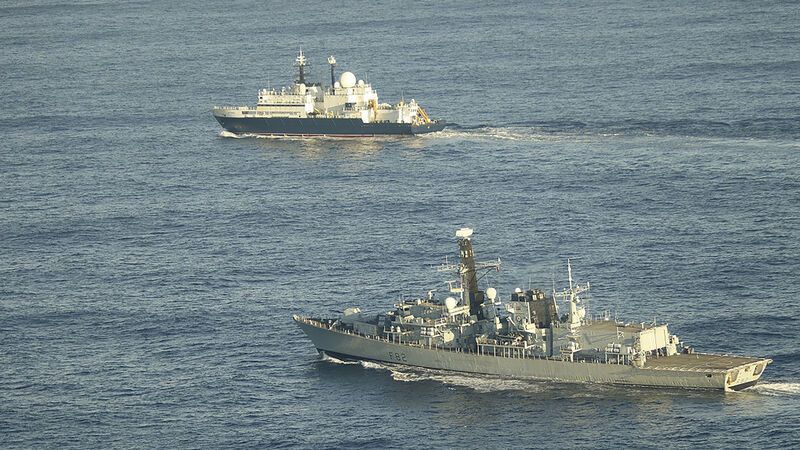
The British Royal Navy's HMS Somerset flanking Russian ship Yantar near UK waters. For Ireland, being at the far end of Europe can no longer insulate the country from Russian interference. File photo

Today, Ireland’s capacity to defend itself is under greater scrutiny than at any stage in the country’s history. 

Security conversations are being had in countries all across Europe in the wake of Russia’s full-scale invasion of Ukraine in 2022. Each European state has its own economic, geographical, and political context, with the perception of the threat posed by Russian aggression understandably higher the closer you get to Ukraine. 

However, for Ireland, being at the far end of Europe can no longer insulate the country from Russian interference and disruption, especially, given the well-documented shortcomings in Ireland’s security architecture.

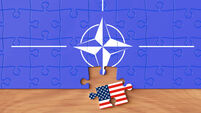
The assertion of Donald Trump’s ‘America first’ approach to international affairs, recently illustrated by US actions in Venezuela and his stated interest in acquiring Greenland, and the depiction of Europe as a rival and a threat to US interests in the recently published US National Security Strategy, should also cause alarm in Dublin. This is reshaping transatlantic relations and, in turn, Irish-US relations — which have been a mainstay of Ireland’s domestic, industrial, and foreign policy for most of the State’s existence.

In this new unfamiliar context, Irish policymakers must be willing to take potentially far-reaching decisions regarding Ireland’s security.

IIEA paper

In a recent Institute of International and European Affairs (IIEA) paper, written in partnership with Deloitte Ireland, we set out some of the measures that the State could pursue to rise to the threats posed by the increasingly threatening risk environment.

We propose that the Government should expedite the drafting of a national security strategy to coordinate and harmonise existing sectoral security strategies and to communicate the state of Ireland’s security environment. The Government should then examine how to increase public awareness to foster a shared understanding of the threats to Ireland’s security.

Essentially, this should involve an all-of-society approach to security that involves the public and private sectors as well as the citizens. The private sector faces heightened exposure to geopolitical risk and should also be given support from the State’s security architecture. 

Equally, private sector actors should be encouraged and supported to share information between themselves, including with rivals, to share best practice and increase resilience in the face of shared threats.

There are also relatively straightforward legislative measures the State should consider, including the provision of a security clearance system for non-government officials to work in Ireland, the lack of which makes Ireland something of an anomaly by European standards. 

Government should also consider removing the restrictions placed on Enterprise Ireland’s engagement with Ireland’s dual-use sector, including with respect to cybersecurity technologies where Irish companies and researchers are increasingly seen as world-leading.

The changing face of conflict

The starting point of any shift in policy of the scale that is required is for the State and its agencies to obtain a clear understanding of the problems the country is facing.

The changing character of warfare means geographical distance or remoteness no longer provides any sort of defence. Historically, Ireland was able to choose to stay out of many international entanglements by dint of geography. 

Today, Ireland no longer enjoys this luxury. Malign actors or bored computer hackers, working for states or for themselves, now have the power to disrupt essential services and supply chains, as seen in the 2021 attack on the HSE. 

Europe experienced close calls in recent times — with the aborted Romanian presidential election in November 2024 and the Moldovan parliamentary elections in September of this year — when Russian interference campaigns came close to compromising national elections in two of Europe’s most fragile democracies.

The heightened sense of threat in Europe has seen former non-aligned states such as Finland and Sweden break from their traditional positions and join NATO. This leaves Ireland among a dwindling number of non-aligned EU countries, alongside Austria, Cyprus, and Malta. 

Minister for Defence and Foreign Affairs, Helen McEntee. A recent IIEA paper proposed that the Government should draft a National Security Strategy. File photo: Eamonn Farrell/© RollingNrews.ie

Outside of the domestic realm, security and defence has been brought to the very centre of EU policymaking and politics since Russia’s full-scale invasion of Ukraine. Until even a decade ago, security and defence verged on a taboo subject within the EU. 

Today, an EU-backed mission in Poland is training the Ukrainian military, the bloc has fast-tracked Ukraine’s candidacy for EU membership, and EU leaders have just agreed to make €90 billion available to help Ukraine stay afloat.

In this context, questions have and will be asked of Ireland in particular, given the country’s location at the edge of the continent, and given the enormous amount of critical infrastructure, including subsea cables and data centres, that are in or near Ireland’s jurisdiction. 

An attack against this infrastructure could have major consequences for EU communications, digital and financial systems. How Ireland moves to defend these assets — and is seen to do so or not — will have major consequences for how Ireland is perceived at the level of the EU and on the world stage.

Defence Forces

Finally, it has been documented that Ireland has one of the lowest rates of military expenditure and capability of any advanced economy. 

Aside from the risks posed by new forms of hybrid threats and the need to defend critical infrastructure, Ireland is not yet in a position to mount effective deterrence or to defend the State in the event of a conventional attack, to adequately tackle criminal activities, including drug interdiction, given its scale, or to know what is in our airspace and seas, given the lack of military-grade radar. 

The announcement of a €1.7 billion investment in Irish defence by Minister for Foreign Affairs and Defence Helen McEntee last month should be seen as a very positive step for anyone who believes that Ireland is worth defending. But much more is required than bigger budgets. An entirely new and inclusive approach to security and defence policy is necessary, as has been pioneered in countries including Finland and Sweden.

Most Irish people believe that Irish democracy, Irish citizens, and the people who call Ireland home, are deserving of protection from the State. Indeed, there are those who argue that it is the primary responsibility of government. 

What’s more, given Ireland’s non-aligned status, it’s not clear who, if anyone, would come to the country’s aid in a time of need. Ireland would need to rely on the goodwill of friends and allies which we have seen in recent years can be subject to change in the event of political transition. 

There is a strong argument that the best way to remain non-aligned and at peace is to invest heavily in the State’s capacity to defend itself and to deter threats.

European democracy more broadly, of which Ireland is a central part, is also worth defending. Ireland is one of the oldest uninterrupted democracies in the world. Democracy has allowed this country to prosper, economically and socially. 

The fight for democracy

Today, dark forces are rising in Europe that wish to degrade European democracies for their own gain. Ukrainian men and women are fighting Europe’s war and while they may not be losing, they are not yet winning. 

The risk to the European way of life is very real and is very near, and Irish leaders and citizens alike must accept that Ireland is in this fight as much as anyone is.

Ireland will be brought to the very centre of the new, uncharted EU security environment later this year when the country assumes the rotating presidency of the Council of Ministers of the EU. 

Irish leaders should see this as an opportunity to signal to European peers that the country is taking its responsibilities to defend both Irish and EU security seriously. European democracy, and the European way of life itself, are at stake.

  • Dr Barry Colfer is Director of Research and Cian Fitzgerald is a Senior Researcher at the Institute of International and European Affairs (IIEA)

More in this section

Revoiced

Newsletter

Sign up to the best reads of the week from irishexaminer.com selected just for you.

Cookie Policy Privacy Policy Brand Safety FAQ Help Contact Us Terms and Conditions

© Examiner Echo Group Limited