Richard Scriven: We can add new meaning to old routes through pilgrimage
Thousands of Irish people are undertaking pilgrimages for religious or spiritual reasons, for charitable causes, or to mark milestones
Richard Scriven: We can add new meaning to old routes through pilgrimage

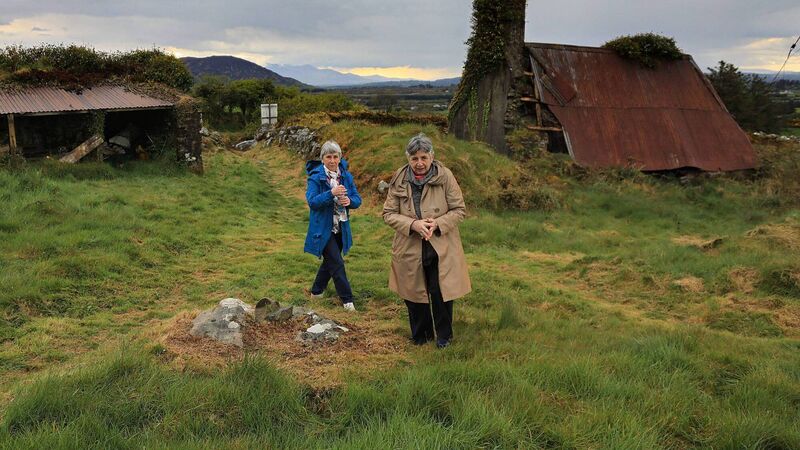
Sisters Julia and Noreen Lucey visit ‘The City’ of Shone pilgrimage site near Rathmore, Co Kerry. Pilgrims visit the site on May 1, to 'do the rounds' and collect water from the sacred well. ‘The City’ or Cathair Crobh Dearg, is located on the northern slopes of the Paps of Anú.‘The City’ refers to the locations role as a cathair — ring-fort. It is thought to be one of the oldest Christian pilgrimage sites in Ireland. Picture: Valerie O'Sullivan

Walking the Camino de Santiago is among the new year’s resolutions that have been mentioned to me. 

Perhaps it is on your list, or you have already completed the route. You probably know several people who have.


The Camino and other walking pilgrimages have gained significant popularity recently. 

Thousands of Irish people are undertaking the challenge for religious or spiritual reasons, for charitable causes, or to mark milestones. 

What is behind the substantial interest in these pilgrim paths? Why has this form of spiritual activity grown at a time when formal religious practice is declining? 

HISTORY HUB

If you are interested in this article then no doubt you will enjoy exploring the various history collections and content in our history hub. Check it out HERE and happy reading

These questions have been a focus of my research. I have identified three broad reasons behind this revived interest in pilgrimage.

Firstly, pilgrimage represents a prototypical journey that is attractive to people seeking a meaningful break. 

In contrast to sun holidays or city trips, there is a distinct resonance underlying the spiritual paths. 

The Camino Portugués, St Olav’s Way in Norway, or St Cuthbert's Way in Northumbria are contemporary quests in which people intentionally challenge themselves to reach a specific place. 

A pilgrim walking to catch the ship to Santona (Cantabria), way of St James, Spain.

The pilgrim leaves home and opens themselves to encounters, they accept the difficulties and opportunities of the route, and they reach their destination before returning renewed. 

This understanding is shaped by European and Christian traditions that highlight how sacrifices on the journey can result in spiritual and personal rejuvenation.

This feature stands out as a key motivator for the pilgrims I have talked with. 

Trekking over long distances is a challenge, with hardships and aches along the way, but it makes the experience more meaningful as a result. 

People describe achieving a unique kind of restoration through these journeys that is unlike any other type of time out.

At a time when many people’s lives are increasingly defined by fast paces and social media, pilgrimages offer a slowed rhythm free of notifications and everyday concerns. 

Research in this area refers to a liminal state in which pilgrims withdraw from normal obligations to enable deeper personal and spiritual journeys. 

In Medieval Europe, the pilgrim was a special kind of traveller whose undertaking was socially respected. 

This esteem still has cultural value today. Pilgrimage offers a different type of disconnection compared to vacations and package holidays. 

Walking these routes serves as an antidote to doom scrolling and demanding schedules.

The second reason behind pilgrimages' popularity is that these journeys are broad enough to incorporate a whole range of motivations. 

The devoted Roman Catholic or Buddhist can ramble alongside the walker with an interest in spirituality and the atheist marking a significant birthday. 

Each pilgrimage contains a multitude of religious/spiritual, emotional, and personal journeys.

I have interviewed people who view pilgrimages as an important part of their faith. It is an opportunity to step back from the usual distractions and focus on their relationship with God. 

These spaces help deepen and revitalise beliefs and dedication to living their principles. 

Then, there are those that participate because of family traditions. I met people on Croagh Patrick and Lough Derg who remembered being brought on their first pilgrimage by their grandparents. Returning to these places is a way of feeling closer to now passed relations. 

Equally, some people explained that they were in search of a different experience that combined physical activity with a cultural significance. 

One person was honouring those who are forced to leave homelands because of conflict or climate disaster. 

The figure of the pilgrim and refugee share a solidarity. 

Moreover, an aspect of the journey is sharing with strangers, allowing different motivations to intermix and add to the vibrancy of pilgrimage.

Finally, pilgrim routes offer a means of connecting with natural and cultural heritage. 

Walking these tracks enables a connection with the environment and historical locations. 

Replicating the success of the Camino, there is a network of Pilgrim Paths across Ireland situated in Celtic and medieval history. 

St Declan’s Way links Cashel and Ardmore with a trail through landscapes steeped in heritage and beauty, while St Brigid’s way leads from Dundalk to Kildare tracing stories of the prominent Irish female saint.

On these paths, there is a meeting of natural, cultural, and spiritual heritage. 

This is a distinct and powerful setting that reinforces the other features discussed. 

It is a space of meaning making that accommodates diverse motivations. 

Walking is recognised as a nuanced way to engage with the environment. 

It gives time to appreciate nature, medieval monasteries, and standing stones. 

These elements blend to make pilgrimage a different form of trekking, a different type of journey.

Whether venturing across continental Europe or completing Tóchar Phádraig in Mayo, people are choosing to engage in journeys embedded in the landscape and cultural or spiritual heritages. 

For some it is a matter of faith, for others it is a personal endeavour or an openness to encounters along the way. 

Regardless, thousands of Irish people will undertake pilgrimages in 2026 adding new meanings to old routes.

Dr Richard Scriven is a geographer in UCC who researches pilgrimage, heritage, and human rights.

x

More in this section

Revoiced

Newsletter

Sign up to the best reads of the week from irishexaminer.com selected just for you.

Cookie Policy Privacy Policy Brand Safety FAQ Help Contact Us Terms and Conditions

© Examiner Echo Group Limited