Ireland has a chance to get it right on protecting our seas
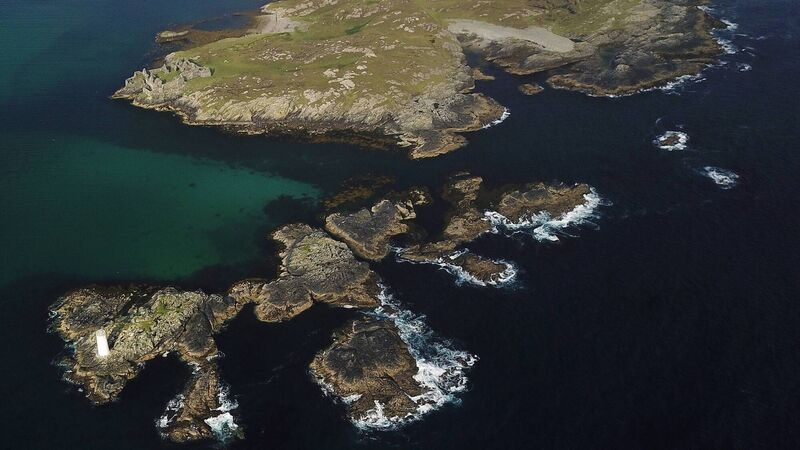
Ireland has a once-in-a-generation chance to legally protect nature in our seas and along our coasts, and we need to do it properly, writes Jack O’Donovan Trá
Ireland has a chance to get it right on protecting our seas

By 2030, Ireland has pledged to protect 30% of our marine waters. With less than 10% of Ireland’s seas currently designated as a MPA, we are currently nowhere near that target and have no adequate management plans in place for any of these areas.

Fair Seas Ireland’s long-promised network of Marine Protected Areas (MPA) is inching forward at a painfully slow pace. MPAs are areas of our seas and coasts designed to legally protect nature in our seas from activities that damage them. 

Most recently, minister of state Timmy Dooley, the responsible minister, suggested that it will be the middle of 2026 before the Heads of the Bill are brought before the Government. This is just the first step in drafting the necessary legislation to designate and manage marine protected areas in Irish waters.


Rushing the process won’t work either. Around the world, countries have discovered the hard way that MPAs declared in name only and without proper design, enforcement, community support and long-term monitoring, fail to deliver for nature or for the people whose livelihoods depend on the sea. Ireland can’t afford to repeat those mistakes. 

If we are going to finally build an MPA network, we must build it properly.

The reality today is that the Government’s timeline is entirely out of step with both scientific urgency and Ireland’s own political commitments. By 2030, Ireland has pledged to protect 30% of our marine waters. With less than 10% of Ireland’s seas currently designated as a MPA, we are currently nowhere near that target and have no adequate management plans in place for any of these areas.

Many benefits have been realised for coastal communities and fishing communities across the globe thanks to the creation of MPAs. Especially within strategically located protected areas the fish, crabs, lobsters and other species recover and grow bigger, they produce more young and spill over into unprotected areas boosting fisheries catches. In the best cases, MPAs become ‘living laboratories’ where scientists can see what a functioning ocean looks like when pressures are lifted.

Case studies

The story of Te Hāwere‑a‑Maki (Goat Island) in New Zealand shows what’s possible. Established in 1975 as the country’s first marine reserve. It was once an underwater desert with rocky reefs stripped bare by decades of intensive fishing. 

Over nearly 30 years, kelp forests returned, juvenile fish and invertebrates surged in number and the reserve became a globally respected model for marine recovery.

And yet, even here, scientists from the University of Auckland, found that recovery is still incomplete. The reserve is small, and intensive fishing activity just outside the boundary continues to reduce the ability of stocks to fully rebuild. 

In other words, even the world’s best MPAs struggle if the design isn’t robust enough or external pressures are left unchecked.

Jack O'Donovan Trá: 'Ireland has a once-in-a-generation opportunity to design an MPA network that avoids the pitfalls seen elsewhere.'

Contrast that with the experience of Lyme Bay on the south coast of England. When mobile bottom-towed fishing gear was banned in 2008 to protect vulnerable reef habitats, conservation groups and fishing communities worked together on a management and monitoring project that became a breakthrough ‘win-win’ moment for nature and livelihoods. 

A documentary was even made to celebrate the apparent co-operation titled The Road to Recovery. But cracks soon appeared. Local fishermen and women co-designed a voluntary code of conduct that allowed the ecosystem to recover and families to continue fishing. 

However, communications between agencies and stakeholders deteriorated. Quota increases encouraged nomadic boats to begin trawling the restored ecosystem of Lyme Bay once again, resulting in years of recovery being undone as well as the loss of local static gears. 

Local fishing vessels called for intervention by government agencies; however, because their locally managed conservation plan was voluntary, this left the local people of the bay with no official ability to protect the area from exploitation. 

The lesson is that good intentions alone don’t deliver functioning protections. Well-considered and locally designed plans need to have legal backing to reinforce the efforts of local communities.

Both case studies point to the same conclusion, declaring an MPA is the easy part. Delivering one that works for biodiversity, for the climate, for fishermen and women and for coastal communities is far harder.

Ireland now has a once-in-a-generation opportunity to design an MPA network that avoids the pitfalls seen elsewhere. But that will only happen if the Government takes a serious, evidence-based approach rather than treating MPAs as a box-ticking exercise.

Here are the key risks and the blueprint for avoiding them:

  • If boundaries are too small or placed in the wrong locations, MPAs simply won’t function. Ireland must ensure ecological coherence and adequate levels of protection including genuine no-take zones where necessary.
  • MPAs imposed on coastal communities rather than designed with them tend to fail. Fishermen and women, tourism operators and local residents must be engaged with early and continuously, not as an afterthought once decisions are made.
  • Protection on paper means nothing without adequate resourcing. Ireland must commit to long-term ecological monitoring, transparent reporting and enforcement including modern tools like remote sensing.
  • Healthy seas benefit communities, but the transition must be managed. Gear transition plans, support for diversification and training are needed to ensure that no group is asked to shoulder disproportionate costs.
  • The ocean is changing quickly due to climate impacts. Our MPA network must be adaptive, flexible and informed by ongoing science. What works today may not work in 20 years with warming waters.

We are at a crossroads. Done right, MPAs could help to restore depleted fish stocks, protect our most endangered species and habitats, build climate resilience and support thriving coastal communities. 

Done poorly, they risk becoming another political gesture, a network of “protected” areas where little is actually protected and all that is realised for communities is red tape and zero tangible benefit. 

Ireland has the benefit of learning from decades of international successes and failures. We should use that advantage, the time to incorporate hard-won lessons is before implementation, not after. 

For coastal communities and the ocean itself, that matters, because a poorly managed MPA risks alienating stakeholders, squandering investment and missing the chance to regenerate the ocean’s rich productivity and resilience.

Let’s get it right, for the ocean and for future generations.

  • Jack O'Donovan Trá is communications officer with Fair Seas, a coalition of Ireland’s leading environmental non-governmental organisations (eNGOs) and environmental networks.

x

CLIMATE & SUSTAINABILITY HUB

More in this section

Revoiced

Newsletter

Sign up to the best reads of the week from irishexaminer.com selected just for you.

Cookie Policy Privacy Policy Brand Safety FAQ Help Contact Us Terms and Conditions

© Examiner Echo Group Limited