Local authorities won't follow party line on the triple lock
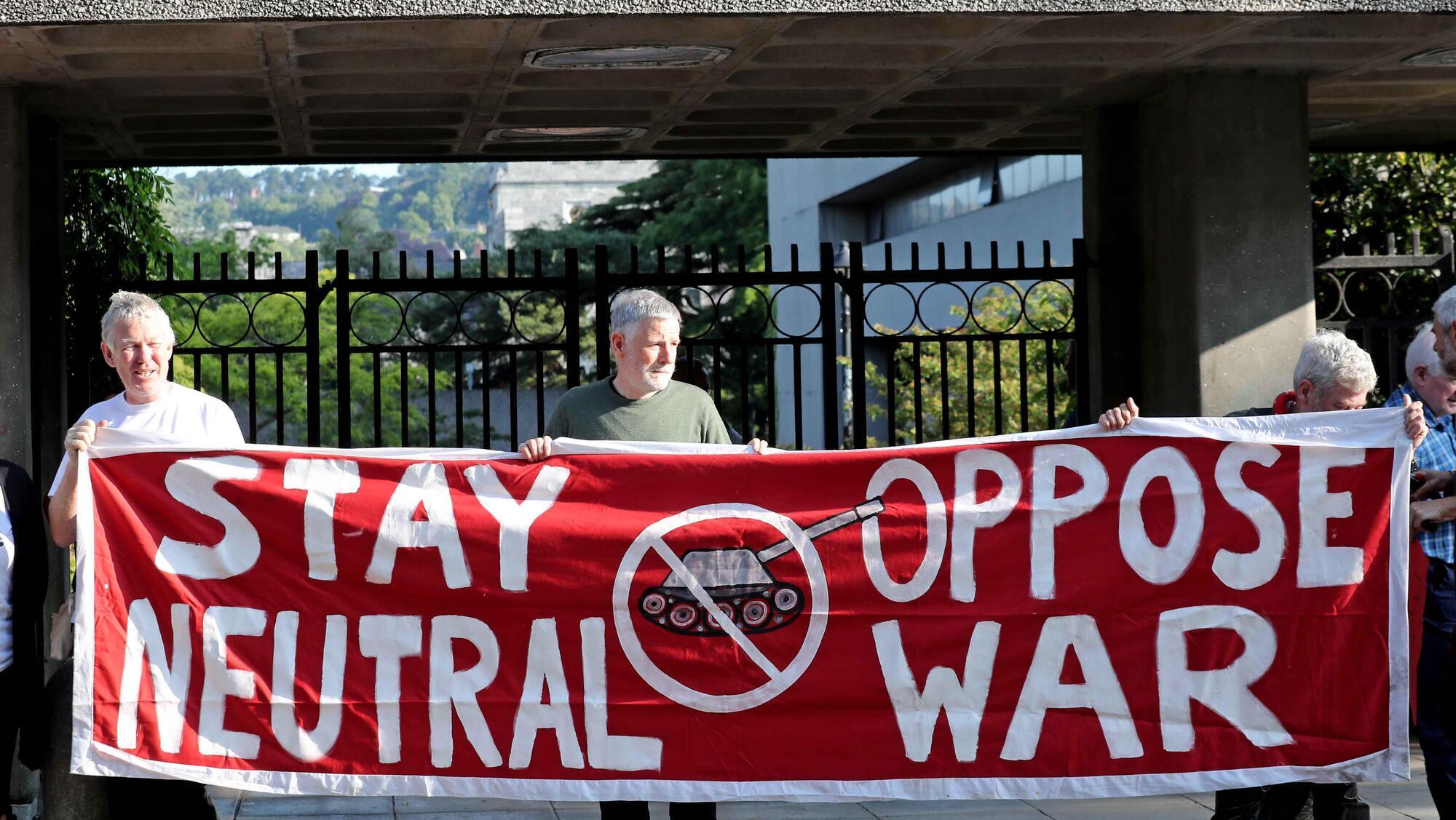
The triple lock was introduced by successive Irish governments in order to persuade the Irish public to vote for the Nice and Lisbon treaties, both of which were rejected in referenda due to concerns about Ireland joining EU military alliances Picture: Jim Coughlan.
Although the Government presents scrapping the triple lock as a purely technical matter, it has become the subject of heated public debate with many seeing it as an attempt to hollow out Ireland’s neutrality.
In response, communities across the country are finding ways to voice democratic opposition to the Government’s plans via county councils. This development not only indicates the depth of public commitment to neutrality, but it also highlights important issues about the nature and limits of Irish democracy.
In January 2025, an Ireland Thinks poll showed that an overwhelming majority of the Irish public support neutrality, with 75% of respondents saying "yes" to maintaining the current policy. Yet, the Government is determined to implement a fundamental shift in foreign and defence policy by scrapping the triple lock — a measure which would abandon neutrality in all but name.
The triple lock, which requires a UN mandate, a Dáil vote, and the backing of the Government to deploy more than 12 Irish Defence Forces personnel overseas is in effect a legal guarantee of neutrality which is not — as many believe — written into the Constitution.
The triple lock was introduced by successive Irish governments in order to persuade the Irish public to vote for the Nice and Lisbon treaties, both of which were rejected in referenda due to concerns about Ireland joining EU military alliances. Repeat referendums secured positive votes after government commitments to ensure the triple lock would be respected.
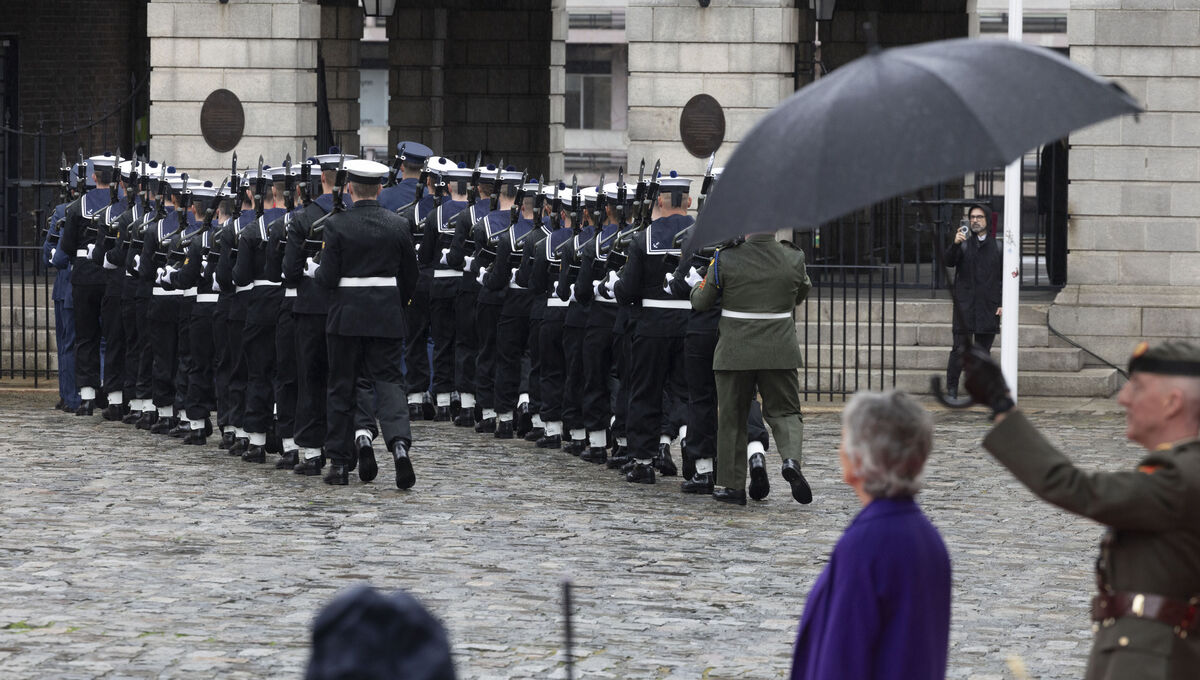
The Government is currently progressing the Defence (Amendment) Bill 2025 through the legislative process towards a vote in the Dáil and the Seanad. The bill would scrap the triple lock, despite the commitments given by past governments to secure public ascent to the Nice and Lisbon treaties.
If passed, the legislation would remove the requirement for a UN mandate to send troops overseas, leaving the decision with the Dáil and the Government alone.
Indeed, the government of the day would have latitude to deploy over 50 troops overseas without Dáil oversight.
The Government is no doubt keen to pass the legislation before Ireland takes up the rotating presidency of the EU Council in July 2026, and the minister of foreign affairs, trade, and defence, Helen McEntee, has noted that a Dáil vote is likely to take place in “early 2026”.
At present, it appears the Government could muster a majority to pass the bill even if opposition parties are united in rejecting it. However, popular pressure is growing against the legislation at local council level.
Over the last eight months, a number of local councils have passed motions in favour of keeping the triple lock — giving democratic voice to popular sentiment.
These votes reflect the impact of a grassroots movement that has emerged to raise awareness about the Government’s intention to remove the triple lock and what it means for Irish neutrality.
The Neutrality Roadshow, an independent political education campaign that has been travelling the length and breadth of the country since May and speaking to local communities about the need to mobilise to protect neutrality, has been central in galvanising this upsurge of local democracy.
Local neutrality groups have sprung up in Louth, Roscommon, and Tipperary to push for council motions on the triple lock in the wake of roadshow events.
In other cases, local councillors have been galvanised by attending these meetings themselves.
So far, eight county councils have passed motions in support of the triple lock — Cavan, Derry-Strabane, Donegal, Dublin South, Louth, Mayo, Mid-Ulster, and Wexford — with motions under discussion in Dublin Central, Dún Laoghaire–Rathdown, and Limerick.
These motions have been led and seconded by Independents and a variety of opposition parties such as Sinn Féin, People Before Profit, and Aontú.
It is no surprise that votes in favour of the government position have largely come from Fianna Fáil and Fine Gael.
In Wexford, for example, the council’s Fianna Fáil chair, Joe Sullivan, broke rank with his party to cast the deciding vote in favour of the motion.
Speaking on South East Radio News, Sullivan said: “I voted with my heart and my conscience … I genuinely believe the triple lock has served this country well and should be retained, not just for political or legal reasons, but for the protection of our Defence Forces going forward.”
Sullivan noted that he didn’t “want to have any hand, act, or part in anyone losing their life in foreign service” because of a vote he cast.
“This wasn’t about politics,” he said, but “about principle…I believe in doing what’s right, not just what’s expected by the party.”
Sullivan’s decision to break with Fianna Fáil’s position as a matter of principle is significant, and it shows the potential for gaps to widen on this matter between government parties and their local support bases across the country, particularly in counties far from Leinster House.
Polling indicates that a majority of all Dáil parties’ voters support maintaining neutrality.
Even 62% of Fine Gael voters are in favour of maintaining the current policy on neutrality, despite the party traditionally being the most skeptical towards it.
Neutrality has historically been associated with Fianna Fáil, given Eamon de Valera’s defence of the stance during the Second World War and Frank Aiken’s time as foreign minister in the 1950s and 1960s.
When Micheál Martin claimed in the Dáil in 2013 that the triple lock was the “core” of Ireland’s neutrality, it was fully in keeping with his party’s tradition. However, he is now determined to betray it.
Council motions on protecting the triple lock have been driven by local grassroots campaigns in a number of cases.
For example, the Louth Neutrality Network and the Tipperary Neutrality Network each produced petitions opposing the Government’s proposed legislation, and they garnered more than 1,000 signatures each.
In Louth, Sinn Féin councillor Antóin Watters brought forward the motion after receiving the petition from "concerned citizens," arguing that although Ireland is a small country "we have been able to punch above our weight" in UN peacekeeping due to neutrality.
The motion was then amended by Independent councillor Kevin Callan to insist that "in the event of any action by this or any future government to endeavour to abolish or amend the triple lock, that the matter be put to the people of Ireland by way of a referendum".
Likewise, in Tipperary, Independent councillor Jim Ryan cited a petition of 1,000 signatures as the impetus for this motion calling on the Government to withdraw the controversial Defence Bill.
Despite this widespread popularity, five councils have now voted against motions on the triple lock — Leitrim, Sligo, Galway City Council, Galway County Council, and Tipperary.
The last three votes have taken place in the last two months, indicating that the government parties have organised themselves to block them.
The vote in Galway City Council was unsuccessful despite significant grassroots support. In October, an initial attempt to debate a motion proposed by Sinn Féin councillors was blocked on the basis of a technicality.
The chairperson claimed the motion was not within the remit of the council. In response, a public campaign was mounted to demand councillors take the motion to vote.
A group of activists from the Galway Alliance Against War group staged a protest in the municipal offices as the council met. The motion was allowed to come before the council in November, but was rejected — in part due to the absence of councillors supposedly committed to neutrality.
Interestingly, three councillors from Fianna Fáil and one from Fine Gael voted in favour of the motion — again pointing to discrepancies of position between the parliamentary party and base of both government parties.
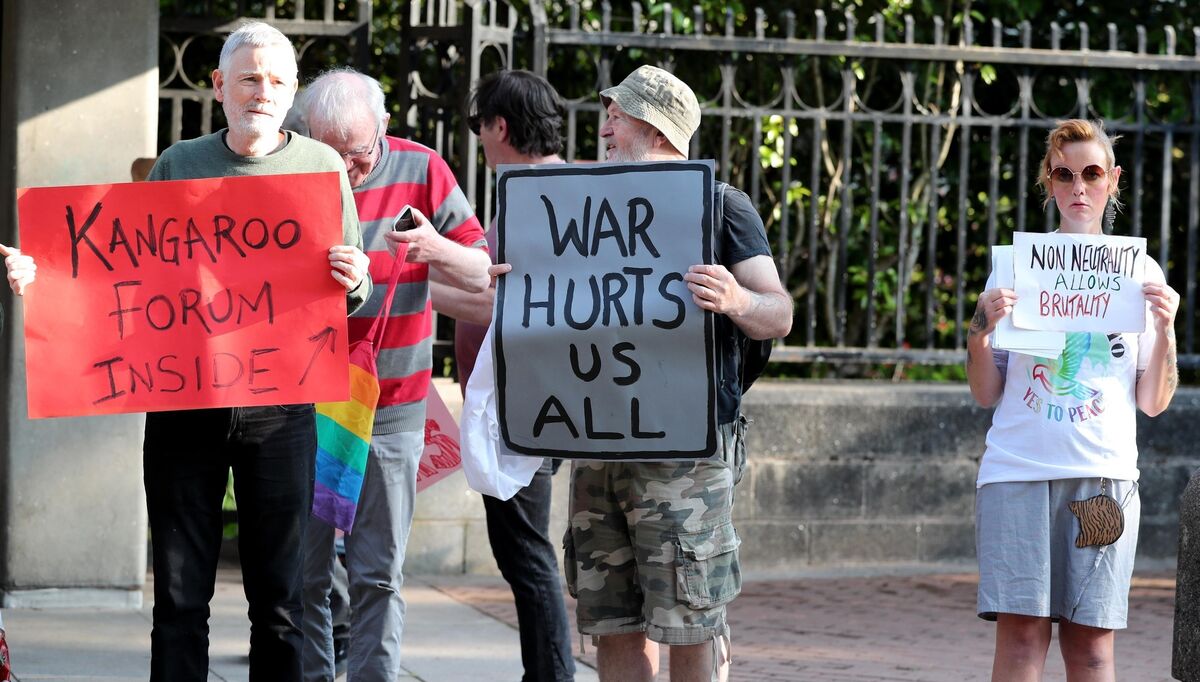
The most recent vote was in Tipperary in early December. The debate in the council chamber became so heated that proceedings had to be temporarily suspended so cooler heads could prevail.
Independent councillor Jim Ryan and Sinn Féin councillors David Dunne and Annemarie Ryan-Shiner brought similar motions calling for a referendum on the triple lock.
Fine Gael councillors Declan Burgess and John Fitzgerald introduced an amendment asking for “extensive and additional pre-legislative scrutiny and public engagement".
This amended motion was carried 18 to 14 (with eight councillors missing), despite the bill already having cleared pre-legislative scrutiny.
The council votes on neutrality highlight the democratic deficit in Ireland, serving as another example of how local concerns are often lost due to centralisation in Ireland.
Whilst councils are principally a platform to address local issues, this upsurge in local democracy indicates how important neutrality is at a local level as much as national.
It is possible that concerns around neutrality may be heightened in areas where the Defence Forces are a major employer, and where troops’ welfare is of direct consequence.
Ireland is one of the most centralised states in Europe with only limited powers being devolved to city and county level authorities.
This has rendered Irish councils weak with restricted capabilities relative to local government in other countries across Europe.
One of the most important consequences is the denial of a diverse set of channels for democratic contestation and control.
Although the Irish State is often praised for having a strong and healthy democracy, the reality is that there are very few actual democratic mechanisms available to the Irish public — and they are often ignored by the Government when convenient.
Notably, over the last decade, citizens’ assemblies have been used to inform governments about popular opinion and voter sentiment on a range of topical issues that deserve strategic consultation.
However, they have no official role in setting policy, and governments have failed to act on the recommendations of previous assemblies.
For example, the results of a 2023 citizen’s assembly on implementing a directly elected mayor of Dublin were ignored, demonstrating governments’ willingness to ignore what processes "owned by citizens" have recommended.
The passage of motions defending the triple lock by councils in Northern Ireland, including Derry-Strabane and Mid-Ulster, indicate that the desire to protect Irish neutrality is a concern shared by people across the island.
This suggests that foreign and defence policy, and the maintenance of neutrality in particular, may well become key to any future unification debate.
This is already reflected in growing debate in British policy circles where a united Ireland is framed as a strategic threat to British security.
The popular will expressed through local councils suggests that a referendum on neutrality would be the most democratic pathway to deciding on any fundamental change to defence and foreign policy.
The democratic legitimacy of removing the triple lock is particularly important because it will allow Ireland to become party to international conflicts, putting the lives of troops at risk overseas and dramatically increasing the risk of attack at home.
Indeed, over recent years, opposition parties have proposed legislation to strengthen neutrality’s place in the constitution.
In 2022, People Before Profit introduced a private member bill to enshrine neutrality in the constitution. Similarly, Sinn Féin introduced a motion in the Dáil in 2023 proposing a citizen’s assembly to draft wording on neutrality for a constitutional amendment and a referendum on changes to the triple lock.
During a Dáil debate in February, Simon Harris repeatedly stated that there was no reason to hold a referendum or a citizen’s assembly on neutrality, as it was not in the Constitution and because the Government holds a democratic mandate to alter the triple lock.
Notably both Fine Gael and Fianna Fáil pledged to “preserve” and “protect and promote” Ireland’s “military neutrality” in their 2024 election manifestos.
Arguably, therefore, their democratic mandate is based on maintaining neutrality, even if their other manifesto pledges on defence were set to undermine this.
It seems clear that the Government is determined to limit democratic participation around neutrality, no doubt because they are aware of the nature and strength of public opinion on the matter.
Instead, citizens were offered the meagre mirage of "consultation" represented by 2023’s consultative forum which was, in effect, a propaganda tour for government policy presented as an exercise in participatory democracy.
The Government’s unfortunate attempts to limit democratic oversight over fundamental matters of state raise serious questions not only about the democratic commitments of this Government, but about the robustness of Ireland’s democratic institutions as such.
It is in this context that these council motions are so significant, demonstrating as they do a popular desire for democratic control over neutrality and real democratic oversight over foreign and defence policy.
In an era where faith in democracy is in precipitous decline, it is ever more important for the Irish State to strengthen democratic participation rather than erode the already weak channels available.
- Eman Abboud is a lecturer at Trinity College Dublin. Rory Rowan is an assistant professor of geography at Trinity College Dublin

CONNECT WITH US TODAY



Be the first to know the latest news and updates