Most Irish people want clean water, not a nitrates derogation
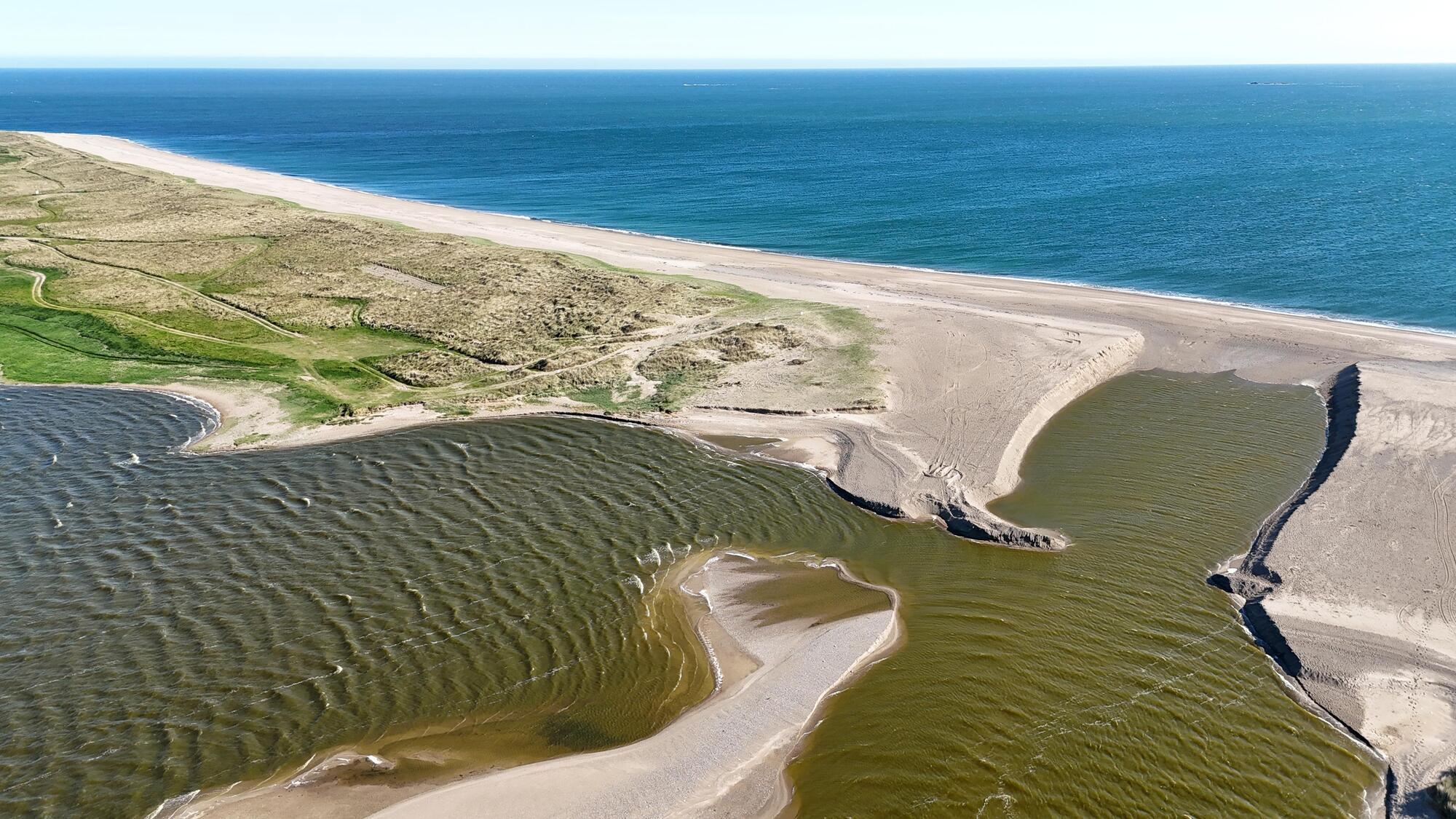
Ireland's largest saltwater lagoon Lady's Island Lake in June 2025, which is polluted with algae, contrasted against the sea on the southeast coast of Co Wexford.Â
Who could have guessed that something as fundamental as clean water could become such a political lightning rod in a developed country with a quality of life ranked sixth in the world by the UN?
Yet, here we are, in a Punch and Judy media show, with those of us who care about clean water pitted against those that farm our land, as if clean water doesn’t, in fact, benefit us all.
Irish people care deeply about clean water. In a recent Ireland Thinks poll the overwhelming majority (82%) indicated that having healthy rivers, lakes and estuaries is very important to them. Why then are clean, healthy waters, the basis for all life, a new battle front in Irish politics?
The battle is over the nitrates derogation.Â
This is a legislative exemption — a pass — granted by the EU, which allows Ireland (the only EU state now seeking a derogation renewal) to have more heavily stocked farms, and to spread more slurry to meet the growth demands of our industrial agricultural sector.
Half of our rivers and two thirds of our estuaries are polluted. Agriculture is consistently the main pressure. Recent EPA data highlights that we’re going backwards on water quality. There are fewer waterbodies now at good ecological status than three years ago.

Agricultural nitrate pollution, from slurry, artificial fertiliser and animal urine, which washes from the land into our waterways, is a significant problem in the south and south-east of Ireland. This is the area also boasting some of the country's most productive agricultural land, including the majority of derogation farms.Â
The EPA has been sounding the alarm about the nitrogen pollution of the waterbodies in these areas for years and is now flagging the "precipitous declines" of our estuaries.
What happens where there is too much nitrogen? Just look at Lady’s Island Lake in Wexford. It’s a lagoon of enormous ecological and cultural significance. It is now being described as "dead", and is one of the most polluted lakes in Ireland, largely on foot of agricultural nitrogen pollution.Â
It glows so green, we are told that apparently it can be seen from space. This is our destination; this dead, toxic water is the end point of our current trajectory if we don’t address the long-standing pollution trends.
So, what is the Irish government doing? Playing politics. They’re currently leveraging the full might of their political capital to persuade the European Commission that it should once again give Ireland a nitrates derogation. This is granted on the proviso that it will not impact on water quality.Â
The truth is, under the current rules, you could farm beside the most polluted lake in Ireland, and the state of that local water body will not be taken into consideration when you apply for a derogation. There is simply no environmental assessment.
While derogation farmers are subject to tighter rules than others, the measures they are putting in place have never been proven to address the problem. Instead, the evidence tells us, overwhelmingly, that nitrogen pollution in high-risk areas of the country, continues, unabated.Â
Some of the measures deployed, like planting of trees and vegetation as buffer zones along rivers, and fencing livestock, may be helpful for other things, like reducing phosphorus pollution, but they’re simply not designed to intercept and stop nitrogen entering our waterways.
The Government has consistently argued that the nitrates derogation is really important for the people of Ireland, and for our economy, and that we need a ‘team Ireland’ approach.
I don’t doubt the derogation is important for those farmers that are availing of it. It allows them to stock higher numbers of cattle, thereby increasing their productivity and profits. Those famers are in an unenviable position, however.Â
Many, advised and encouraged by agencies of the State, have taken on significant debt to expand their dairy enterprises. Every four years they find themselves at a cliff edge while the Irish Government tries to persuade our European colleagues to grant Ireland another derogation, each time against the backdrop of further deteriorating water quality.Â
It’s an incredibly risky business model for which individual farmers can’t be held responsible.
Setting aside the ecological and the economic arguments, has the Irish Government ever asked the people of Ireland if they agree with its staunch stance that we should all pull on the green jersey to convince Europe to give us another derogation?
Recent Ireland Thinks polling indicates that the Irish people don't agree with this.Â
Overwhelmingly, a majority value clean water and are not in favour of Ireland seeking another derogation.Â
Whose interests then, are our elected representatives actually representing?Â
Why are they burning so much political capital at an EU level to secure it?
That fight is all the harder given the recent evidence of the Government’s poor stewardship of Ireland’s water with the European Court of Justice ruling last week that Ireland was legally non-compliant with water legislation on 14 counts.
In our view, the Government’s latest plan for preventing agricultural water pollution is also too weak to protect water, a case we are making through the courts, and which will be heard in front of the European Court of Justice on Thursday, December 11.
The European Commission last week recommended that Ireland be given a three-year extension of our derogation, with stricter environmental conditions.Â
The final decision now rests with the European Nitrates Committee, which will make a final decision today, Tuesday, December 9.
It looks likely that Ireland will indeed get another derogation. This is being widely hailed as a good outcome by our Government, but good for who?Â
Good for the salmon, freshwater pearl mussel and kingfisher that rely on clean water to exist? Good for the communities that find themselves living beside dead, green lakes?Â
One would have to ask, is this even good for derogation farmers for whom water is also a vital resource and who, in three years’ time, will once again find themselves on this economic cliff edge, wholly dependent on the benevolence of the European Commission, who should only be granting Ireland a derogation if the water quality is good.
Will the Irish Government take this three-year period to actually transition farmers to a more sustainable agricultural model, and away from reliance on a derogation? Given recent rhetoric I wouldn’t hold my breath.
Our waters are crying out for a break from the pollution, Irish people are calling for clean water, but our voices are being drowned out in a world of political wrangling and vested interest. And the thing is, you can’t drink politics.
- Dr Elaine McGoff is Head of Advocacy with An Taisce