Third-level sector must do more to fight far-right discourse
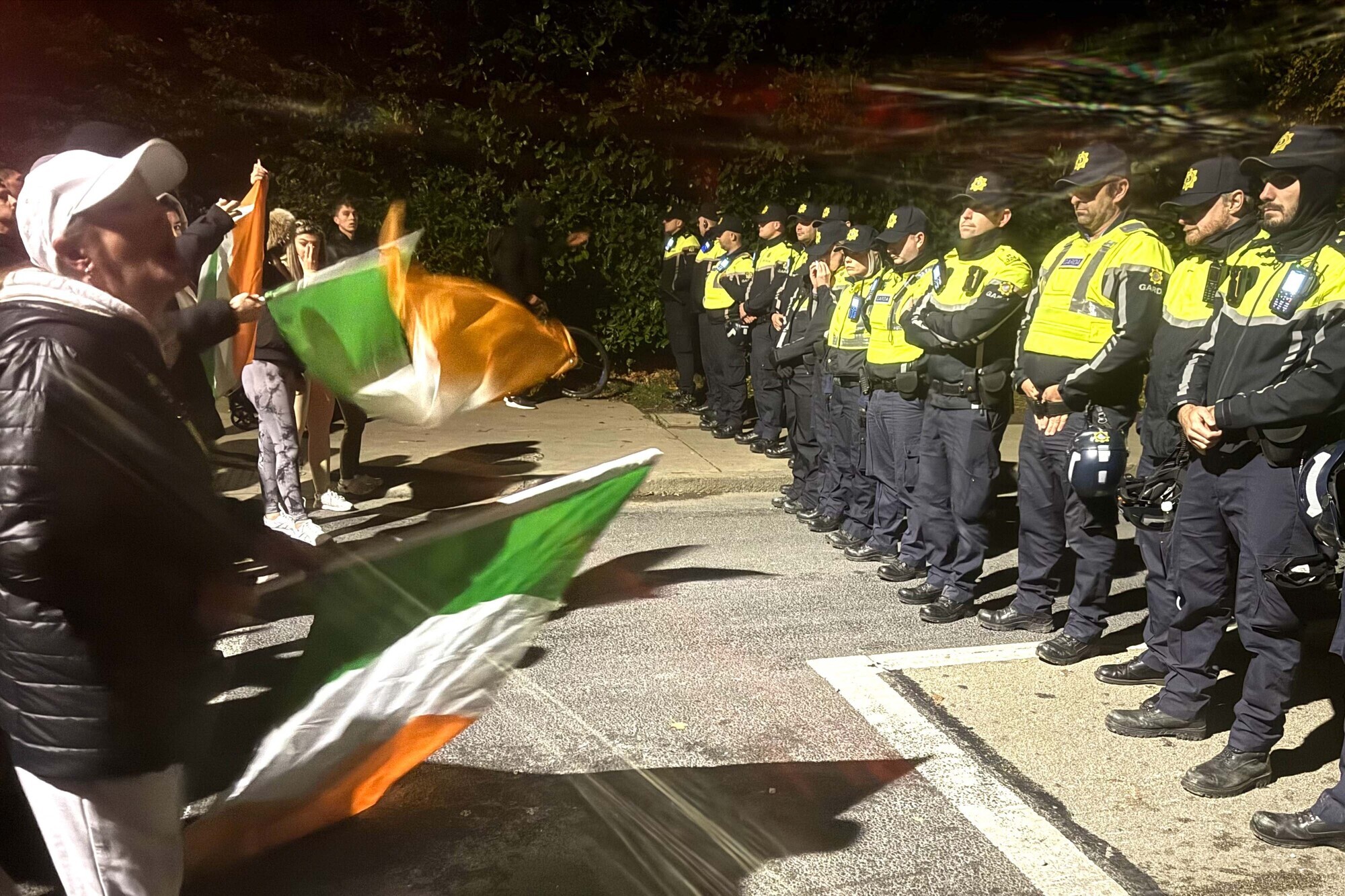
The recent attacks on Ipas centres in Citywest and Drogheda did not happen in a vacuum. Picture: Leah Farrell / RollingNews.ie
As beacons of truth and knowledge, we have a responsibility in higher education institutions to identify and call out disinformation in all its forms. Particularly here in Ireland, while people in other parts of the world are being penalised for speaking up, we have an opportunity, if not an obligation under the Public Sector Equality and Human Rights Duty, to prevent discrimination, promote equality and protect human rights.
Despite this duty, in times of prolonged, unprecedented crisis, there is a temptation for some people to keep their heads down in the hopes of avoiding potential challenge or controversy. Unfortunately, while we continue quietly, others are becoming emboldened to take action in increasingly vicious and violent ways.
The recent attacks on Ipas centres in Citywest and Drogheda did not happen in a vacuum.
Long before our Government’s increasingly problematic remarks on immigration, an investigation into the online mis- and disinformation ecosystem in Ireland, Uisce Faoi Thalamh, was published in November 2023.

Gallagher, O’Connor and Visser highlight how the far right have “mobilised against immigration, framing asylum seekers and refugees as an existential threat to Ireland and spreading hateful falsehoods against the LGBTQ+ community”.
We are now seeing this violence play out — not just against those seeking international protection, but also against Indian immigrants in Dublin, including an Amazon employee, and against drag queens in Cork on what should have been a sociable jazz weekend. None of us are safe when discrimination goes unchecked.
Our universities are increasingly reliant on revenue from alternative sources, including our lucrative, international fee-paying students. According to the ICEF Monitor, the number of international students enrolled in Irish higher education reached a new record high in the 2023/24 academic year, passing over the 40,000 student benchmark for the first time.
But with increasingly emboldened racism in our society, including an attack on an Indian student in Cork last year, will Ireland continue to be seen as a safe, welcoming space for this profitable pipeline? Choosing silence comes at a cost — not just in lost talent and revenue, but our collective humanity.
Some of us may think we can opt out, or take a neutral stance but harm does not start with physical violence — it starts with our words or lack thereof.

Speaking at a conference in the University of Galway in 2016, then president Michael D Higgins said: “It is here, in our universities, that we can begin to enact such transformative thinking as is necessary to create the foundations of a society that is more inclusive, participatory and equal.”
This transformative thinking requires effective, inclusive leadership across the higher education sector. When disinformation is being increasingly weaponised by far right extremists, the most powerful thing we can do as educators is ensure we are accurately aware of what is happening in the world. Then, once informed, we can take action in a way that is meaningful and sustainable within our fields of influence.
On the night the former president left the Áras for the last time, he was flanked by a guard of honour by the Sanctuary Runners, a running group for refugees, asylum seekers and Irish citizens, of which he is a patron.
President Higgins’ empathy and compassion has been a defining characteristic of his leadership over the last 14 years, leaving sizable shoes for his successor to fill. Thankfully, despite experiencing disinformation and smear campaigns herself, we have Catherine Connolly as our new Uachtarán na hÉreann.
President Connolly is already bringing her own authenticity and humanity to the role with a letter of support for our trans community on the recent Transgender Day of Remembrance, and speaking out against gender-based violence as “an affront to human dignity, to equality and to the fundamental right of every person to live safely and freely” on the International Day for the Elimination of Violence against Women.
Looking further afield, we can draw inspiration from Zohran Mamdani, the mayor-elect of New York City, and Zack Polanski, the newly-appointed leader of the Green Party in the UK.
There are, of course, differences in their politics and personalities, but their empathy has been a driving factor in their recent successes. From Palestine to the LGBTQ+ community, they stand with all marginalised and oppressed people, and are succeeding because of their solidarity rather than in spite of it.
Closer to home, we can learn from the many community and public sector organisations already active in this area — the Hope & Courage Collective, the Irish Network Against Racism and the Irish Human Rights and Equality Commission, to name a few. We do not all need to be experts, in fact, naming our lack of knowledge and an openness to learning might be a powerful place for us to begin.
- Siobhan Kangataran works in equality, diversity and inclusion in the higher education sector. These are her views and not those of her employer