Battle for the coveted Palme d’Or will play out on the French Riviera
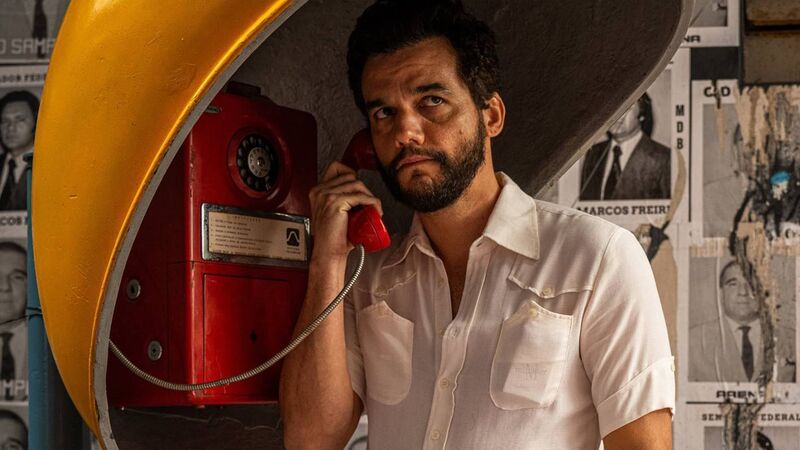
Wagner Moura in a scene from Kleber Mendonça Filho's political thriller ‘The Secret Agent’.
Cannes. That peculiar stretch of Riviera real estate that bursts into life every May.
For some, it's all about the champagne and photo calls. For others, it’s the battle for the Palme d’Or — a prize that has, of late, become a sort of cinematic oracle, whispering clues about the Oscars months ahead of schedule.
Four of the last five Palme winners have gone on to Oscar nominations, and two — Bong Joon-ho’s and the electric — took home the top prize in Hollywood.
That kind of clairvoyance makes Cannes less a film festival and more a weather vane for global taste.
So, as the red carpets are unfurled along the Croisette and the flashbulbs start to pop, the speculation begins: who will claim cinema’s most revered festival prize this year?
Here are a six titles that may stake a claim for the Palme d’Or:
Danish filmmaker Joachim Trier came into prominence in 2021 with the magnificent .
The film, which dealt with the various sexual exploits of one Julie, premiered at Cannes where lead Renate Reinsve picked up the best actress award for her star-making turn.
Trier’s magnum opus even made it all the way to the Oscars where it was nominated for Best International Feature Film and Best Original Screenplay.

With his follow up set to pack out the Theatre Lumiere, it's not unreasonable to think that Sentimental Value — a family drama steeped in Scandinavian melancholy — will take the big prize at this year's major European soirée de cinema.
Reinsve returns, this time alongside Stellan Skarsgard who plays her ailing father, as she tries to navigate the complex paternal bond and loss of her mother.
It seems ripe for a Cannes coronation.
Mascha Schilinski is a hitherto unknown entity but it’s more than likely that won’t be the case after Cannes 78.
The German filmmaker comes to the Croisette with , a title that has the gallery sitting up and taking notice.
Schilinski’s story — originally titled — surrounds four women on the same farm at various points in history, as they come to terms with the past and the dark secrets hidden beneath their hallowed turf.
It’s an ambitious structure — one that asks audiences to consider how time, memory, and trauma linger in physical spaces — and it is rare that a Cannes neophyte would cause such a stir.
However, the word on the street is is truly special.
French director Julia Ducournau has tasted Palme gold before — only the second woman ever to win the Palme outright — for her thrillingly provocative, genre-blurring .
Whether that will work in her favour for this edition will have to be determined.
The Parisienne is a mainstay on the Riviera, having debuted all of her films at the festival.
This time around Ducournau presents , a story about a young girl living in a fictional city inspired by New York in the 1980s where an epidemic similar to HIV begins to affect her and her loved ones.
star Emma Mackey will play a supporting role, alongside young Mélissa Boros as the lead.
Ducournau doesn’t court comfort. In fact, she wields the grotesque like a scalpel.
But past Cannes jurors have proven they aren’t squeamish and with the legendary Juliette Binoche heading the jury, and a French filmmaker at centre stage, it’s hard to ignore the possibility of a repeat coronation.
Lynne Ramsay is another Cannes constant. The Scottish maestro’s latest, , was a late addition to the competition slate, but that has only built the intrigue around the film.

Ramsay has teamed up with Jennifer Lawrence and Robert Pattinson for her latest project which sees Lawrence’s character grappling with postpartum depression.
Ramsay consistently walks her characters to the precipice of breaking point, forcing them to peer into the psychological abyss.
On top of this, her films are often moving portraits of mental illness and trauma with powerfully evocative, often beautiful imagery.
will inevitably be another one to add to the resumé.
Few filmmakers have shown as much formal curiosity and consistency as Austinite Richard Linklater.
In (or New Wave), the American director turns his lens toward the birth of the French New Wave, offering a dramatised account of the making of — a film that inarguably changed the course of cinema in the 20th century.
Zoey Deutch stars as Jean Seberg, with newcomer Aubry Dullin playing screen icon Jean-Paul Belmondo.
The film is said to blend historical recreation with Linklater’s familiar interest in dialogue, character, and time.
While Cannes juries can be unpredictable when it comes to English-language films, Linklater’s sincere engagement with French film history, and his long-standing reputation as a thoughtful chronicler of cinema and youth, might make a force to be reckoned with.
Brazilian cinema is riding the crest of a wave after the success of at the Oscars.
Don’t be surprised in the slightest if Kleber Mendonca Filho’s nicks the Palme.
This political thriller looks to be intriguing with Wagner Moura ( ) playing the titular character, a teacher who returns to his home town of Recife in 1970’s to find peace, only to come face to face with the conflict he sought to leave behind.