We cannot stand back and watch the deaths of humanitarian aid workers who only try to bring relief
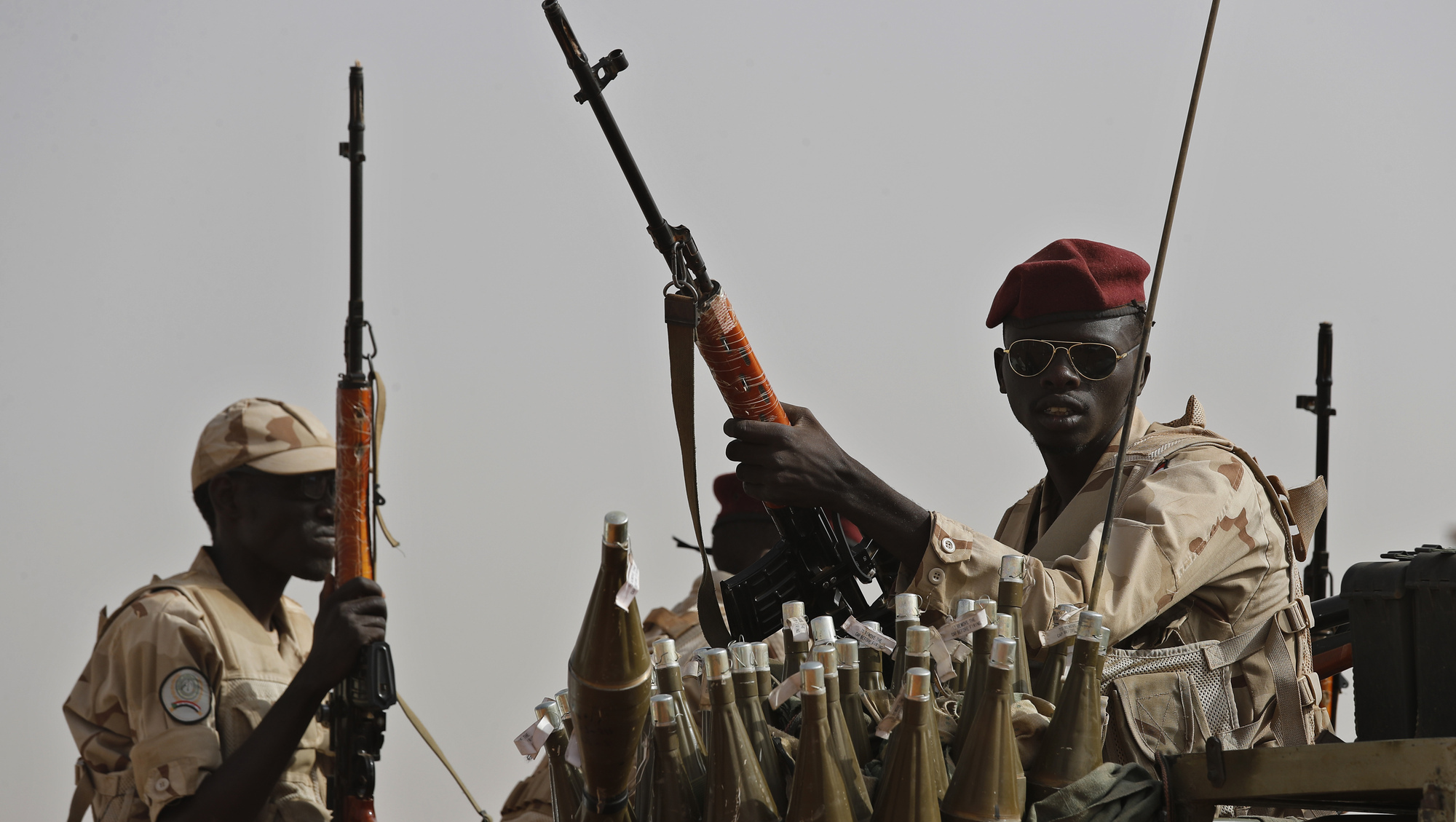
Sudanese soldiers in the East Nile province of Sudan in June 2019. Since the war broke out in Sudan, according to the UN, at least 84 humanitarian workers have been killed. File photo: AP/Hussein Malla
Years ago, like many doctors and nurses before me, I joined a humanitarian mission with an international medical charity. I was curious as to why some colleagues felt pulled towards volunteering in difficult and sometimes dangerous places.
Within hours of arriving on my first trip to Ethiopia, I understood why thousands of Irish-trained healthcare professionals embark on this work. It is a labour of compassion. The sole motivation is to be with your fellow humans who are suffering, to try and relieve pain, and show them that the world has not abandoned them.
My family were reassured that I was travelling with an organised mission and would therefore be protected.
In winter 2010, I went to Syria. The mission was cut short, and we were evacuated, as conflict originally contained in some rebel areas began to spread to the cities. While our safety was prioritised, many other agencies remained and continued working.
Last month, the world observed a humanitarian aid convoy attacked in Gaza, its aid workers shot and buried under rubble.
The strange dual morality that meant aid workers could enter a conflict zone and not be attacked – a law of bandits as it were – has been eviscerated. Recent video footage of aid trucks emblazoned with flashing red lights and international symbols of humanitarian aid, which are under attack by the Israeli military, shreds any belief that healthcare staff are protected in war.
Since April 2023, hundreds of attacks have been carried out on healthcare staff and health facilities in Sudan, depriving children of vaccines and mothers of antenatal care. These violations of protection of hospitals and community health centres have continued now for two years, with disastrous effects on basic healthcare for millions of people. Since the war broke out in Sudan, according to the UN, at least 84 humanitarian workers have been killed.
The World Health Organization (WHO) issued an appeal in January 2024 that 18.2 million Yemeni people would require urgent humanitarian assistance. Aid Worker Security, an NGO working in Yemen, recorded 12 ‘major attacks’ on aid workers in Yemen in 2024, and six in 2023. Six aid workers were killed in Yemen across the two years.
The displacement of people, food insecurity and disruption of healthcare has affected primarily women and children, spiralling an urgent need for more aid and healthcare intervention.
In an April meeting with the United Nations Security Council, Joyce Msuya, Assistant Secretary-General with the UN aid co-ordination office, said that 2024 was "the deadliest ever" for aid workers.
Humanitarian workers are being killed in unprecedented numbers with 377 fatalities across 20 countries. This was nearly one hundred more than in 2023, which already saw a 137% increase in 2022. Many more aid workers were injured, intimidated, kidnapped, attacked and arbitrarily detained.
Increasingly, humanitarian workers appear to be considered as targets, perhaps because they represent an international presence on the ground, and perhaps because of the comfort and hope that they provide. This is completely counter to the philosophy of humanitarian assistance that emerged out of the ashes of the Second World War, where politics and diplomacy were used as tools to disarm, with a stream of aid continuing regardless of negotiations.
Ireland has contributed much to international aid missions, responding to war and natural disasters; with healthcare and logistics staff volunteering as part of organisations such as Médecins sans Frontieres and the International Red Cross. Irish Healthcare Workers for Palestine has been steadfast in their support for people suffering in Gaza.
In recent years there have been small Irish-led missions into Haiti, Ethiopia, Vietnam and Ukraine, focusing on providing healthcare, humanitarian aid, and peacekeeping. In our six medical schools, generations of students have fundraised and worked in countries in need of basic medical aid.
They leave a legacy of medical training and return home with a new understanding of the meaning of healthcare which they carry forward.
As we sit in the safety and familiarity of our homes and workplaces, watching with horror as the news unfolds, the lives of millions of people hang suspended waiting for the world to make up its mind. There is a danger of compassion fatigue as we bear witness, seemingly powerless.
No matter your stance, it is unconscionable to stand by while humanitarian workers are targeted. The day has arrived for people to show solidarity for aid workers in every region: we cannot stand back and watch the deaths of people who only try to bring relief.
- Dr Suzanne Crowe is President of the Medical Council

CONNECT WITH US TODAY



Be the first to know the latest news and updates